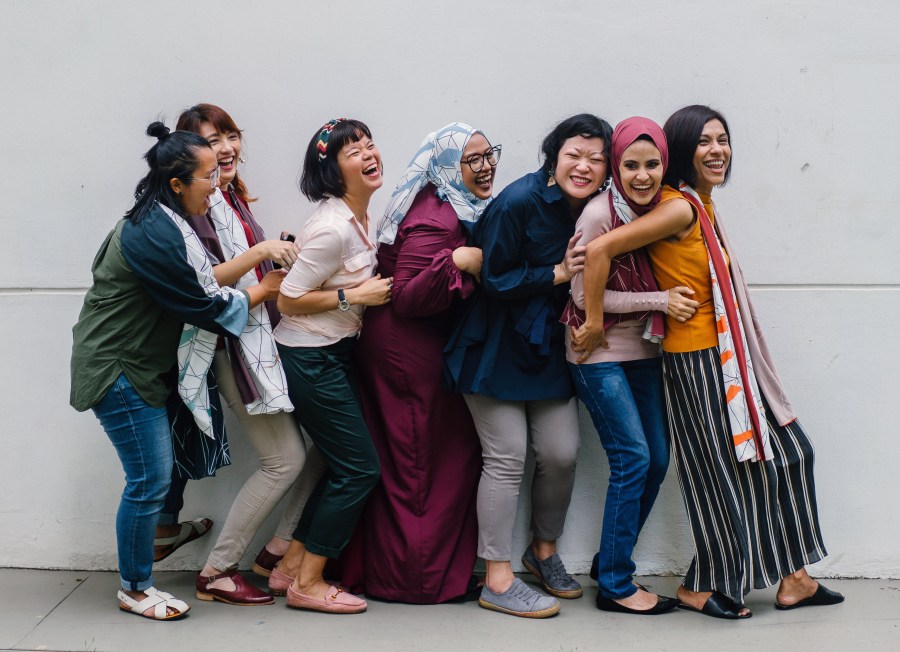
Whether you’re reminiscing about time with family, expressing gratitude for a gathering, or even writing your next love song, these all involve talking about being together with others. In this post, we’ll learn how we can talk about togetherness in Chamorro, including expressing thoughts in the past, present and future tenses. You’ll also find Chamorro example sentences, Chamorro audio narrations by Jay Che’le, and English translations to guide your learning. Happy studying!
Introduction to Togetherness in Chamorro
When we talk about togetherness in English, we tend to use the words “together” or “with” to talk about being with other people. But Chamorro has an interesting way of conveying togetherness, which involves using and transforming its emphatic pronouns. How we transform these pronouns depends upon the following:
- The number of people who are together (2 people versus 3+ people)
- If we are talking about the past, present or future.
In the rest of the blog post, we will review the plural emphatic pronouns, learn the different ways to transform them, and practice the basic forms for past tense, present tense, and future tense.
Emphatic Pronouns in Chamorro
When we talk about togetherness in Chamorro, we will be using the Chamorro emphatic pronouns that refer to more than one person. Let’s do a quick review of these pronouns, which are in the table below:
| hita | us (inclusive) |
| hami | us (exclusive) |
| hamyo / hamyu | you all |
| siha | they, them |
If you need a quick review on Chamorro pronouns, please see this post: Introduction to Pronouns in Chamorro.
In the rest of this post, we will learn how to transform these pronouns to talk about togetherness.
Past Tense: We Were Together
In this first section, we will practice making sentences in the past tense, such as “We were at the party together” or “They were at the beach together.” We must transform the emphatic pronouns with the UM Infix when there are 2 people together, but we use the Plural Man- Prefix when there are 3 or more people together.
Let’s get started practicing these transformations.
2 People: We Were Together
When we are talking about 2 people being together in the past tense, we transform the emphatic pronouns with the UM Infix. As a reminder, we put this infix in front of the first vowel in the word.
Let’s practice transforming our emphatic pronouns in the table below:
| hita | humita | we (2) were together |
| hami | humami | we (2) were together |
| hamyu | humamyu | you (2) were together |
| siha | sumiha | they (2) were together |
To get a firmer grasp on how to actually use these words, let’s practice using them in some simple example sentences. In the sentences below, we will just add a location after the transformed pronoun:
| Transformed Emphatic Pronoun + Gi + Location |
| Humita gi gipot. | We (2) were at the party together. |
| Humami gi kusina. | We (2) were in the kitchen together. |
| Humamyu gi kanton tåsi. | You (2) were at the beach together. |
| Sumiha gi gima’ Yu’us. | They (2) were at the church together. |
3+ People: We Were Together
If we want to talk about 3+ people being together, we must transform the emphatic pronouns with the plural man- prefix instead of the UM infix.
Let’s practice these transformations in the table below:
| hita | manhita | we (3+) were together |
| hami | manhami | we (3+) were together |
| hamyu | manhamyu | you (3+) were together |
| siha | mañiha | they (3+) were together |
Now let’s use those words in simple sentences. We will be using the same locations from the previous section, to keep variation at a minimum and help us practice the pattern:
| Transformed Emphatic Pronoun + Gi + Location |
| Manhita gi gipot. | We (3+) were at the party together. |
| Manhami gi kusina. | We (3+) were in the kitchen together. |
| Manhamyu gi kanton tåsi. | You (3+) were at the beach together. |
| Mañiha gi gima’ Yu’us. | They (3+) were at the church together. |
Present Tense: We Are Together
If we want to talk about currently being with someone, we must transform our verbs a little differently. We will still use the UM Infix with 2 people and the Plural Man- Prefix for 3 or more people, but we will also add an additional transformation with reduplication.
2 People: We Are Together
When we want to talk about 2 people being together, we will apply transformations in this order:
- Reduplicate the emphatic pronoun
- Add the UM Infix
Let’s practice these transformations in the table below:
| hita | híhita | humíhita |
| hami | háhami | humáhami |
| hamyu | háhamyu | humáhamyu |
| siha | sísiha | sumísiha |
Now let’s practice using these reduplicated forms in simple sentences, where we just add a location:
| Transformed Emphatic Pronoun + Gi + Location |
| Humíhita gi gipot. | We (2) are at the party together. |
| Humáhami gi kusina. | We (2) are in the kitchen together. |
| Humáhamyu gi kanton tåsi. | You (2) are at the beach together. |
| Sumísiha gi gima’ Yu’us. | They (2) are at the church together. |
3+ People: We Are Together
Now we will put these emphatic pronouns in the forms needed for talking about 3+ people. To do this, we will transform the emphatic pronouns in this order:
- Reduplication
- Plural Man- Prefix
Now let’s practice applying these transformations in the table below:
| hita | híhita | manhíhita |
| hami | háhami | manháhami |
| hamyu | háhamyu | manháhamyu |
| siha | sísiha | mañísiha |
Now let’s use these in some simple example sentences:
| Transformed Emphatic Pronoun + Gi + Location |
| Manhíhita gi gipot. | We (3+) are at the party together. |
| Manháhami gi kusina. | We (3+) are in the kitchen together. |
| Manháhamyu gi kanton tåsi. | You (3+) are at the beach together. |
| Mañísiha gi gima’ Yu’us. | They (3+) are at the church together. |
Future Tense: We Will Be Together
In this final section, we will learn about talking about togetherness in the future tense. Since we are talking in the future tense, we will also be using future markers and hu type pronouns with our emphatic pronouns.
With this combination of future markers and pronouns, we need to pair the right pronouns together.
For example: If we are saying “You will be together”, the hu type pronoun will be en and the emphatic pronoun will be hamyu.
If this seems confusing, please don’t worry. We’ll go over the key phrases so you can learn them as a unit, that way you don’t need to piece them together word-for-word on your own.
2 People: We Will Be Together
When we want to talk about 2 people, the emphatic pronouns will stay in their root forms. Let’s practice the key future tense phrases for togetherness when talking about 2 people to see what this looks like. Make sure to learn these phrases as entire units:
| para ta hita | we (2) will be together |
| para bai in hami | we (2) will be together |
| para en hamyu | you (2) will be together |
| para u siha | they (2) will be together |
Now that we have learned our basic phrases, let’s use them in example sentences. We will just be adding a location after our phrases, to keep it simple:
| Future Marker + Hu Type Pronoun + Emphatic Pronoun + Gi + Location |
| Para ta hita gi gipot. | We (2) will be at the party together. |
| Para bai in hami gi kusina. | We (2) will be in the kitchen together. |
| Para en hamyu gi kanton tåsi. | You (2) will be at the beach together. |
| Para u siha gi gima’ Yu’us. | They (2) will be at the church together. |
3+ People: We Will Be Together
When we want to talk about 3 or more people who will be together, we must transform the emphatic pronouns with the plural fan- prefix. The plural fan- prefix is simply the plural man- prefix, but for the future tense.
To get started, let’s first practice transforming the emphatic pronouns in the table below:
| hita | fanhita |
| hami | fanhami |
| hamyu | fanhamyu |
| siha | fañiha |
Now let’s combine them with our future markers and our hu type pronouns. These are the phrases you will want to learn and internalize:
| fanhita | para ta fanhita |
| fanhami | para bai in fanhami |
| fanhamyu | para en fanhamyu |
| fañiha | para u fañiha |
Now let’s use these phrases in simple sentences:
| Future Marker + Hu Type Pronoun + Transformed Emphatic Pronoun + Gi Location |
| Para ta fanhita gi gipot. | We (3+) will be at the party together. |
| Para bai in fanhami gi kusina. | We (3+) will be in the kitchen together. |
| Para en fanhamyu gi kanton tåsi. | You (3+) will be at the beach together. |
| Para u fañiha gi gima’ Yu’us. | They (3+) will be at the church together. |
Special Note About Romantic Contexts
One thing for learners to note is that these pronoun transformations for togetherness can also be used in romantic contexts to refer to being “with” someone in a romantic relationship. One of the easiest ways to see this usage is in Chamorro music, and in the table below I have some lyric samples so we can see how these pronouns are used in a romantic contexts. Practically speaking, the romantic connotations are carried by the overall context of what’s being said:
| Na’kumprendi yu’ sa’ håfa na ti siña humita | Make me understand why we cannot be together |
| Maolekña na ta båsta yan magåhet guinaiyå-ta ta hita ha’ ta’lo | It’s better that we stop, and if our love is true, we will be together again |
| Kada diha yanggen humíhita, magof korason-hu | Everyday when we are together, my heart is happy |
Wrapping Up: Keep Practicing!
And that’s it for this introduction togetherness in Chamorro! If the different forms feel overwhelming to remember, try to practice with one pronoun at a time until you are comfortable, and then move to the next pronoun. With consistent practice, using these pronouns to talk about togetherness will start to feel more intuitive.
References
The word forms in this post were gathered by either reading different stories written in Chamorro, looking at example sentences in the dictionaries, or else listening to speakers and Chamorro music.
 Lengguahi-ta