The Overnight Vigil in Past Times on Guam

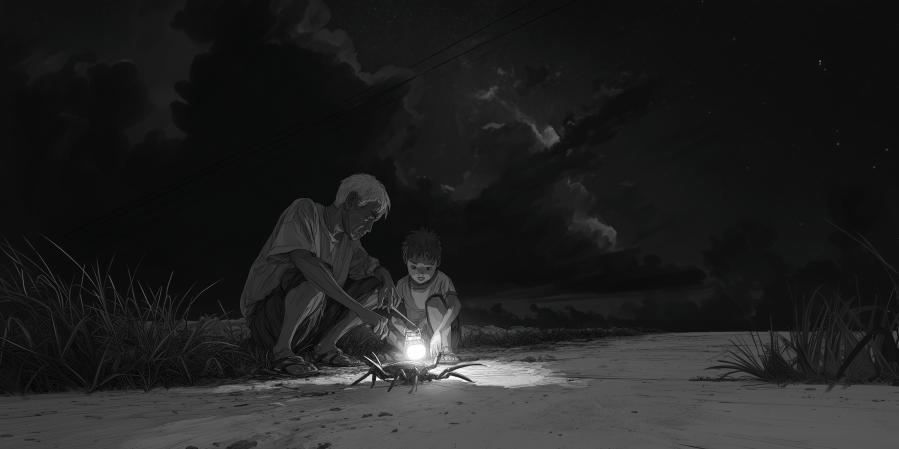
In earlier times, when death came to a Chamorro family, it was met at home—with prayer, care, and community. One important custom was the bella (or bela), the overnight vigil held at the home of the deceased. In my own life, I’ve never attended a bella, and neither has Jay—in his family, the last one was held when his grandfather passed away. Have you ever attended a bella, or heard about this tradition from your elders? In this post, we share a story about this traditional practice in Chamorro culture, along with the Chamorro text, an English translation, language footnotes, and an audio narration by Jay Che’le. Happy reading!

Continue reading “The Overnight Vigil in Past Times on Guam”

The Heat of the Road: Exploring Spiritual Energy and Sickness in Chamorro Life

Prefer to listen? Hear this essay narrated below on Spotify:

For the past two weeks, our Saturday morning practice group has been reading an interview with the suruhåna Tan Maria Palacios Crisostomo, featured in the Directory of Traditional Healers & Medicinal Plants in the CNMI. I chose this text because she discusses a concept called Minaipen Chålan—literally “the heat of the road,” but more accurately describing the harmful spiritual energy that one can pick up while traveling.

Since I would need Tan Maria’s written permission to share the full interview here, I instead wanted to write about the rich discussion her words inspired in our group. In this post, I’ll share some of our reflections on how heat, spiritual energy, and spiritual sickness are understood in Chamorro culture, as well as the practices we engage in—or have seen in our families and communities—around these ideas.

Continue reading “The Heat of the Road: Exploring Spiritual Energy and Sickness in Chamorro Life”

Learning “Don’t” in Chamorro, Part 2: Referencing Yourself With Mungnga’ – “Don’t Ask Me”

In part 2 of this mini-series on saying “don’t” in Chamorro, we’ll learn how to tell someone not to do something to you—for example, “Don’t talk to me”, “Don’t touch me” or “Don’t ask me.” We’ll still be using mungnga’ in this post, but with a slightly different speech pattern. And if you missed it, check out Part 1 of this blog series for a brief introduction on using mungnga’.

As always, this post includes example sentences, Chamorro audio narrations by Jay Che’le and English translations. Happy studying!

Continue reading “Learning “Don’t” in Chamorro, Part 2: Referencing Yourself With Mungnga’ – “Don’t Ask Me””

Before You Begin: 9 Things You Need to Know About Learning Chamorro in Adulthood

Learning Chamorro as an adult can feel intimidating—especially if you didn’t grow up speaking it or have never learned another language to conversational fluidity. You might wonder if it’s too late to start, or if you’ll ever sound natural. But here’s the truth: adult learners bring powerful strengths to the table—discipline, self-awareness, and life experience—that make progress not only possible, but deeply rewarding.

In this first post of the Getting Started series, I’ll share 9 key lessons I wish I had known before I began learning Chamorro. These ideas will help you build a strong mindset, prepare you for some potentially unexpected challenges, and approach your studies with confidence and patience.

Continue reading “Before You Begin: 9 Things You Need to Know About Learning Chamorro in Adulthood”

Kåntan Chamoru: Fanohge

I’m working my way through our Saturday evening practice group’s song backlog, and here’s one we transcribed back in mid-July. It’s another Daniel De Leon Guerrero piece, written in honor of Angel Santos, a political activist who championed the rights of the Chamorro people. In this song, we get a musical tribute that amplifies his calls to action—urging the Chamorro people to stand up and defend our culture, customs, people, and land.

As always, this post includes Chamorro lyrics and an English translation for the song Fanohge by Daniel De Leon Guerrero. Happy listening!

Continue reading “Kåntan Chamoru: Fanohge”