
What’s the Deal with “Hit” in Chamorro? – When Colloquial Speech Doesn’t Follow the Rules

Prefer to listen? Hear this essay narrated below on Spotify:

When I started learning Chamorro, I quickly realized that knowing the literal meaning of words did not guarantee that I would understand what was actually being communicated. One of the phrases that taught me this was Ågang hit – which I first heard in conversation with an aunty or uncle. They were saying “Call me”, but with hit (“us”) instead of yu’ (“me”). At the time it really confused me because it didn’t match the grammar rules I was taught. But now, with five additional years of language exposure and a revelation from a certain British baking show, I understand this Chamorro speech pattern in a different way. In this post, I’m going to explore this phenomenon in spoken Chamorro – when hit is switched for yu’ – and how I’ve come to a new understanding of its function in the language.

Continue reading “What’s the Deal with “Hit” in Chamorro? – When Colloquial Speech Doesn’t Follow the Rules”

Everyday Speech: How to Say “Our Neighbor Totoro” in Chamorro

Sometimes when we talk about the people in our lives, we want to mention both their name and our relationship to them—like “My nephew Lathan” or “Our neighbor Totoro.” In Chamorro, there’s a specific way to express these kinds of phrases using the article as. In this post, we’ll practice this simple pattern that adds a subtle depth to everyday conversation. As always, you’ll find example sentences, English translations, and Chamorro audio narrations by Jay Che’le to guide your learning. Happy studying!

(Image Note: This is a Totoro-inspired AI illustration, generated for educational/non-commercial use on this blog).

Continue reading “Everyday Speech: How to Say “Our Neighbor Totoro” in Chamorro”

Ti Bai Maleffa by Daniel De Leon Guerrero – Chamorro Lyrics and English Translation

Jay had to cancel his evening practice group at the last minute this past weekend, so there’s no new song for this week. But this is another song from our backlog, which Jay’s Saturday evening group transcribed back in May. It’s on the slightly faster side, with the singer declaring to his spouse that he will never forget their wedding day. As always, this post includes Chamorro lyrics, an English translation and language notes for the song Ti Bai Maleffa sung by Daniel De Leon Guerrero. Happy listening!

Continue reading “Ti Bai Maleffa by Daniel De Leon Guerrero – Chamorro Lyrics and English Translation”

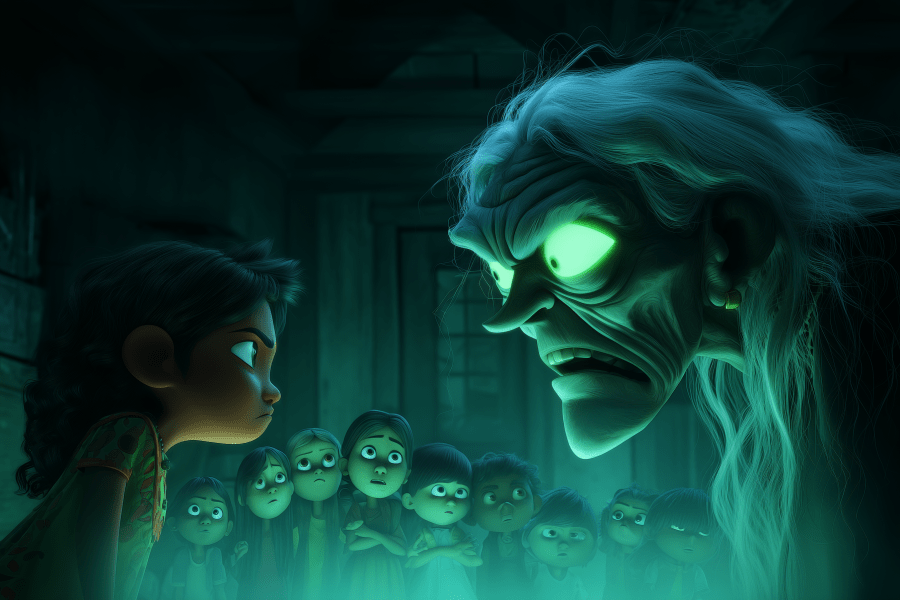
The Story of the Evil Old Woman

As we near the end of October, we’re fully into the fall here in Oregon. Days continue to shorten, leaves are transitioning through golden yellow and red hues, and the air has taken on a crisp chill. To mark the season, we’ll be reading a particularly spooky story in our Saturday practice this week. This story is about a large family who must contend with an unexpected threat. While mom and dad are away for several days on an errand, the eldest amongst eleven fulfills her duty in keeping everyone safe and ensuring their chores are done by bedtime.

In this post, you’ll find the Chamorro text, an English translation, language footnotes, and an audio narration by Jay Che’le. Happy reading!

Continue reading “The Story of the Evil Old Woman”

“The Rock Was Dragged”: Saying What Happened, Not Who Did It

Ever wanted to say something happened—like “The child was found”; “I was hugged”; or “The cooking pot was taken”—but got stuck because you didn’t know how to say it without saying who did it? You’re not alone! In this post, we’re learning how to talk about actions when we don’t include the doer. This is actually a simple but powerful pattern that brings greater flexibility to our speaking and is foundational for adding a layer of complexity to our Chamorro language patterns. In this lesson, we’ll practice some basic sentence patterns and start understanding how to use contextual clues for translating the tense of these sentences.

As always, this post includes explanatory notes, example sentences, Chamorro audio pronunciations by Jay Che’le and English translations to guide your learning. Happy studying!

Continue reading ““The Rock Was Dragged”: Saying What Happened, Not Who Did It”