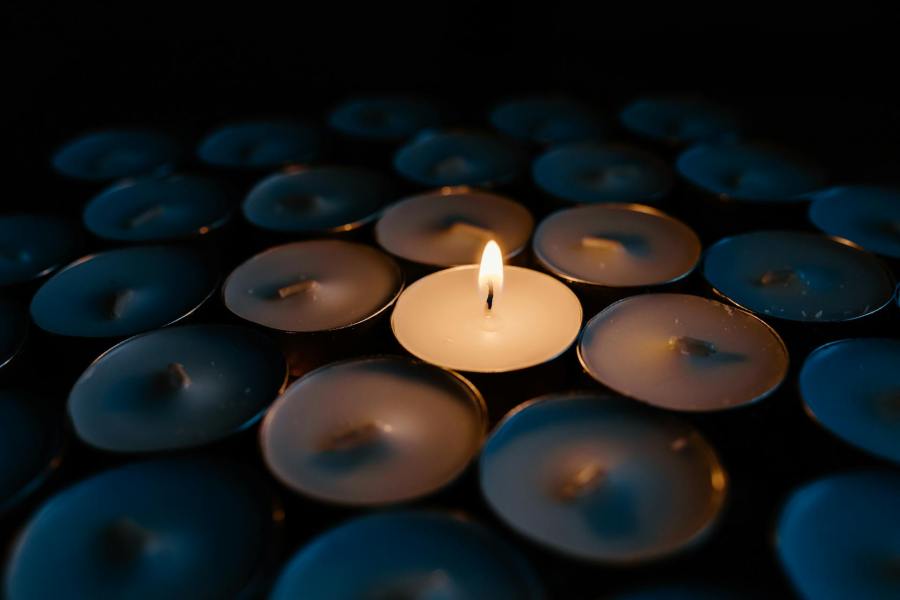
In earlier times, when death came to a Chamorro family, it was met at home—with prayer, care, and community. One important custom was the bella (or bela), the overnight vigil held at the home of the deceased. In my own life, I’ve never attended a bella, and neither has Jay—in his family, the last one was held when his grandfather passed away. Have you ever attended a bella, or heard about this tradition from your elders? In this post, we share a story about this traditional practice in Chamorro culture, along with the Chamorro text, an English translation, language footnotes, and an audio narration by Jay Che’le. Happy reading!
I BELLA ÅNTES NA TIEMPO GIYA GUAM
Tinige’ as Illuminada S. Perez
Åntes na tiempo i manåmko’ yanggen mansénmalångu ti u fanhånao para i espitåt. Ga’on-ñiha na u fanmåtai gi katren-ñiha komu mañísiha yan i familia. Yanggen matungo’ seguru na esta i malångu cháchaflek, ma ågang si Påle’ yan i techa para u tinaitayi ya u ma ayuda i malångu esta ki håfa denesponen Yu’us.1
Unu en unu i famagu’on manhånao guatu gi cháchaflek na guella pat guello manmangågågao asi’i pat despensasíon yanggen guaha na mana’piniti i amko’. Todu este na tiempo durånten i malangu-ña i amko’ mapúpulan ha’ ni familia. I familia mankonfotmi nu i malago’ Yu’us.
Yanggen måtai i amko’, mamuda ensigidas. Malaknos huyong i katre-ña despues mafa’tinasi ata’ut. Tenga2 i katpenteru gi sengsong bumolontårio para u cho’gue i ata’ut. Ti meggai guihi na tiempo pentura pues ayu i hagon sibukao ma u’usa. Todos i familian i matai manlinitu3 ya matutuhon i lisåyu. I lisåyu matucha gi alas dosse gi an talo’åni, alas ocho gi painge, yan lokkue’ gi alas dosse gi tatalo’ puengi. Yanggen tomótu’tu4 i matai mafåtto lokkue’ si Påle’ para i responsu.5 Mababa i matai benti-kuatru oras. Mabella6 tulanochi esta i segenti dia.
Tenga i entieru i alas kuatru gi segenti talo’åni. I tátaotao mana’hånao guatu gi gima’yu’us para mamisåyi7 i matai. Despues manhånao para i siputtura para u fanmanhåfot. Todu este na tiempo durånten i tomo’tu-ña i matai mandanña’ i manyettnu, mangumairi8 yan i manátungo’ manmama’tinas para i tinaotao9. Durånten i bella, maná’tane’ siha i tinaotao ni’ balåha.
Tenga alas kuatru gi talo’åni todos manmanhåfot ya kada unu manmañule’ odda’ ya madåggao påpa’ gi naftan. Guaha gi manåmko’ sumångan na yanggen ti sumaonao hao mandåggao odda’ pues siempre mafa’ñague10 hao. Despues di i entieru mandeskånsa i taotao sa’ manmåtto ha’ ta’lo para i lisåyon alas ocho. I lisåyu matucha nuebi noches despues guaha finakpo’.11 Todos ta’lo manmanayuda manmama’tinas para i manlisåsayu.12
Despues di finakpo’ lisåyu guaha ta’lo lisåyon guma’ para i membros i familia. Este na lisåyu matucha ta’lo nuebi noches. I membros i familia manlutu un åñu. I mina’ un åñu na tiempo matucha i lisåyon kompleåños.
The Overnight Vigil in Past Times on Guam
Written by Illuminada S. Perez
In past times, the elders, if they were extremely ill, would not go to the hospital. They preferred to pass away in their beds so that they would be together with the family. If it was known for sure that the sick was dying, the priest and prayer leader were called to pray for and help the sick person until God’s will is carried out.
One by one, the children went over to the dying grandmother or grandfather, asking forgiveness or pardon if they had ever done something to hurt the elder. All of this time during the elder’s illness, he/she is just watched over by the family. The family conforms with the will of God.
When the elder passed away, they (the elder) are immediately dressed. Their bed is taken out, then the coffin is made for them. Usually the carpenter in the village is the one who volunteers to do the coffin. There wasn’t a lot of paint at that time, so the Sappanwood leaves were what they were using. The entire family of the deceased were dressed in black mourning clothes, and the rosary was started. The rosary was recited at 12 o’clock in the afternoon, 8 o’clock at night, and also at 12 o’clock at midnight. If the deceased was being laid to rest, the priest also arrived for the vigil prayer. The deceased was revealed (the coffin was open) for 24 hours. They held a vigil all night until the following day.
Usually, the burial was 4 o’clock on the following afternoon. The body was sent over to the church for a mass to be said for the deceased. Afterward, they go to the cemetery to bury (whoever has passed away). All of this time during the deceased’s internment, the daughter-in-laws, the målis and the friends gathered and prepared (food) for those who held the vigil. During the vigil, the people in attendance made themselves busy with card playing.
Often (at) 4 o’clock in the afternoon, everyone participates in the burial, and every one takes some dirt and its thrown down into the grave. There are those amongst the elders who say that if you do not join in throwing dirt, then you will definitely be haunted. After the burial, the people rested because they arrived again for the 8 o’clock rosary. The rosary was recited for nine nights, and afterward there was the end (of the rosary). Everyone again helps prepare (food) for those praying the rosary.
After the final rosary, there is also a rosary at the house for the members of the family. This rosary is recited again for nine nights. The members of the family wear black mourning clothes for a year. At the one year mark, the anniversary rosary is recited.
Notes
- håfa denesponen Yu’us: This is literally “what is God’s command/rule”, but it’s actually a metaphorical way of talking about the person’s death. The family is doing everything they can to help the person, until “what God has commanded/intended” will happen, which in this case refers to the person’s death. ↩︎
- tenga: This means “usually, often, most of the time.” It can also be spelled as tengnga. A word that many learners may be more familiar with is sesso / sessu. ↩︎
- manlinitu: The root word lutu, which are the black clothes worn in mourning. The IN Infix was added, to make it linitu, which is how we can use it as a verb that means “to wear black mourning clothes” or more literally “to be clothed in black mourning clothes.” Then the Plural Man- Prefix was added, to make it refer to 3 or more people wearing black mourning clothes. ↩︎
- tomotu’tu: The root word is to’tu or to’to’, which is understood as to “lie down on [the] back”. Some of you may even be familiar with this word as the name of a village on Guam. But the word tomotu’tu or tumoto’tu also specifically means “being laid to rest” in the sense of a deceased person being placed in their final resting place. ↩︎
- responsu: This is specifically a vigil prayer for the dead. It may also be spelled as risponsu. ↩︎
- mabella: The root word is bella or bela, which is from the Spanish word vela, which is an overnight vigil or wake with the deceased. ↩︎
- mamisåyi: The root word is misa, which means “Mass”, which refers to the Mass held in a Catholic church. The -i/-yi suffix has been added to make the word misåyi, which means “to hold Mass for or on behalf of someone.” And then the Passive Ma- Prefix is added, to turn it into “Mass was held for or on behalf of someone.” In the context of this story, this refers to Catholic tradition of holding a funeral Mass for the deceased, as a way to continue to pray for them and assist them in their journey through the afterlife. ↩︎
- mangumairi: The root word here is kumairi, which is often shortened to måli’ in everyday speech. A kumairi or måli’ refers to the godmother of your child or the mother of your godchild. This term is challenging to translate because there is no equivalent English term that encapsulates this special relationship. ↩︎
- tinaotao: The root word here is taotao, which means “person” or “people.” In current times, the word tinaotao is often used to approximate the English word for “humanity”. But in this context it’s not being used in such a broad sense; instead, tinaotao refers to those who are “peopling” the vigil – essentially, the people who are actually holding the vigil. ↩︎
- mafa’ñague: The root of this word is fa’ñague or fa’ñagui, which means “to haunt [someone].” There is also a Passive Ma- Prefix in the front, which means “was haunted.” However, the entire phrase is siempre mafa’ñågue hao, to mean “you will definitely be haunted.” Since the word siempre is understood in the future tense, the entire phrase is then understood in the future tense. ↩︎
- finakpo’: This literally means “end, conclusion”, and here refers to the final recitation of the rosary for the dead. But culturally, a finakpo’ is usually associated with a big party or celebration. We also see this for other novenas. ↩︎
- manlisåsåyu: The root word here is lisåyu, which means rosary. The addition of reduplication and the Plural Man- Prefix helps us see that it’s referring to the people (3 or more) who are praying/reciting the rosary. ↩︎
Source
Illuminada S. Perez, “I Bella Antes Na Tiempo Giya Guam,” University of Guam Digital Archives and Exhibitions, accessed October 16, 2025, https://uogguafak.omeka.net/items/show/461.
 Lengguahi-ta