
For this week’s Saturday morning practice group, we will be reading through the first half of a book about plants found on Guam, which I found in the KPV Collection. This book certainly does not have everything, so if you are interested in learning about more of the plants found on the Mariana Islands, check out the book Trees and Shrubs of the Mariana Islands, available from UOG Press.
In this post we have the Chamorro text, an English translation, and a Chamorro audio narration by Jay Che’le for the first five plants found in the book Tinanom Siha Giya Guam by Carmen C. Blas. Happy reading!
Tinanom Siha Giya Guam
Tinige’ as Carmen C. Blas
Pinentan as Lita Payne yan Richard Duke
PÅGU
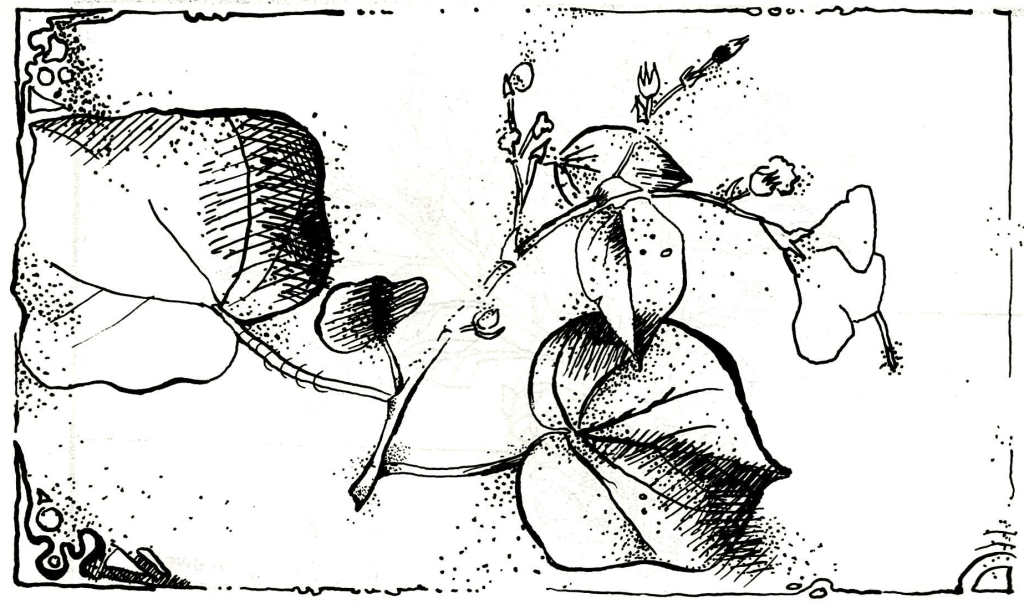
Este na tinanom gof meggai na siña matånme giya Guam. I mineddong-ña nai måtto ha’ chi-ña gi dosse esta kinse pi’e dinangkolo-ña. I ramås-ña man lólokka’ ya man á’hatme ya guaha na gof potpot ya esta ti siña maloffan i taotao pat gå’ga’ gi papå’-ña. I hagon-ña kulan korason ya finu gi sanhilo’ na bånda lao i sanpapa’ kulan guaha pilu-ña. I flores-ña, amariyu yanggen på’gu humuyong yan ogga’an, lao kume’ agaga’ yanggen esta pupuenge åntes di u poddong.
Meggai este na tinanom mana’setbebe-ña Guam. Åntes na tiempo mafa’tátali para manggodi guaka pat babui. I flores-ña guaha nai mafa’åmot. Guaha otro klåsen Hibiscus ni’ mafa’nána’an flores rosa. Este na klåsi matåtånme gi hatdín pat fi’on i gima’ siha. Ti mana’dådångkolo este na tinanom. Guaha na flores rosa manflóflores agaga’, å’paka’, amariyu, kulot di rosa yan kulot kåhet. Matåtånme i råmas pat mana’fan håhale’ gi airi yan matånom pi’ot yanggen para un na’fandanña i kulot.
ILANG-ILANG
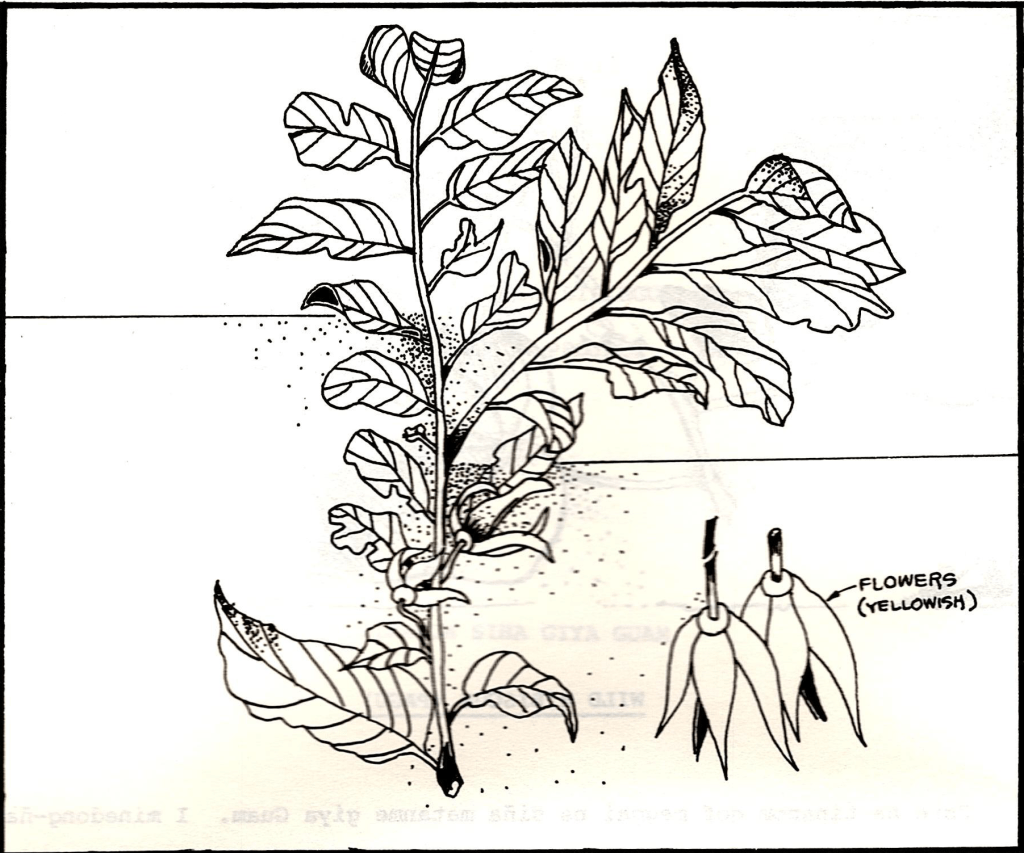
Este i ilang-ilang na tinanom gógof dångkolo trongko-ña. Guaha nai måtto ha’ gi kuarenta esta i sinkuenta pi’es linekkå’-ña. Gof paopao flores-ña pi’ot ha’ yanggen puenge. Ma’á’alok na buente ginen i Filipinas este na tinanom. Iya Filipinas, matåtånme este na trongko para makometsi’o. Ma’estítila i laña ni’ machúchule’ ginen i flores para paopao.
Guaha esta trongkon ilang-ilang Guam pi’ot gi sanhaya na bånda. I hagon-ña manakadidok ya man a’kalaye’ påpa’. I frutå-ña este na trongko, manrasísimu ya guaha na un potgådas inanako’-ña.
MANSANITA
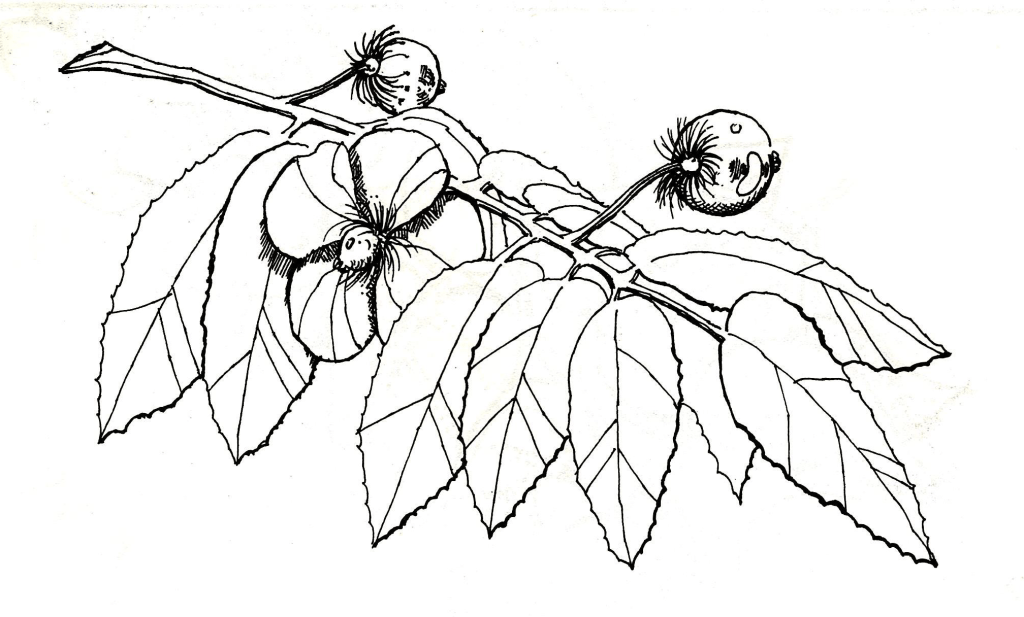
Este na tinanom i mafa’nána’an “Panama Cherry” pat mansanita gi fino’ Chamorro, mana’ hålom Guam ginen iya Amerika gi sanhaya. Gof chaddek mana’ mamta’ sa’ i pipitås-ña kinikilili taotao pat paluma esta i otro bånda ya gof chaddek dokko’.
Ti dumådångkolo este na trongkon håyu. Håssan ha dingo i trenta pi’e dinangkolo-ña lao gof åncho ya manakpapa’ ramås-ña. I hagon-ña ti gof dångkolo ya malapbla uriyå-ña. Manggof dikike’ flores-ña ya å’paka’ kulot-ña. Dikike’ lokkue’ i frutå-ña ya gof mames sabót-ña. Siña lokkue’ mafa’konsetba i fruta.
Gof bunitu lokkue’ mafa’ trongkon nuhong pi’ot ha’ na minaolek para muna’nuhong tinanom sa’ sumåsaga ha’ i hagon-ña, ridondo et åñu. Meggai na mansanita mandódokko’ gi halom tåno’ pat i sulåt ni’ ti manma’ú’usa Hagåtña. Meggai lokkue’ giya Tomhom gi fi’on i mandångkolo na Hotel.
PUTI TAI NOBI’O

I flores Guam, i Bougainvilla, mafa’nána’an gi fino’ Chamorro, “puti tai nobi’o”. Guaha diferentes kulot ni’ este na flores. Si Louis De Bougainvilla, (1729-1811) Franses este na taotao, ha diskubre giya Rio de Janeiro, Brazil, gi sanhaya giya Amerika. Mana’fatto giya Guam buente ginen Hawaii gi mit nuebe si’entos dies na såkkan.
Este na tinanom dådångkolo na trongko, lao kumukunanaf ramås-ña. I flores-ña tres ohas ya ha tótoktok tres na fina’anåkko’ gi tallo’. Ti manónokcha’ este na tinanom. Mana’låla’la’ ni’ ma’utot i råmas ya matånme pat siña lokkue’ mabalutan ni’ gunot niyok pat i plastik ya mana’fanhåle gi råmas. Guaha na tinanom puti tai nobi’o guaha dos kulot gi unu ha’ na råmas. Bula puti tai nobi’o giya Guam gi oriyan guma’taotao siha. Bula lokkue’ gi fi’on i Plåsa de España giya Hagatña.
IFIT
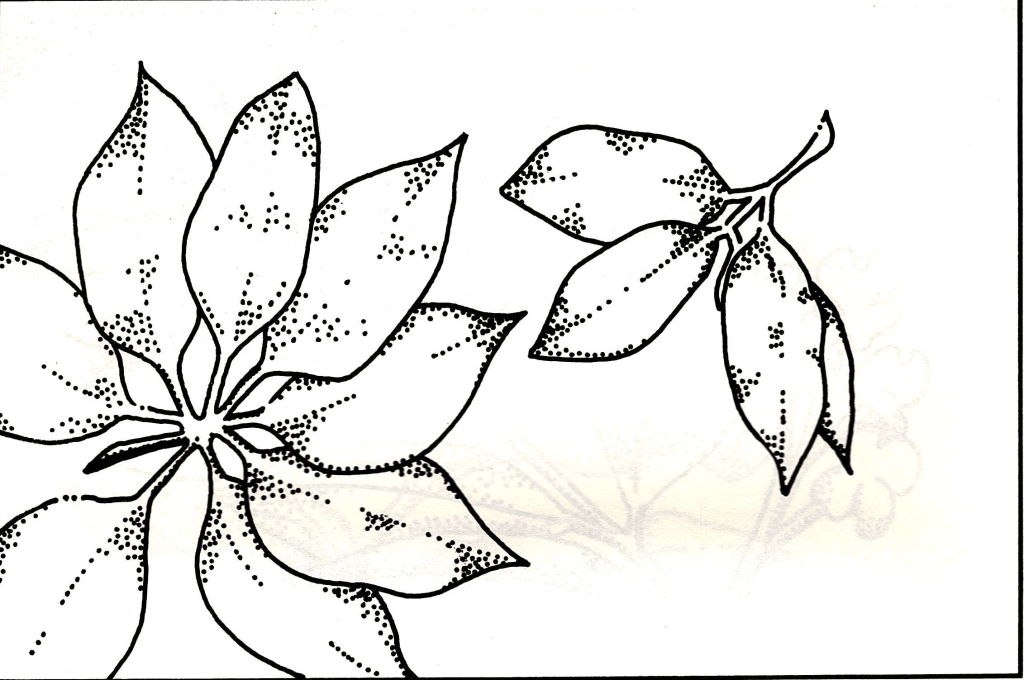
Este na trongkon håyu mafa’nána’an “Intsia Bijuga” lao i Chamorro mafa’nána’an “ifit”. Este unu gi tinanom ni’ hagas ha’ Guam. Gof meggai este na trongko åntes di i gera pi’ot ha’ gi sanlagu na bånda giya Guam annai ka’unnai i edda’ yan yånu na lugåt. Esta ti gof meggai este na tinanom fuera di i masodda’ giya Tarague Beach. I dopble na hagon gof betde ya i flores-ña gof chomchom, ya kada unu guaha kuatro ohås-ña yan unu na å’paka’ yan kulot de Rosa na ohas. Gof potput i baina-ña ya kalan kuero. Inannåko’-ña kuatro putgådas esta i dies putgådas ya guaha pipitås-ña tres pat mas di tres na manaridondo.
Gof maolek este na trongkon håyu para mafa’håyun guma’ gi åntes na tiempo ya gof mahetok maolek para tråstes hålom guma’ yan para guma’ lokkue’.
Plants on Guam
Written by Carmen C. Blas
Illustrated by Lita Payne and Richard Duke
Wild Hibiscus
A lot of people can plant this plant on Guam. Its size reaches its limit at twelve to fifteen feet in height. Its branches grow tall/long and they intertwine with each other and sometimes they are very dense until people or animals cannot pass underneath it. It’s leaves are like a heart and smooth on the top side but the bottom is as though it has hair. Its flowers are yellow when they first come out with the morning, but they start to turn red when it’s already evening before they fall down.
This plant has many uses on Guam. In old times, it was made into rope for tying up cows or pigs. Its flowers were sometimes made into medicine. There is another kind of Hibiscus which is called flores rosa. This type is planted in the garden next to the houses. This plant is not made to be large. Sometimes the flores rosa blooms red, white, yellow, pink, and orange. The branch is planted or rooted in the air and planted, especially when you will combine the colors.
Ylang-Ylang
This, the ylang-ylang plant is a very large tree. Sometimes it does reach forty to fifty feet in its height. Its flowers are very fragrant, especially when it’s night. It is said that this plant is probably from the Philippines. In the Philippines, this tree is planted for commerce. The oil which is taken from the flowers is distilled for perfume.
There is already a Guam ylang-ylang tree, especially on the southern side. Its leaves are sharp and they hang down. The fruit of this tree clusters, and some times they are one inch long.
Panama Cherry
This plant, the one called “Panama Cherry” or mansanita in the Chamorro language, was brought into Guam from South America. It propogates very quickly because its seeds are carried by people or birds to the other side, and it sprouts very quickly.
This tree does not get big. It’s rare that it passes thirty feet in its size, but it is very wide and its branches are low. Its leaves are not very large and its edges are scalloped. Its flowers are very small and the color is white. Its fruit is also small and the flavor is very sweet. The fruit can also be made into preserves.
It’s also very beautiful/nice to be made into a shade tree, it’s especially good for shading plants because its leaves just stay year-round. Many Panama Cherry plants grow in the jungle or the places which are not used in Hagåtña. There are also many in Tumon next to the big hotel.
Bougainvilla
The flower of Guam, the Bougainvilla, is called in the Chamorro language “it hurts to not have a sweetheart”. There are different colors of this flower. Louis De Bougainvilla (1729-1811), this man was French, he discovered it in Rio de Janeiro, Brazil, in South America. It was brought to Guam probably from Hawai’i in the year 1910.
This plant is a really big tree, but it has creeping branches. Its flowers are three leaves and it hugs three long things in the middle. This plant does not fruit. They are cultivated by the branch being cut and planted, or it can also be wrapped with the coconut fiber or plastic and made to root in the branch. Sometimes bouganvilla plants have two colors on just one branch. There are many bouganvillas on Guam around people’s houses. There are also a lot next to the Spanish Plaza in Hagåtña.
Pacific Teak or Pacific Mahogany
This tree is called “Intsia Bijuga”, but the Chamorro people call it “ifit.” This is one of the plants which has been on Guam for a long time. There were a great many of these trees before the war, especially on the northern side on Guam where the soil is sandy and the place is flat. There are already not very many of these plants, other than what is found on Tarague Beach. The folded leaves are very green, and its flowers are very full/dense, and for every one it has four leaves, with one white and pink leaf. Its pods are very thick and like leather. Its length is four to ten inches, and it has three or more round seeds.
This tree is very good to be used as timber/wood for houses in the old times and it is very hard, good for things inside the house and for the house as well.
Source
Blas, Carmen C. (1977). Tinanom Siha Giya Guam. [PDF]. https://airtable.com/appU43QeD409YS6Hl/shrXhl6F1kRn9xx1H/tblQeLirqavda9h6P/viwh0oCoEpAZEH4XG/rec4dVf2XYbOLKu8x/fldWSwclEvY9lGVlu/attqxNZxSAfTCc3I5?blocks=hide
 Lengguahi-ta