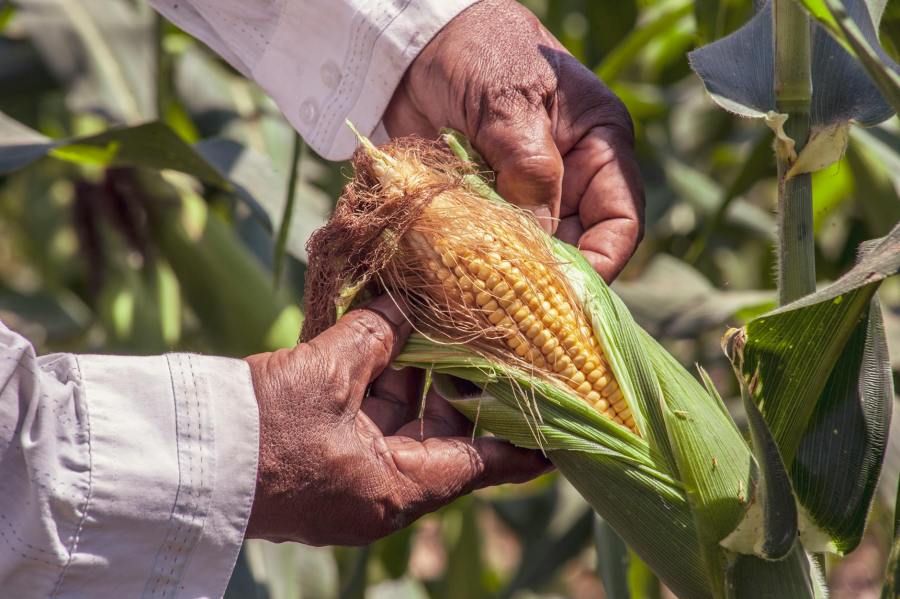
Corn is also a traditional staple of Chamorro households, brought to our islands from Mexico. In this post, we will read a short selection about corn in the Mariana Islands and four recipes for tortillas, pudding, porridge, and corn broth. This selection comes from the book Manmannge’ Na Nengkanno’ I Manchamorro Yan Taimanu Manmafa’tinas-niha written by Carmen C. Blas, which I found in the UOG Archives and Digital Collections website. This post includes the Chamorro text, an English translation, and a Chamorro audio narration by Jay Che’le. Happy reading!
MAI’ES (CORN)
I mai’es na tinanom gof prisisu para i lina’la’ i Chamorro gi tiempon gera.
Gof meggai na lancheru manmanånanom meggai na mai’es åntes di i gera. Este i mai’es na nengkånno’, siña mafa’titiyas, atmåyas, kalamai yan atuli. Parehu ha’ este i mai’es para i Chamorro yan i pigas para i Japanese yan i Chinu i batåtas yan i pån para i Amerikanu yan i espageti para i Taliano. Matåtanme este i mai’es dos biahi gi sakkan ni Chamorro para u hinago’ desde i unu na kosecha asta i otro kosecha. Guaha siha lancheru ni manlágefsaga, manggai aladu yan manggai ga’ karabao para u mahåla i aladu. Meggai-ña i lancheros ni manmangúaguassan ni fusiños.
Matåtanme i mai’es gi Abrit pat Mayu na mes, para i primet kosecha yan lokkue’ gi Septembre pat Oktubre na mes para i sigundo kosecha. Såsakkan este i mai’es gi dos meses i media na tiempo. Yanggen såkkan, mako’ko’. Mana’sahnge i båba yan i maolek. Este i maolek para matåla’ ya mana’ånglo’ para makånno’, på’go i båba para na’gå’ga’. Yanggen esta gof anglo’ i mai’es, masini gi gasgas na tangke ya mapo’lo gi annai ti u fotgon, para makånno’.
Este i mai’es na nengkånno’, machule’ hålom Guam ginen Mexico ni i ManEspañot.
TITIYAS
Fine’nana mana’lågu i hanom åfok, yanggen loklok, manå’yi ni mai’es ya matampe. Yanggen para un guahi i mai’es, chagi nåya kao esta siña un na’hånao i lassas i mai’es. Mafa’nana’an este i manå’yi åfok na mai’es, “eskomi”. Yanggen esta siña, hotyat i eskomi asta ki sen gasgas. Pues mulinu gi mulinon mai’es ha’. Na’finu para titiyas. Liti i minilinu yan hånom ya un fa’bolabola. Pada’ gi maha’mi na hagon chotda ya un na’lågu gi kemat. Este mafa’nana’an “titiyas”.
Taiguini ha’ i Meksikånos yanggen mamada’ titiyas lao ma na’dikike’ ha’. I Chamorro yan manmámada’, gógof dångkolo. Yanggen ti payon i palao’an mamada’, guaha nai ma’pe’, lao gof meggai manggof maolek manmámada’.
ATULI
Chule’ este i minilinon eskomi ya un liti yan hånom. Katkula kuanto na minilinu para u nina’te’ok i kantidan atuli ni para mana’lågu. Na’lågu ya sigi ha’ lumehgua’ ni kucharón. Yanggen gof te’ok, nå’yi didide’ hånom. Yanggen asta kumeke’loklok, nå’yi ni lechen niyok ya un guahi. Gof maguaiya este i atuli ni manåmko’ lao esta ti mafa’títinas dimasiao sa’ gof ná’yommok.
ATMÅYAS
Yanggen esta gåsgas i eskomi, mulinu ya un na’bastos. Na’lågu yan hånom asta ki måsa pues leche niyok. Gof månnge’ manå’yi asukat pues na magimen. Åntes na tiempo, gof maolek este i atmåyas mamoksai neni ni asta chumóchocho.
Ti ma gof tungo’ este na nengkånno’ i atmåyas ni manhoben na Chamorro sa’ esta ma’angóngoku ha’ i cereal yan i pån ni mafåfahan ni taotao.
KALAMAI
Chule’ i minilinon eskomi maseha dos bolabola yan un liti yan lechen niyok. Kula i liniti maseha kuanto biahi asta ki gof finu. Pues na’lågu ya un sigi ha’ lumehgua’ sa’ u fama’trosu. Na’mames månu i ya-mu na minames, yanggen malago’ hao un nå’yi kulot, usa ha’ i para muna’kulot nengkånno’. Templa månu nai maolek tine’ok-ña. Yanggen dimasiao te’ok, nå’yi ta’lo lechen niyok, yanggen ti gof te’ok, nå’yi liniten ginilek. Yanggen loklok, nå’yi gi ancho na låtan pån ya un na’måpao. Pues chåchak ya ayu nai makånno’. Gof månnge’ este i kalamai.
CORN
The corn plan is a very essential for the life of the Chamorros in war time.
A great many ranchers were planting a lot of corn before the war. This food, corn, it can be made into tortillas, corn porridge, corn pudding and corn broth. This corn for the Chamorros is the same as the rice for the Japanese and the Chinese, and potatoes and bread for the Americans, and spaghetti for the Italians. This corn is planted two times a year by the Chamorros to reach from one harvest until the next harvest. There are those ranchers who are wealthier, who have a plow and water buffalo to pull the plow. More often, the ranchers clear the land with a hoe.
The corn is planted in April or May, for the first harvest and also in September or October for the second harvest. The corn is ready to be harvested in two and a half months. If it is ready to be harvested, it is harvested. The bad ones and the good ones are separated. The good ones go to be hung and dried to be eaten, now the bad ones are for animal food. When the corn is already very dry, it is placed in a clean container and it is put in a place where it won’t get wet, for it to be eaten.
This food, corn, it was brought into Guam from Mexico by the Spanish.
TORTILLAS
First, lime water is cooked, when it’s boiling, corn is added to it, and it is covered. When you are going to remove the corn from the heat, first try if you can already get rid of the corn skin. This corn with added lime is called “eskomi.” If it can already be done, scrub the eskomi until it is very clean. Then just grind it in the corn grinder. Make it fine for tortillas. Stir the ground corn with water, and make it into balls. Pat it in the heated, pliant chotda leaf, and cook it on the flat metal griddle. This is called tortillas.
The Mexicans do it just like this when they are forming tortillas, but they make them small. When the Chamorros pat them out, they make them very big. If the woman is not used to forming tortillas, sometimes it will be split, but a great many are very good at forming them.
BROTH MADE WITH CORN
Take this ground soaked corn, and stir it with water. Calculate the amount of ground corn that will thicken the large amount of broth which will be cooked. Cook it and continue to stir it with a large spoon. If it is very thick, add a little bit of water. When it is already about to boil, add the coconut milk and remove it from the heat. This corn broth is very loved by the elders, but it is already not being made very much because it’s very fattening.
CORN PORRIDGE
If the soaked corn is already clean, grind it so that it’s coarse. Cook it with water until it is ready, then add coconut milk. It is very delicious if sugar is added and then it is drunk. In old times, this corn porridge was very good for nourishing a baby who already eats.
The young Chamorros don’t really know this food, corn porridge, because they are already just depending upon the cereal and the bread that is bought by people.
CORN PUDDING
Take the ground soaked corn about two balls and stir it with with coconut milk. Strain the mixture any number of times until it is very fine. Then cook it and keep stirring it because it will make clumps. Make it sweet to the sweetness you like, if you want to add color, just use food coloring (that which is for making food colored). Mix it to a good thickness. If it is too thick, add coconut milk again, and if it is not very thick, add the ground corn mixture. When it boils, add it into a wide bread pan and cool it down. Then cut it and that is when it is eaten. This corn pudding is very delicious.
References
Carmen C. Blas, “Manmannge’ Na Nengkanno’ I Manchamorro Yan Taimanu Manmafa’tinas-niha,” University of Guam Digital Archives and Exhibitions, accessed January 16, 2025, https://uogguafak.omeka.net/items/show/548.
 Lengguahi-ta