This lesson is part of the Beginner Chamorro learning path.
In this post, we’ll continue learning Chamorro patterns for talking about what belongs to us. This time, we’ll focus on how to talk about food that belongs to you or someone else—phrases like “my breadfruit” or “your apple.” Chamorro uses special words in these kinds of possessive phrases, especially when talking about food, drinks, and animals. In this lesson, we’ll start with the food pattern and practice using it in clear, everyday examples to help it feel natural. Happy studying!
Contents
- Introduction to Chamorro Classifiers
- The Food Classifier: na’
- How to Say “My Breadfruit”
- How to Say “Juan’s Food”
- How to Say “The Woman’s Food”
- How to Say “The Women’s Food”
- How to Say “Chamorro Food”
- How to Say “Pet Food”
- Wrapping Up: Keep Practicing on Quizlet!
- ➡️ Keep Learning! Continue to the Next Lesson
- Documentation & Further Study
Introduction to Chamorro Classifiers
In Chamorro, classifiers are specific words that must be used with our possessive pronouns in order to indicate possession of certain types of objects. This means that for some words, instead of attaching the possessive pronoun directly to the word, we must instead attach the possessive pronoun to the classifier first. Classifiers we can use in Chamorro are:
- na’ (for food)
- gimen (for drinks)
- ga’ (for animals)
- iyo- / iyon- (general usage)
In this post we will learn how to use the classifier na’ which is used for making possessive statements about food.
The Food Classifier: na’
The food classifier na’ is what we use when we want to make possessive statements about food. In its most basic form, we can just attach a possessive pronoun to na’, as shown in this structure:
| na’ + -possessive pronoun |
When we use this basic structure, we are making phrases such as “my food”; “your food”; “their food.” Let’s practice using the food classifier with all the possessive pronouns:
| Chamoru | English |
|---|---|
| i na’-hu | my food |
| i na’-mu | your food |
| i na’-ña | her/his/its food |
| i na’-ta | our food |
| i na’-miyu | your food |
| i na’-måmi | our food |
| i na’-ñiha | their food |
Now we can use these new words in complete sentences. Here are some examples, using beginner sentence structures:
| Chamoru | English |
|---|---|
| Mångge i na’-hu? | Where is my food? |
| Hu fa’tinas i na’-mu. | I made your food. |
| Kao un chule’ i na’-ña? | Did you take her food? |
| Hu fåhån i na’-ta. | I bought our food. |
| Para u tåña’ i na’-miyu. | She will try your food. |
| Månnge’ i na’-måmi. | Our food is delicious. |
| Ya-ña i na’-ñiha. | He likes their food. |
| Enague’ na’-mu.1 | There is your food. / That’s what you get.1 |
| Kao para un fa’tinas i na’-ta? | Are you going to make our food? |
| Ha kånno’ i na’-mu. | He ate your food. |
1 Enague’ na’-mu: This is a phrase that literally translates to “there is your food” but it is also a Chamorro expression referring to the result of your actions. The English equivalent would be, “That’s what you get.” So be careful if you want to use this phrase because of the cultural connotation. We also see a form of this expression used in the song Lalåhi by Pacific Cool, which is great to listen to for hearing this expression used in context.
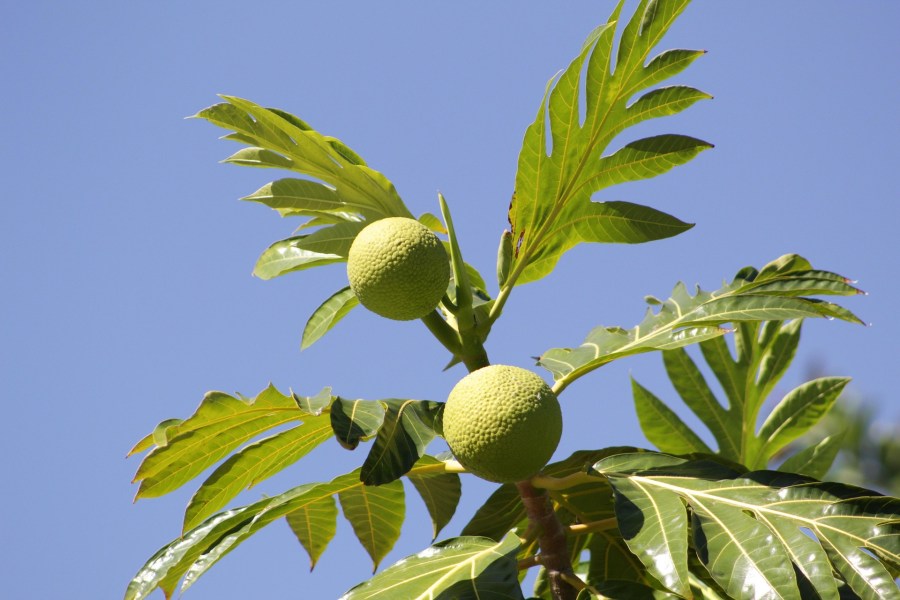
How to Say “My Breadfruit”
Now that we’ve practiced the foundational structure, let’s make possessive statements about specific foods, such as “my breadfruit” or “your dessert”. To do this, we simply add the food after our possessive statement with the classifier. We can follow this structure:
| [na’ + -possessive pronoun] + food |
Now let’s practice this basic structure with the word lemmai to get used to the form:
| Chamoru | English |
|---|---|
| i na’-hu lemmai | my breadfruit |
| i na’-mu lemmai | your breadfruit |
| i na’-ña lemmai | his/her/its breadfruit |
| i na’-ta lemmai | our breadfruit |
| i na’-miyu lemmai | your breadfruit |
| i na’-måmi lemmai | our breadfruit |
| i na’-ñiha lemmai | their breadfruit |
Now that we’ve practiced the basic pattern, let’s try this structure with different types of food:
| Chamoru | English |
|---|---|
| i na’-hu tinekcha’ | my fruit |
| i na’-mu inafuyot | your sandwich |
| i na’-ña kåddo’ | her/his/its soup |
| i na’-ta fina’mames | our dessert |
| i na’-miyu hineksa’ | your cooked rice |
| i na’-måmi chukulåti | our chocolate |
| i na’-ñiha alåguan | their porridge |
Now let’s practice using those words in full sentences:
| Chamoru | English |
|---|---|
| Un chule’ i na’-hu tinekcha’. | You took my fruit. |
| Kao siña hu kånno’ i na’-mu inafuyot? | Can I eat your sandwich? |
| Kao un fåhan i na’-ña kåddo’? | Did you buy her/his/its soup? |
| Ma tåña i na’-ta fina’mames | They tasted our dessert. |
| Ha yute’ i na’-miyu hineksa’. | She threw away your cooked rice. |
| Maloffan mames i na’-måmi chukulåti.2 | Our chocolate is too sweet.2 |
| Mampos maipe i na’-ñiha alåguan. | Their porridge is too hot. |
2 maloffan mames: In this construction, I am using the word maloffan in the same way as other intensifiers, such as the intensifier gof. In English we can interpret maloffan mames as “very sweet” but a literal translation can be understood as “passed sweet” which is essentially the same thing; if it has passed being sweet, then it is too sweet. We can also use maloffan with other descriptive words too. A common one I have heard and read from Ray Barcinas (taotao Luta) in his speech and writing is maloffan masåmai which is a way of saying “very beautiful.”
How to Say “Juan’s Food”
Now let’s learn how to make possessive statements about a specific person’s food to say things like “Juan’s food”, “Maria’s food”, or “Lola’s food.” For this structure, we use na’-ña for everything, and then follow it with si and the person’s name:
| na’-ña + si + person’s name |
Let’s practice this structure with a few different names:
| Chamoru | English |
|---|---|
| i na’-ña si Juan | Juan’s food |
| i na’-ña si Lola | Lola’s food |
| i na’-ña si Maria | Maria’s food |
| i na’-ña si Alicia | Alicia’s food |
| i na’-ña si Jesus | Jesus’s food |
| i na’-ña si Dabit | David’s food |
| i na’-ña si Lupe’ | Chilang’s food |
| i na’-ña si Manet | Manuel’s food |
| i na’-ña si Måme’ | Carmen’s food |
| i na’-ña si Ramón | Raymond’s food |
Now let’s practice using these in full sentences. We will take from some of the sentences used previously, but feel free to also make your own sentences for additional practice:
| Chamoru | English |
|---|---|
| Mångge i na’-ña si Juan? | Where is Juan’s food? |
| Hu tåña i na’-ña si Lola. | I tasted Lola’s food. |
| Kao un chule’ i na’-ña si Maria? | Did you take Maria’s food? |
| Hu fåhån i na’-ña si Alicia. | I bought Alicia’s food. |
| Manengheng i na’-ña si Jesus. | Jesus’s food is cold. |
| Yute’ i na’-ña si Dabit. | Throw David’s food away. |
| Ya-ña i na’-ña si Lupe’. | Lupe’ likes her food. |
| Kao ya-ña i na’-ña si Manet? | Does Manuel like his food? |
| Mala’et i na’-ña si Måme’. | Carmen’s food is bitter. |
| Kao ma kånno’ i na’-ña si Ramón? | Did they eat Raymond’s food? |
We can also state specific foods, such as “Juan’s rice” or “Maria’s sandwich.” We just add the noun after the possessive pronoun:
| na’-ña + noun + si + person’s name |
Let’s practice the sentences above, but with specific foods:
| Chamoru | English |
|---|---|
| Mångge i na’-ña hineksa’ si Juan? | Where is Juan’s rice? |
| Hu tåña i na’-ña titiyas si Lola. | I tasted Lola’s titiyas. |
| Kao un chule’ i na’-ña empanåda si Maria? | Did you take Maria’s empanåda? |
| Hu fåhån i na’-ña chandia si Alicia. | I bought Alicia’s watermelon. |
| Manengheng i na’-ña kåddo’ si Jesus. | Jesus’s soup is cold. |
| Yute’ i na’-ña latiya si Dabit. | Throw away David’s latiya. |
| Ya-ña i na’-ña kelaguen månnok si Lupe’. | Lupe’ likes her chicken kelaguen. |
| Kao ya-ña i na’-ña inafuyot si Manet? | Does Manuel like his sandwich. |
| Mala’et i na’-ña hineksa’ agaga’ si Måme’. | Carmen’s red rice is bitter. |
| Kao ma kånno’ i na’-ña niyok si Ramón? | Did they eat Raymond’s coconut? |
How to Say “The Woman’s Food”
In this next structure we will make phrases like “the woman’s food” or “the child’s food.” We use na’-ña and follow it with i + noun:
| na’-ña + i + noun |
Let’s practice with some different nouns:
| Chamorro | English |
|---|---|
| i na’-ña i palao’an | the woman’s food |
| i na’-ña i patgon | the child’s food |
| i na’-ña i neni | the baby’s food |
| i na’-ña i lahi | the man’s food |
| i na’-ña i fafa’cho’cho’ | the worker’s food |
How to Say “The Women’s Food”
If we want to make this plural to say things like “the women’s food” we can use na’-ñiha and then follow it with a plural noun, or use siha after the noun to make it plural:
| na’-ña + i + plural noun (or noun + siha) |
Let’s practice making these phrases:
| Chamorro | English |
|---|---|
| i na’-ñiha i famalao’an | the women’s food |
| i na’-ñiha i lalåhi | the men’s food |
| i na’-ñiha i famagu’on | the children’s food |
| i na’-ñiha i ga’lågu siha | the dogs’ food |
| i na’-ñiha i babui siha | the pigs’ food |
Now let’s practice using all of those words in complete sentences:
| Chamorro | English |
|---|---|
| Kao pika i na’-ñiha i famalao’an? | Is the women’s food spicy? |
| Ha fa’tinas i na’-ñiha i lalåhi. | He made the men’s food. |
| Ti mames i na’-ñiha i famagu’on. | The children’s food is not sweet. |
| Kao maolek i na’-ñiha i ga’lågu siha? | Is the dogs’ food good? |
| Mångge i na’-ñiha i babui siha? | Where is the pigs’ food? |
How to Say “Chamorro Food”
The cool thing about the food classifier is that we can use it with more than just possessive pronouns. We can also attach the names for different cultures to talk about cuisines from around the world. The basic structure we can use is as follows:
| na’ + Proper Noun |
To see how this structure can be used, look at some of the examples below where we are talking about foods from different cultures:
| Chamoru | English |
|---|---|
| i na’Chamoru | Chamorro food |
| i na’Hapones | Japanese food |
| i na’Amerikånu | American food |
| i na’Koreånu | Korean food |
| i na’Italiånu | Italian food |
And here are some example sentences that use the words from above:
| Chamoru | English |
|---|---|
| Sen mångnge’ i na’Chamoru. | Chamorro food is very delicious. |
| Ti malago’ yu’ na’Amerikånu. | I don’t want American food. |
| Kao malago’ hao na’Italiånu på’go na puengi? | Do you want Italian food tonight? |
| Ya-hu na’Hapones. | I like Japanese food. |
| Kao ya-mu na’Koreånu? | Do you like Korean food? |
How to Say “Pet Food”
We can also use the na’- classifier with other nouns to talk about other foods, such as “dog food”, “pig food”, “fish food”, etc. To use this structure, we just put the noun after the classifier na’-.
| na’ + noun |
Let’s make some examples with this new structure:
| Chamoru | English |
|---|---|
| i na’ga’lågu | dog food |
| i na’guihan | fish food |
| i na’babui | pig food |
| i na’katu | cat food |
Now let’s put these words into complete sentences:
| Chamoru | English |
|---|---|
| Kao un fåhån i na’ga’lågu? | Did you buy the dog food? |
| Hu fåhån i lachi na na’guihan. | I bought the wrong fish food. |
| Mångge i na’babui? | Where is the pig food? |
| Lachai esta i na’katu. | The cat food is already run out. |
📝Special Note About Meals: When it comes to certain Spanish loanwords such as åmotsa or sena, I’ve noticed that these don’t tend to use classifiers. Instead, speakers will attach possessive pronouns directly to these words, and say things like åmotsan-måmi or senan-måmi. But you may also read and hear things like na’ogga’an (breakfast) or na’talo’åni (lunch).
Wrapping Up: Keep Practicing on Quizlet!
In this lesson we have learned about the Food Classifier na’ and how it is used to make statements such as “my food”, “Juan’s food”, and “the woman’s food.” We even reviewed how it is used to talk about different types of cuisines and foods, such as “Chamorro food” or “cat food.”
If you want more practice with the drills and example sentences from this post, use this Quizlet Deck as a supplementary study tool. Make sure you can understand the Chamorro, and challenge yourself by translating the English back into Chamorro.
➡️ Keep Learning! Continue to the Next Lesson
Continue to the next lesson in the series, where you’ll learn Chamorro patterns and phrases for talking about your drinks.
Documentation & Further Study
References
Topping, D. M., & Dungca, B. C. Chamorro Reference Grammar (PALI Language Texts―Micronesia). University of Hawaii Press, 1973.
Topping, Donald M. Spoken Chamorro: With Grammatical Notes and Glossary (Second Edition). University of Hawaii Press, 1980.
Further Reading
Topping, D. M., & Dungca, B. C. “CLASSIFIERS.” In Chamorro Reference Grammar, 164-166. Honolulu: University of Hawaii Press, 1973.
Topping, D. M., & Dungca, B. C. “Possession with Classifiers.” In Chamorro Reference Grammar, 223-224. Honolulu: University of Hawaii Press, 1973.
Topping, D.M. “GRAMMAR NOTES.” In Spoken Chamorro: With Grammatical Notes and Glossary (Second Edition), 36-37. Honolulu: University of Hawaii Press, 1980.
 Lengguahi-ta
Pingback: Introduction to Possessive Pronouns in Chamorro – Lengguahi-ta
Pingback: Saying “My, Yours, Hers” – An Introduction to Possessive Pronouns in Chamorro – Lengguahi-ta
Pingback: How to Say “My Water” in Chamorro – Talking About Your Beverages – Lengguahi-ta