Here is a story from the Caroline Islands, retold in Chamorro by Dolores Marciano, about a child who goes on a couple of adventures to help the chief of his village. This post includes the Chamorro text, a Chamorro audio narration by Jay Che’le, and an English translation. Happy reading!
Estorian I Maolek Na Påtgon
Sinangan ta’lo as Dolores I. Marciano
Eståba un påtgon låhi gi sanhaya siha na påtte giya Karolinas. Este na påtgon sesso humånao ya pumeska gi tasi sa’ gof ya-ña gi tasi. Un diha gi annai humåhånao para i gima’-ñiha ginen i tasi, ha sodda’ un guihan ni gof dangkulo’ gi hilo’ i anglo’ na åcho’ na esta mamadédesi sa’ kumeke’måtai. I patgon yan i yo’åse’-ña ha konne’ i guihan ya ha sotta hålom gi tasi.
Ensigidas i guihan duru pumalapa gi halom hånom. I guihan ha atan hulo’ i patgon ya ilek-ña, “Chule’ un go’naf ginen i ge’naf-hu ya yanggen malago’ hao malak i papa’ tåsi, sangåni ha’ este i ge’naf ya siempre nina’libre hao guatu gi hinanao-mu.”
I patgon ha chule’ i ge’naf ya humånao para i gima’-ñiha. Gi annai måtto i patgon gi sengsong, ha sodda’ i magalåhen i tano’-ñiha na manggágagao misirikotdia nu i taotao-ña para u ma’ayuda.
“Pot fabot, yanggen siña en ayuda yu’ nu este i nisisidåd-hu. Guaha sumaki i asagua-hu ya makonne’ guatu asta i tasi. Bai hu promesa hamyo na i kumonne’ mågi i asagua-hu giya guahu bai hu nå’i bulan regålu. Håyi siña umayuda yu’ nu este na problema?” mámaisen i maga’låhi.
I taotao manmamatkíkilu ha’. Guaha nai mahungok na gi fondúdu gi tasi meggai siha na birak yan espiritu mañåsaga guihi na lugåt. Bonitu eyu na lugåt, lao tåya’ ni un taotao humåhånao para este, solo ha’ malingu pat sino måtmos. I espiritun i tasi guaha na manmañakki taotao siha ginen i tano’ ya makonne’ påpa’ asta i fondu gi tasi. Estague’ sineseden i asaguan i maga’låhi.
Gi annai tåya’ manó’oppe’, bumulontårio hulo’1 i patgon para guiya u ayuda i ma’gas-ñiha.
“Bai hu chagi todu i nina’siñå-hu ya bai hånao,” ilek-ña i patgon.
“Hånao ya bai nánangga hao yan i asagua-hu,” manoppe i maga’låhi.
Humånao i patgon para i lugåt annai uttimo mali’e’-ña i palao’an. Humålom i patgon gi halom tåsi ya ha sangåni i ge’naf, “Konne’ yu’ guatu gi lugåt annai gaige i asaguan i ma’gas.”
I ge’naf ha konne’ i patgon påpa’ asta i fondon i tasi. Ha li’e’ manbonitu siha na lugåt gi papa’ i tasi. Meggai gå’ga siha lini’e’-ña. Guaha birak ni gof dångkulo’ pachot-ña, atadok-ña yan gof ná’ma’ñao. Todu ayu i ti ha líli’e’ gi tano’ manggaige gi fondun i tasi. I gima’ siha gi fondon i tasi mansen bonitu. Purúru ha’ kuraling2 i uriya yan i gima’ siha manmafa’tinas ginen i kuraling lokkue’. Meggai flores yan tronko manlåla’la gi uriyan i kuraling siha na guma’.
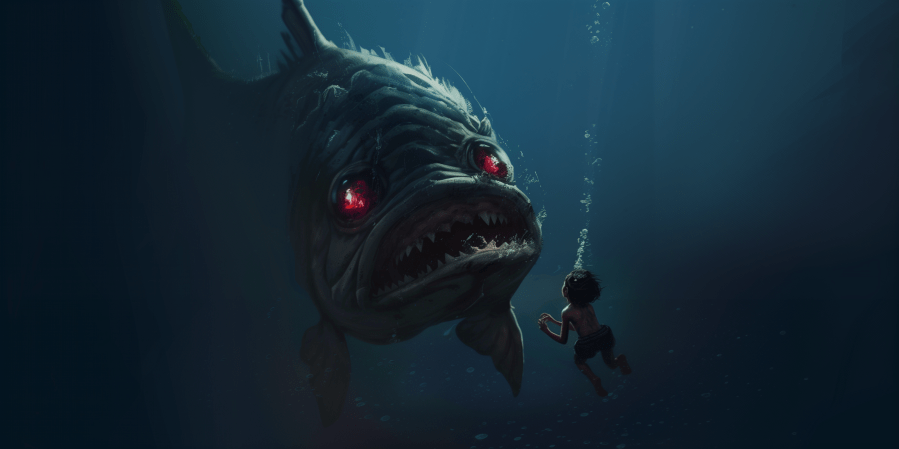
I patgon sigi humånao gi fondun i tasi yan i ge’naf gi kannai-ña, ha alíligao i palao’an lao ti ha sósodda’. Ti apmam måtto gi un dångkulo’ na guihan ni sen ná’ma’ñao. Este na guihan gof åttilong yan sen dångkulo’ i pachot-ña yan i nifen-ña. Kulan ha’ i chåchak ilektrisida i nifen-ña ni malaktos-ña. I atadok-ña mampos ma’lak ni agagå’-ña yan i dinangkulo’-ña. Sumísiha i guihan yan i palao’an.
“Måtto yu’ para bai hu konne’ hao tåtte,” ilek-ña i patgon nu i palao’an. “Chule’ i paño ya un tåmpe i matå-ña i guihan para ti u tungo’ yan u li’e’ na para un hånao.”
Ha cho’gue i palao’an i tinago’ i patgon. Ma bira siha tåtte asta i sengsong. Eståba i maga’låhi na mannánangga. Annai ha li’e’ i asagua-ña, ha toktok ni minagof-ña. Ha nå’i lokkue’ i patgon meggai nengkånno’, guma’ ni sen maolek yan galaide’ para u na’sésetbe yanggen malago’ ma’udai yan meggai siha na rigålu para i patgon.
Un diha gi annai mamómokkat i patgon gi kanton tåsi para u hånao ya u peska, mañodda’ paluma. Esta i paluma todu gåddon ni hagon niyok ni poddong gi hilo’ cha’guan. I paluma duru kumåti, “Pot fabot, na’libre yu’, sotta yu’ ginen este i gaddon-hu.”
I patgon dumilok påpa’ ya ha pula’ i gaddon i paluma ya ha sotta hulo’ gi hilo’ airi. I paluma gumupu hulo’ gi hilo’ i ramas na tronkon håyu ni hihot annai tumótohge i patgon.
“Bokbok un pulu ginen i papå-ku ya hadai na un yute’. Yanggen malago’ hao gumupu maseha månu na lugåt ni minalago’-mu, faisen ha’ i pilu-hu ya siempre ha konne’ hao,” ilek-ña i paluma guatu gi patgon.
Ha chule’ i patgon i pilon i paluma.
Ti apmam na tiempo maloffan, mumalångu i asaguan i maga’låhi. Tåya’ ni háfafa ha’ na åmot gi tano’ siña muna’homlo’ i palao’an. I amot ni siña muna’libre i palao’an gaige gi langet. Un espisiat na hånom este, ya siña ha åmte maseha håyi na taotao ni kuméke’måtai pat sino yanggen esta måtai i taotao ya un pálala’i nu este na åmot, siempre u lå’la’ ta’lo.
Manggagao ta’lo i ma’gas misirikotdia para u ma’ayuda nu i taotao-ña. “Bai hu promesa i petsona ni umayuda yu’ na bai hu na’huyong må’gas este na tåno’ ya u tahgui yu’ guini gi puesto-ku.”
I taotao guihi na isla ma yengyong i ilon-ñiha. “Ti pumusipble enao i un gágagao ham. Tåya’ ni un taotao siña humånao hulo’ gi langet. Ni un taotao siña u gupu hulo’ gi langet.”
I patgon ha hasso i fino’ i paluma ya ilek-ña, “Bai hu ayuda hao ni nisisidåd-mu.”
Ti apmam måtto mågi i paluma ya ha na’chetton un pilu-ña gi papa’ i kannai patgon. Åntes ha’ di u gupu i patgon ha chule’ lokkue’ un dångkulo’ na hågon suni. Gumupu hulo’ i patgon gi hilo’ i aire. Sigi gumupu ya gi kannai-ña ha mantíetieni lokkue’ i hagon suni. Måtto gi un lugåt annai guaha un fina’såddok ya i hanóm-ña mampos gåsgås, klåru yan manengheng. Ha sine i hanom gi halom i hagon suni ya ha bira gue’ tåtte gi tano’. Annai måtto tåtte gi gima’ i ma’gas, ensigidas manå’i’ i palao’an ni hanom.
Humuyong i palao’an sumén bråbu yan homlo’. I ma’gas ha na’huyong i patgon mumaga’låhi guini na isla. Ha preba na siña ha’ ha setbe i taotao este na lugåt yanggen håfa nisisidåd-ñiha maseha håfa na problema.
The Story of the Good Child
Retold by Dolores Marciano
There was a young boy in the eastern parts of the Caroline Islands. This child often went and fished in the ocean because he liked it in the ocean. One day when he was going to their house from the sea, he found a fish that was very big on top of a dry rock that was already suffering because it was about to die. The child, in his mercy, took the fish and released it into the ocean.
The fish instantly splashed hard inside of the water. The fish looked up at the child and said, “Take a scale from my scales and if you want to go to the bottom of the ocean, just tell this scale and surely it will make you free (to go where you want) in your journey.
The child took the scale and went to their house. When the child arrived in the village, he found the chief of their land asking for mercy from his people so that he will be helped.
“Please, if you can all help me with my need. Something stole my wife, and she was taken there to the ocean. I will promise you that the one who brings my wife to me, I will give him many gifts. Who can help me with this problem?” the chief asked.
The people were just silent. Sometimes it was heard that at the bottom of the ocean there were many ghosts and spirits living in that place. That place was very beautiful, but nobody goes to this place, only when they get lost or drown. The spirit of the ocean sometimes steals people from the land and they are taken down to the bottom of the sea. This is what happened to the wife of the chief.
When nobody was answering, the child volunteered himself to help their chief.
“I will try everything in my power and I will go,” the child said.
“Go and I will be waiting for you and my wife,” the chief answered.
The child went to the place where the woman was last seen. The child went into the ocean and told the scale, “Take me there to the place where the wife of the chief is.”
The scale took the child down to the bottom of the sea. He saw beautiful places at the bottom of the ocean. He saw many animals. There was a ghost with a very big mouth, and eyeballs, and it was very frightening. All of those things that he didn’t see on land were at the bottom of the ocean. The houses at the bottom of the ocean were very beautiful. It was entirely acroporid coral in the surroundings and the houses were made from acroporid corall too. Many flowers and trees were living in the surrounds of the acroporid coral houses.
The child kept going (around) on the bottom of the ocean with the scale in his hand, he was looking for the woman but he was not finding her. Soon, he came to a big fish that was very frightening. This fish was very black, and its mouth and teeth were very big. Its teeth were like electric saws in their sharpness. Its eyes were very bright in their redness and bigness. The woman and the fish were together.
“I have come to take you back,” the child said to the woman. Take the handkerchief and you will cover the eyes of the fish so it will not know or see that you are going to leave.”
The woman did what the child ordered. They turned back to the village. The chief had been waiting. When he saw his wife, he hugged her in his joy. He also gave the child a lot of food, a house that was very good, and a canoe for him to be using if he wanted to ride it, and many gifts for the child.
One day when the child was walking on the beach to go and fish, he found a bird. The bird had already been all tangled up by the coconut leaves that had fallen on top of the grass. The bird kept crying, “Please, free me, release me from my entanglement.”
The child bent down and he removed the entanglement of the bird and released him up into the air. The bird flew up onto the branch of the tree which was next to where the child was standing.
“Pluck a feather from my wing and be careful lest you throw it away. If you want to fly to any place you desire, just ask my feather and I will definitely take you,” the bird said to the child.
The child took the feather of the bird.
Not much time had passed, and the wife of the chief became ill. There was no medicine, absolutely none, in the land that could heal the woman. The medicine which could deliver the woman was in the heavens. This was a special water, and it can heal whomever was about to die, or else if the person had already died and you smeared them with this medicine, they would surely live again.
The chief asked again for mercy, to be helped by his people. “I promise the person who helps me that I will make them the chief of this land, and they will take my place here, in my position.”
The people on that island shook their heads. “That which you are asking of us is not possible. There is nobody, not a single person who can go up to the heavens. Not a single person can fly up to the heavens.”
The child remembered the words of the bird and said, “I will help you with what you need.”
Soon the bird came to him and he stuck one of his feathers on the back of the child’s hand. Right before he was going to fly, the child also took a big taro leaf. The child flew up into the air. He continued to fly and in his hand, he was also holding the taro leaf. He arrived at a place where there was something like a river, and its water was very clean, clear and cold. He placed the water inside the taro leaf and he turned back to the land. When he arrived back at the house of the chief, the woman was immediately given the water.
It came to be that the woman was extremely healthy and recovered. The chief made the child become the chief of this island. He had really proved that he could serve the people of this land with whatever they needed, whatever the problem.
Notes
1 bumulontårio hulo’: One of our aunties in our morning practice group told us that this. phrase can be translated to “signed up for.” In the context of the story, the child signed up to help the chief. ( back to text )
2 kuraling: This is a specific type of coral. The generic name is Acroporid coral, and the scientific name is Acropora globiceps. I couldn’t find this in my dictionaries, but I found it in a management plan for the Mariana Trench Marine National Monument (pg. 113). ( back to text )
References
Marciano, Dolores. 1975. “I Estorian I Maolek na Patgon.” PDF. In ESTORIA SIHA GI FINO’ CHAMORRO, 51-59. Kiu Press. https://www.kpvcollection.com/kpv-collection.html
 Lengguahi-ta