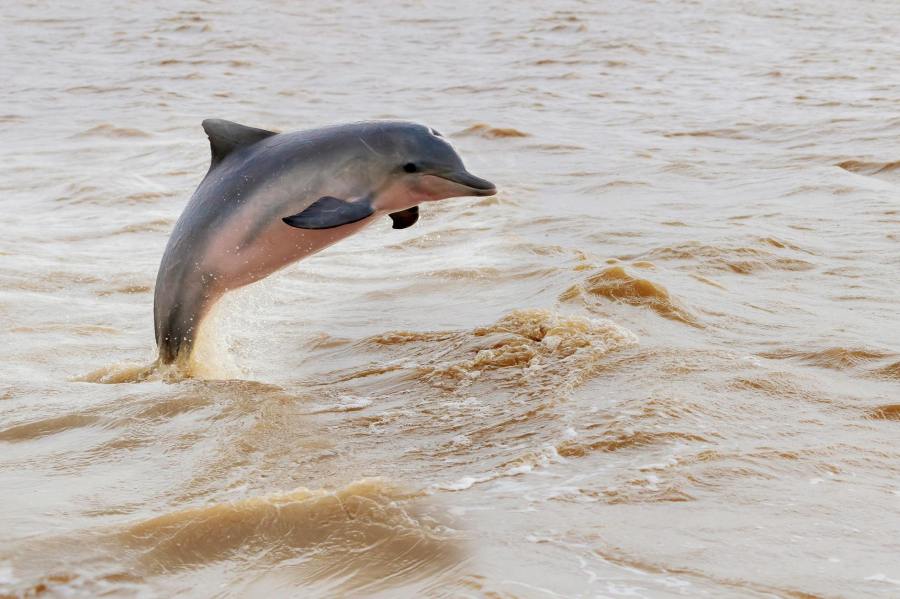
Here is a cute story about how two children befriend a dolphin, written by Dolores Marciano. This post includes the Chamorro text, an audio narration in Chamorro by Jay Che’le, and an English translation. Happy reading!
I Tuninos Yan I Dos Påtgon
Tinige’ as Dolores Marciano
Maseha månu hao guatu giya Marianas, siempre un komprende na masen respetao este i tuninos na gå’ga’. Masen hongge lokkue’ na gof ayudånte este siha na klåsen gå’ga’ para i marineru, piot para i peskadot siha ni manhinasa gi tasi. Siha munånå’i i peskadot inangoku yan siningon para u fanggai komfiansia giya siha mismo gi lina’la’-ñiha. Este na estoria pot i tuninos yan i dos na påtgon palao’an.
Gof fresko guihi na talo’åni. Klåru i ininan atdao lao ti maipe i ininå-ña. Eståba si Teresita na ha chuchule’ i platon bukåyu para i dos hagå-ña i humugågåndo gi inai. Gaige i dos påtgon na mama’titinas palåsyo ginen i hanom tåsi yan i inai gi kanton tåsi. Ti ma hungok annai mamomokkat mågi si nanan-ñiha. Gof bunitu i tasi sa’ klåru yan sen asut i kulot-ña. Gof mångnge’ umo’mak guini gi halom tåsi.
“Ei! Na buniniton palåsyo ennao i en fa’titinas,” ilek-ña si nana.
“Nan, sa’ ti in siente kao måtto hao. Kao bukåyu ennao? Kao para hami ennao i bukåyu?” mamaisen si Lani.
“Pues guiya ennao i pao niyok ni sen mångnge’ pao-ña,” kumuentos hulo’ si Rita.
“Ai na buniton ha’åni. Maolekña nihi ya ta fanmamokkat gi kanton tåsi. Kulang ha’åni-ta este na ha’åni para hita todu,” ilek-ña si nana.
Sen magof i dos palao’an. Ma guaiya para u famokkat gi kanton tåsi. Si Lani ni amko’ña ki si Rita tumohge ya ilek-ña, “Nihi Rita. Maila’ ya ta tattiyi si nana. Ta fanhita manmamokkat gi kanton tåsi.”
Singko åños ha’ si Rita i idåt-ña. Ti guiyaya lokkue’ i dinangkulo’-ña. Kulot chukulåti i gapotulu-ña yan i kulot atadok-ña. Guiya i mås påtgon gi familia. Sumåsåga i che’lu-ña as Juan gi lancho yan si tatå-ña bihu. Gof ya-ña si Rita humugåndo yan gå’ga’ siha. Mampos lokkue’ ya-ña kumuentos, kulang mohon ha tungo’ todu håfa i ha såsångan.
Annai sigi mo’na gi pinekkå’-ñiha, ma li’e’ meggai huguhi, ayu siha i panglao manmachålek gi kanton tåsi. Duru i haguhi siha manmalågu. Kulan mohon mandidi’u sa’ kada mahålom gi un måddok, manmalågu ta’lo esta i otro måddok. Ha keke’chagi si Rita para u fangonne’ haguhi, lao ti siña sa’ manggef chaddek manmalågu.
“Atan, nåna, atan i paluma siha gi hilo’ trongkon kamachili. Atan lokkue’ i trongkon niyok ni mamifila ya manmamomokkat,” ilek-ña si Lani.
Mientras manmamomokkat i tres ya ma’gogosa i fresku na guinaifen månglo’ mampåra pot un råtu para u ma’ekungokñaihon sa’ kulang guaha mohon ayu i kumuentutusi siha. Eståba un taotao na tumotohge kasi bente singko pie yan annai manotohge siha. Tåya’ este na taotao chininå-ña, sumen magågågu gi sanhilo’ gi tataotao-ña. Ha u’usa un sade’ agaga’ yan ayu siha i kadenan kulales gi aga’gå’-ña. Gi hilo’ i pecho-ña eståba dos lucha na tinatto gi taotao-ña. Tres na tatton mandikike’ na figuran lansa mamifila gi dos lucha. Gof dångkulo’ yan sumen bunitu este na taotao yan i mames chålek-ña.
“Gef adahi na un sotta i famagu’on ya u ma gacha’ i tuninos,” ilek-ña i bihu.
Gi me’nan i taotao, eståba un tuninos ni oggan hålom gi kanton tåsi. Lamitå gi tataotao-ña gaige gi halom hånom. Desde i tiyån-ña esta i dadalak-ña gaige gi halom hånom. I ilu-ña ha fafana’ hålom i tano’. Mampos na’ma’ase i ga’ga’ kulang mohon manggagagao misirikotdia. Tutuho’ lokkue’ i lago’-ña. Kumåkåti i ga’ga’ ya ha a’atan hulo’ gi taotao kulang manggagagao ayudu.
“Siña ha’ hamyo in fanmaloffan, lao fanesgen i dadalak-ña mungnga’ pot fabot manesgen i ilu-ña pat en hago’ i aga’ga’,” ilek-ña i taotao.
“Kao malångu?” mamaisen si Lani. “Håfa chetnot-ña?”
“Kao siña ta ayuda i ga’ga’? Kao siña ta chonnek huyong gi tasi? Hu tungo’ ha’ na un na’siña, lao adahi sa’ gof dångkulo’ yan makkat. Ta aposta na siempre na’magof para ta ayuda este na gå’ga’. Piot sa’ tåya’ ni manli’e’ ham ni magåhet na tuninos muchumas i para bai in pacha yan in atan este i magåhet na tuninos,” ilek-ña si Rita.
Ha estudiåyi i taotao i dos påtgon pues ilek-ña, “Mampos ansias hamyo na dos para en ayuda este i ga’ga’. Siempre maolek este para amigon-miyu. Hågu Lani falak i atayo’-ña ya un håtsa ginen ennao na bånda. Hågu hagå-hu ni dikike’ falak i dadalak. Hågu para un hålla ginen ennao na bånda hålom gi hanom. På’go hågu nåna, ayuda yu’ humåtsa i ilu-ña ya ta chonnek hålom gi halom hånom.”
Todu i kuattru manayuda ya ma tattiyi i tinago’ i bihu. Ma håtsa pues ma chonnek i ga’ga’ esta ki esta siña ha na’kalamten gue’ na maisa. Gigon ha siente gue’ na esta siña ha na’gue kalamten sin ayudon i otro gi halom hånom, ha tutuhon pumalappa yan tuma’yok. Gof magof gi halom hånom. Kada kahulo’, bumaila yan duru umessalao kulang mohon ha keke’nå’i siha si Yu’os ma’åse.
Gof magof i nana yan i dos patgon. Mantinane’ ma atan i tuninos gi kanton tåsi annai duru di humugåndo. Annai ma bira siha para u ma kuentusi i bihu, manhinenggang sa’ malingu esta. Malinguhålom ha’ i bihu. Ma atan gi uriyan i kanton tåsi, lao ti ma li’e’ i bihu. Para siha gof na’manman este sa’ tåya’ ni un biåhi ni masusedi taiguini.
Desde ayu na tiempo, sesso mambinisita ni tuninos pot para u fanhugåndo. Humånånao ha’ umamigu i tuninos yan i dos påtgon.
The Dolphin and the Two Children
Written by Dolores Marciano
Wherever you go in the Marianas, you’re sure to understand that the dolphin is highly respected. It’s also well believed that these animals are very helpful for mariners, especially for fishermen who are adrift at sea. They give the fisherman trust and endurance in order to have confidence in themselves in life. This story is about a dolphin and two girls.
It was a very fresh afternoon. The sunshine was clear but it was not hot. Teresita was taking the plate of coconut candy to her two daughters who were playing at the beach. The two children were making castles from the seawater and sand at the beach. They didn’t hear when their mom approached them. The sea was very beautiful because it was clear and very blue. It’s delightful to swim here in the ocean.
“Wow! That’s such a beautiful castle you’ve made,” said the mom.
“Mom, we didn’t even sense you arrived. Is that coconut candy? Is that coconut candy for us?” asked Lani.
“So that’s the delicious coconut smell,” Rita piped up.
“Oh what a beautiful day. We should go and walk along the beach. Today is like our day, for all of us,” said mom.
The two girls were very happy. They loved to walk by the sea. Lani, who was older than Rita, stood and said, “Let’s go Rita. Let’s follow mom. We’ll walk along the beach together.”
Rita was only five years old. She wasn’t particularly big, either. Her hair and eyes were brown. She was the youngest in the family. Her brother Juan stayed at the ranch with her grandfather. Rita loved playing with animals. She also really liked talking, it was as though she knew everything she talked about.
As they continued on their walk, they saw many sandcrabs, those wild crabs at the edge of the water. The sandcrabs ran vigorously. It was as though they were running bases, because every time the entered a hole, they ran again to the next one. Rita tried to catch sandcrabs, but she couldn’t because they run so quickly.
“Look, mom, look at the birds on the monkeypod tree. Look also at the coconut trees walking in a line,” Lani said.
While the three were walking and enjoying the fresh breeze, the stopped for a moment to listen because it seemed like there was someone talking to them. There was a person standing about twenty-five feet away from where they stood. This person didn’t have a shirt, they were naked on their upper body. They used a red loincloth and had strings of beads around their neck. At the top of their chest were two lines that were tattooed on his body. Three small spear-shaped tattoos lined up to the two lines. This person was very big and handsome with their sweet smile.
“Be very careful not to let the children go and step on the dolphin,” said the old man.
In front of the man, there was a dolphin that was stuck on the shore. Half of its body was in the water. From its stomach to its tail was in the water. Its head faced in toward the land. It was pitiful, as though the animal were asking for mercy. Its tears were also dripping. The animal cried and looked up at the man as though it were asking for help.
“You all can pass, but go by its tail, please don’t go near its head or up to its neck,” the man said.
“Is it sick?” asked Lani. “What’s wrong with it?”
“Can we help the animal? Can we push it out to sea? I know that you can do it, but be careful because it’s big and heavy. I bet it’d be fun to help this animal. Especially because we’ve never seen a real dolphin, moreover that we can touch and look at this real-live dolphin,” Rita said.
The man studied the two children and said, “The two of you are very eager to help this animal. This will be good for your friend. You, Lani, go to its lower back and lifted from that side. You, small daughter, go to the tail. You will pull from that side into the water. Now you, mom, help me lift its head and we’ll push it into the ocean.”
All four helped and followed the old man’s directions. They lifted and pushed the animal until it could move on its own. As soon as it felt that it could move without another’s help in the water, it began splashing and jumped. It was very happy in the water. Every time it got up, it danced and shouted intensely, as though trying to give them a thank-you.
The mom and her two children were very happy. They were busy looking at the dolphin on the edge of the water as it played. When they turned to speak to the old man, they were shocked because he was already gone. The old man vanished. They looked around on the beach, but they didn’t see the old man. It was puzzling for them because not once had they ever experienced something like this.
From then, they were often visited by the dolphins to play. In the end, the dolphin and the children became friends.
Notes
References
Marciano, Dolores, I, and Deby Nakamura. n.d. “OLAC Record: I Tuninos Yan I Dos Patgon.” http://www.language-archives.org/item/oai:pacific.library.manoa.hawaii.edu:549994.
 Lengguahi-ta
Pingback: Kottura: I Taotaomo’na – Lengguahi-ta