March is Mes Chamoru on Guam, so Biba Mes Chamoru! What do you all have planned for celebrating Chamorro culture and language this March? On this blog, I’m hoping to share some new Chamorro stories, in addition to the weekly stories I post here for our Saturday practice group. For me, this month is all about trying to spark our imaginations in the Chamorro language 🙂
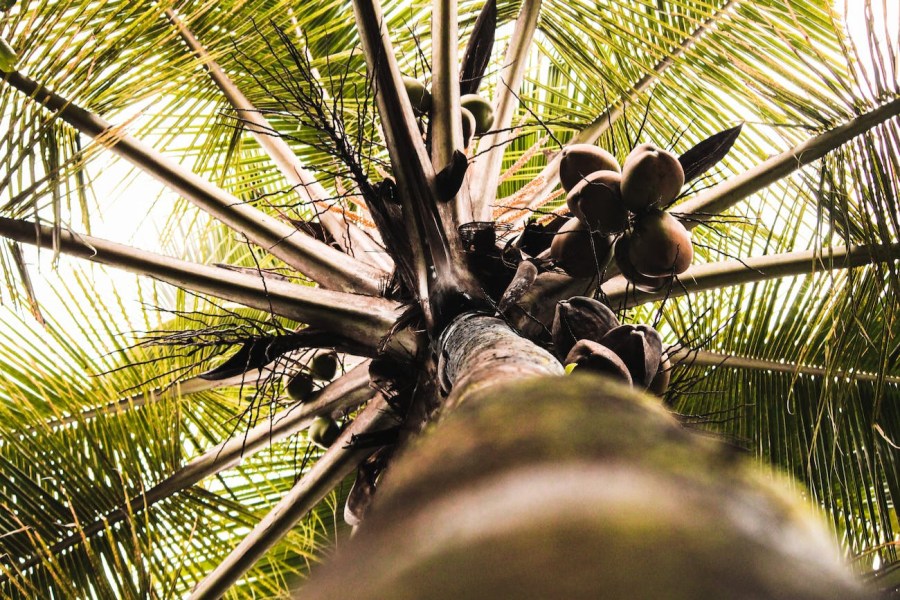
To get us started for Mes Chamoru, here is the Legend of the Coconut, which we will be reading and translating in our morning practice group this Saturday. This post includes the Chamorro text, Chamorro audio narration by Jay Che’le, an English translation, and two Quizlet flashcard decks – one for learning affixed words, and another to learn the phrase chunks. Happy reading!
I Estorian i Niyok
Tinige’ as Jesus Barcinas
Yininga as Rogelio G. Faustino
Gi apmámam na tiempo eståba giya Guåhån un sen takhilo’ na familian Chamoru: i tata, i nana, yan i hagan-ñiha. Siha i manákhilo’ manmafana’an i Achote. Gos maolek macho’cho’ i tata. Guiya manánaga’ åcho’ para latte yan kontodu para atupak yan eskopplo. I nana gos tomtom mamfok. Ha tútufok i pekse’ pagu yan i pekse’ lemmai para tåpes. Sotterita esta i hagan-ñiha. Ha osge i maolek na kostumbren i nanå-ña yan tatå-ña. Gos maguaiya gue’.
Ha tutuhon mumalångu i sotterita, ya gos triste. Mampiniti i taotao siha. Mandanña i famalao’an para u ma espiha håfa chetnot-ña. Må’o i sotterita. Ha ågang si tatå-ña ya ha faisen, “Tåta, siña mohon un chuli’i’ yu’ nu ayu na fruta i mahetok, ya gaichigo’ na kalan mames na hånom?”
I tata ha ågang i lalåhen i sengsong. Ha sangåni nu i malago’ i hagå-ña. “Bai in fanhånao ya in espiha ayu na fruta,” ilek-ñiha i lalåhi.
Ti masodda’ ayu na fruta, pues måtai må’o i sotterita. Ma’adotna i gima’ nu i manadan flores, ya mangånta i taotao siha ni manná’mahålang na kånta. Mahåfot i matai gi takhilo’ na sabåna. Un simåna di kada diha uchan, ya ti siña mabisita i naftan.
Annai pumåra i ichan, manhånao i tatan i matai yan i taotao i sengsong para u maná’tachu i latte. Fina’tinas i tata i latte para i naftan i hagå-ña. Mansenmanman annai ma li’e’ na dokko’ un tinanom gi naftan. “Håfa este na tinanom?” todus manmamaisen.
Manguentos i manmalåte’. Ilek-ñiha, “Adahi sa’ gaipåkto este na tinanom. Debi di u mapulan sa’ yanggen siña måtto, pues siña lokkue’ malingu.”
“Nihi ya ta håtsa un lancho para liheng, ya ta pulan este na tinanom,” ilek-ñiha i taotao.
Sinko åños di mapúpulan i tronku. Esta dångkolo’ ya manokcha’. Poddong un gafo’. Mahokka i gafo’ ya annai mayengyong, ma siente na guaha cháchaochao gi sanhalom. Manågo’ i amko’ na må’gas, “U ma’i’eng ya u ma’ette enao na tinekcha’ asta ki ta li’e’ håfa cháchaochao.”
Annok i mahetok na sanhalom i tinekcha’. Manma’å’ñao i taotao sa’ ma li’e’ na gaimåta, gaigui’eng, yan gaipachot. Kalan gaigapotilu i inetten-ñiha. Mahåtsa otro liheng para i ná’manman na fruta. Mafa’tinåsi un lamasa ya mapo’lo i fruta para u ma adora.
Luminao un talo’åni, sumén duru yan sumén anåkko’. Manóppop i taotao gi hilo’ tåno’ ya manggos luhan. Gumalilek i tinekcha’ esta i fina’manana. Inina ni atdao, mumaipe, ya despues måffak.
Pumåra i linao. Taigue i tinekcha’ gi lamasa. Masodda’ gi hilo’ tano’ gi fina’manana. Manma’å’ñao i taotao sa’ ma li’e’ na i tinekcha’ ha baba i pachot-ña, ya á’annok mansen å’paka’ na nifen. Ma li’e’ lokkue’ na guaha hånom gi sanhalom i tinekcha’.
I ma’gas i manåmko’ ha ågang i tatan i matai na sottera ya ilek-ña, “Hågu ni tata, chagi fan gumimen i hanom i tinekcha’.”
“Ai, ti siña hu gimen enao,” ilek-ña i tata.
“Maila, ya guahu bai gimen,” ilek-ña i nana.
Ilek-ña ta’lo i nana, “Yanggen binenu i hanom este na tinekcha’ ya ha puno’ yu’, na’danña ham gi naftan yan i difunta hagå-hu. Humållom yu’ na ginen as Yu’us este na trongkon påtma.”
Ha gimen i nana i chigo’ i tineckha’. Ha ipe’ i fruta ya ha kånno’ i sensen. “Gos mångnge’ i tinekcha’ este na påtma,” ilek-ña i nana.
Desde ayu na tiempo matungo’ na siña mana’fansetbe i diferentes na påtte siha gi niyok.
The Story of the Coconut
Written by Jesus Barcinas
Illustrated by Rogelio G. Faustino
A long, long time ago, there was on Guam a high-ranking Chamorro family: the father, the mother, and their daughter. They were the high ones that were called the Achiote. The father worked very well. He was the one who cut rock for latte, and also for sling stones and chisels. The mother was very brilliant with weaving. She wove the hibiscus plant fiber and the breadfruit plant fiber for coverings.* Their daughter was already a teenager. She took after the good customs of her mother and father. She was very loved.
The young woman started to become sick, and it was very sad. The people were all in grief. The women gathered to figure out what her illness was. The young woman was thirsty. She called her father and asked him, “Father, if only you could bring to me that fruit which is hard, and has juice that is like sweet water*?”
The father called the men of the village. He told them of his daughter’s desire. “We will go and search for that fruit,” the men said.
That fruit was not found, and so the young woman died of thirst. The house was decorated with an abundance of flowers, and the people sang songs of longing. The deceased was buried on a high mountain. One week, it rained every day, and the grave could not be visited.
When the rain stopped, the father of the deceased and the people of the village went to erect a latte stone. The latte stone was the creation of the father for his daughter’s grave. They were all very amazed when they saw that a plant had sprouted at the grave. “What is this plant?” everyone asked.
The wise ones talked. They said, “Be careful, because this plant has magic. It must be watched over because if it can arrive, then it can also be lost.”
“Let’s go and we will raise a temporary shelter for cover, and we will watch over this plant,” the people said.
For five years the tree was watched over. It was already big and it produced fruit. One barely ripe coconut fell. The barely ripe coconut was picked up, and when it was shaken, they felt that there was liquid sloshing around on the inside. The eldest chief ordered, “That fruit will have its husk peeled and torn off, until we see what liquid is sloshing.”
The hard inside of the fruit was revealed. The people were afraid because they saw that it had eyes, a nose, and a mouth. What they touched was like hair. Another shelter was raised for the wondrous fruit. A table was made for it and the fruit was put on it for them to adore it.
One afternoon there was an earthquake, and it was extremely severe and long. The people laid on their stomachs on top of the ground, and they were very afraid. The fruit rolled around on the ground until about morning. The sun shone on it, it became hot, and then it broke.
The earthquake stopped. The fruit was not on the table. It was found on top of the ground around morning-time. The people were afraid because they saw that the fruit had opened its mouth, and extremely white teeth were showing. They also saw that there was water inside the fruit.
The chief of the elders called the father of the deceased young woman and said, “You are the one who is the father, please try to drink the water of the fruit.”
“Oh, I cannot drink that,” the father said.
“Bring it to me, and I will be the one to drink it,” the mother said.
The mother said again, “If the water of this fruit is poison and it kills me, put me in the grave, together with my deceased daughter. It has come to me that this palm tree is from God.”
The mother drank the juice of the fruit. She split open the fruit and ate the meat. “The fruit of this palm is very delicious,” the mother said.
Since that time, it is known that the different parts of the coconut can be put to use.
Study Resources
Quizlet Flashcards for Affixed Words: https://quizlet.com/888088865/i-estorian-i-niyok-affixed-words-flash-cards/?i=2ugq94&x=1qqt
Quizlet Flashcards for Phrase Chunks: https://quizlet.com/885847328/i-estorian-i-niyok-flash-cards/?i=2ugq94&x=1jqY
References
Barcinas, Jesus C. n.d. “I Estorian I Niyok (the Story of the Coconut).”
https://eric.ed.gov/?q=chamorro&ff1=subChamorro&pg=5&id=ED087264.
 Lengguahi-ta