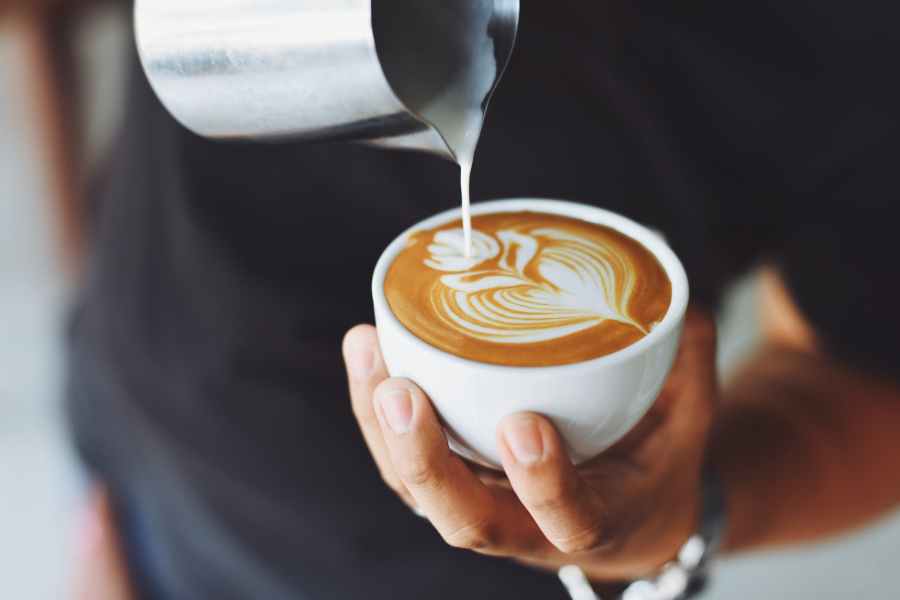
Let’s learn how to talk about beverages in Chamorro with this list of 40 terms that can help us learn different types of water, juice, tea, milk, and other drinks. We’ll also learn how we can talk about drinks, including the grammar needed to talk about drinks that belong to people (i.e.: my coffee, your water) and we’ll go through some example phrases we might use in daily life. Audio is included with this word list. Happy studying!
Contents
- General Drinks
- Milk
- Tea
- Juice
- Water
- Making Your Own Words
- Talking About Your Own Drink: “My coffee.”
- Example Sentences
- References
General Drinks
| Chamorro | English |
|---|---|
| gimen | drink (both a noun and verb) |
| kafé | coffee |
| hånom | water |
| chå | tea |
| binu | wine |
| gimen fotte | strong drink (like liquor) |
| gimen mames | sweet drink |
| setbesa | beer |
| atkahót | alcohol |
| tuba | coconut liquor, made from coconut sap |
| leche | milk |
| lemonåda | lemonade |
Milk
| Chamorro | English |
|---|---|
| lechen tinanom | plant milk |
| lechen talisai | almond milk |
| lechen kasoi | cashew milk |
| lechen niyok | coconut milk |
| lechen chiba | goat milk |
| lechen låta | canned milk |
| lechen låtan niyok | canned coconut milk |
| lechen guaka | cow milk |
| lechen kinilu | sheep milk |
Tea
| Chamorro | English |
|---|---|
| chån mames | sweet tea |
| chå sin asukat | unsweetened tea (literally “tea without sugar”) |
| chån leche | milk tea |
| chån boba | boba tea |
| chån åttilong | black tea |
| chån betde | green tea |
| chån å’paka | white tea |
| chån yetba buena | mint tea |
| chån mango’ | turmeric tea |
Juice
| Chamorro | English |
|---|---|
| chugo’ niyok | coconut juice |
| chugo’ kåhet | orange juice |
| chugo’ mansåna | apple juice |
| chugo’ piña | pineapple juice |
| chugo’ ubas | grape juice |
| chugo’ kåhet må’gas | grapefruit juice |
| chugo’ åbas | guava juice |
Water
| Chamorro | English |
|---|---|
| hånom tupu | well-water |
| hånom ais | ice-water |
| hånom sinaga | rain water |
| hånom grifu | tap water |
| hånom bo’bo’ | spring water |
| hånom buteya | bottled water |
| buteyan hånom | water bottle; bottle of water |
| hånom bo’an* | carbonated water (literally “bubble water”) |
*hånom bo’an: This is what I use to for carbonated water, but it’s definitely not in any official dictionary. So use at your own risk 😉
Making Your Own Words
In Chamorro, if a word does not already exist in our language we can often use the grammar rules to create our own word. To get started, pair two words together (usually two nouns) to create a new term. The word that is being described goes first, and then the descriptor follows. And if the first word ends in a vowel, just put an “n” at the end of the word.
A great example of this is with the term “goat milk.” To say this in Chamorro, we say lechen chiba. The word for milk goes first, and the word for goat follows. And because leche ends with a vowel, we put an “n” at the end of the word.
Now that you know the framework, you can try making your own words!
Talking About Your Own Drink: “My coffee.”
When we talk about drinks that belong to someone in Chamorro, we must use a special structure. We must use the word gimen with a possessive pronoun in front of the beverage. Here is the structure:
| Gimen + Possessive Pronoun + Beverage |
So for example, if I want to say “my coffee” I cannot say kafé-hu. Instead, I must say gimen-hu kafé. We’ll see more of this structure in the following section of example sentences.
Example Sentences
Now here are some example sentences for talking about beverages. For each sentence, experiment with replacing the beverage with a different one from the word list above.
| Chamoru | English |
|---|---|
| Mångge i setbesa? | Where is the beer? |
| Åmånu malago’-mu? Hånom grifu pat hånom boteya? | Which do you want? Tap water or bottled water? |
| Ga’ña-ku hånom ais. | I prefer ice-water. |
| Te’ok i gimen-hu kafé. | My coffee is strong. |
| Mampos maipe i gimen-hu chå. | My tea is too hot. |
| Mamåhån yu’ lechen chiba gi metkao. | I bought goat’s milk at the market. |
| Kao un fåhån i chigo’ kåhet? | Did you buy the orange juice? |
| Mångnge’ i chån åttilong, lao i chån betde i mas ya-hu. | The black tea is delicious, but the green tea is my favorite. |
| Nå’i yu’ fan i lechen låta. | Please give me the canned milk. |
| Ti siña yu’ gumimen lechen guaka. | I cannot drink cow’s milk. |
| Gumimen yu’ chugo’ åbas på’go na ogga’an. | I drank guava juice this morning. |
| Nihi ta ápåtte ini na binu. | Let us go and share this wine. |
| Kao siña un fa’tinåsi hit lemonåda? | Can you make us some lemonade? |
| Bei fahåni hao ni gimen-mu. | I will buy your drink for you. |
| Po’lo ya bei fahåni hao ni gimen-mu kafé. | Just leave it and I will buy your coffee for you. |
| Manggígimen ham tuba. | We are drinking coconut liquor. |
| Matå’pang este na gimen-hu. | My drink is bland. |
Notes
Te’ok: The word te’ok means thick, but in Chamorro it is used specifically to talk about if coffee is strong or not. If a coffee is strong, we say it is te’ok.
Matå’pang: This word means “bland.” Jay was telling me that he hears the word matå’pang used to describe beverages that don’t have flavor. This word can also be used to describe food that is bland.
Hånom Buteya / Buteyan Hånom: Hånom buteya can be understood as “Bottled Water”, but in speech if we are asking for a bottle of water, we would typically use buteyan hånom which is “water bottle.” Malago’ yu’ ni buteyan hånom = I want the bottle of water / water bottle.
References
Topping, D. M., & Ogo, P. M. (1980). Spoken Chamorro with Grammatical Notes and Glossary (PALI Language Texts―Micronesia) (2nd ed.). University of Hawaii Press.
- Classifiers: pg. 164-166
- Describing Nouns with Nouns: pg. 208-209
 Lengguahi-ta