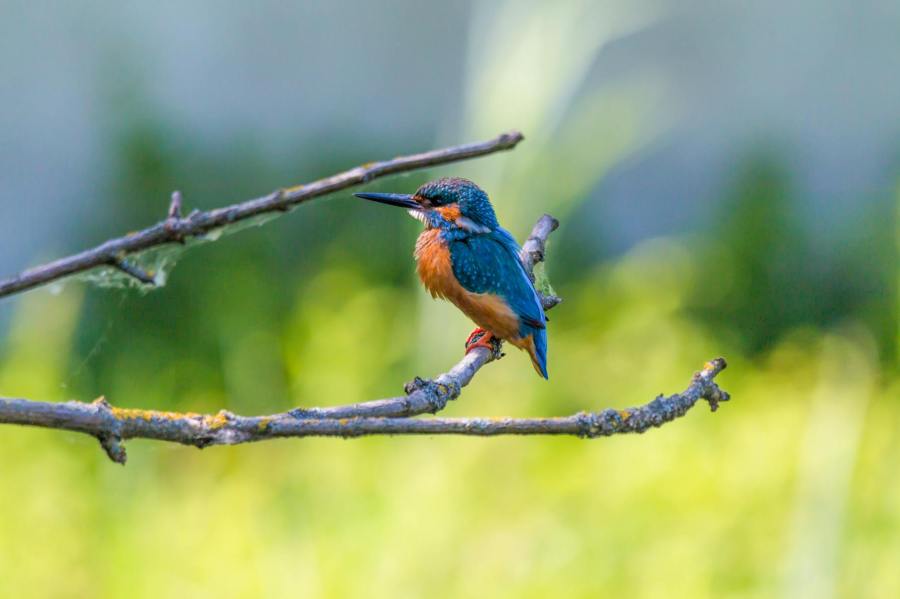
Here’s a story about a bull, also involving a kingfisher, that teaches us why we should not be so aguaguat (stubborn). This post includes the Chamorro text, an English translation, the audio narration in Chamorro by Jay Che’le, and a Quizlet flashcard study deck for the phrase chunks. Hope you enjoy the story!
Un Toru Na Sen Aguaguat
Ginen i “Lepblon Manaitai Para I Sinko Grådu”
Nina’huyong nu i Marianas District Education Media Production
Este na påtgon låhi, kada puenge humåhånao para i paståhin-ñiha ya ha å’ågang i ga’-ñiha para u na’fanggimen. Todu i tiempo, i aguaguat na toru ti malago’ måtto. Pues må’pos i patgon ya sigi lumíliko’ gi halom tåno’ gi halom paståhin-ñiha. Ha sodda’ i ga’-ñiha toru gi halom tåno’ na kéketu ha’ ya guiguiya ha’ na maisa. Ti malago’ ta’lo na u dalalak i linahyan. Ti malago’ na u dalalak i patgon. Sen aguaguat este na toru. Pues lalålo’ i patgon, sa’ sigi ha ågang i toru para u tattiyi i linahyan ya u gimen lokkue’, lao ti malago’ i toru.
Pues guihi na biahi, eståba un sihek na tumótohge gi råmas håyu. Manalíligao måtai håyu para u fandulok para u fañåda’ gi maddok i hayu. I sihek na gå’ga’, yanggen para u fañåda’, ha dúdulok i matai na tronkon håyu ni mañaña’, ya mama’ngúngulo’ gi sanhalom, ya ayu nai mañåñåda’. Pues este na sihek eståba guini.
Sigi i amu ha ågang i ga’-ñiha. Annai ti malago’, lalålo’ ya ha falåggue guatu gi toru ya ha pañiti i kalaguak-ña. Gigon ha’ pañiti, dånkolon måddok humuyong. Hasso’ enao, i trompon taotao para u na’dånkolo na måddok gi guaka. Pues i sihek ha ripåra este na måddok gi guaka. Ensigidas gumupu ya humålom gi kalaguak i guaka ya mañåda’. Annai monhåyan mañåda’, gumupu huyong ya sigi kumåti.
Mampos nina’sage’ i toru ni puten i kalaguak-ña, sa’ gaige i chada’ gi sanhalom. Duranten i tiempo mientras mapulálakes i chada’ gi kalaguak i toru, mumaso’ yuhi i piñañiten i amu. Annai mumaso’, mapulakes i chada’, ya ti siña humuyong i pechon sihek. Pues este na toru, kada kumåti, kåten sihek katíti-ña.
Un puenge annai måtto guatu i amu, ha hungok na kumåti i sihek. Pues kumåti i toru ya parehu kåten-ñiha yan i sihek. Mampos nina’manman i amu. Despues, ha hasso’ na annai ha pañiti i ga’-ña toru ya ha na’måddok i kalaguak-ña, humålom i sihek ya mañåda’. Ayu na chåda’ mapulakes gi kalaguak i toru. Kada kumåti i toru, i sihek kumåkåti gi sanhalom.
Despues di ha susedi este, i toru humuyong manso, ya månu ha’ guatu i manhanaogue i linahyan, ayu ha’ ha tattítiyi. Este lokkue’ i patgon, yanggen mampos aguaguat, siempre trinemponånåsu as nanå-ña; pat mansinakúkudi hamyo. Mungnga manåguaguat. Fanmanosge as nånan-miyu.
A Bull That Was Very Stubborn
From the book “Reading Book for the 5th Grade”
Printed by the Marianas District Education Media Production
This boy every night would go to their pasture and call their animals to make them drink. All the time the stubborn bull did not want to come. And so the child left and continued going around the jungle inside their pasture. He found their bull in the jungle, just keeping still and by itself. Yet again it did not want to follow the group. It did not want to follow the child. This bull was very stubborn. So the child was angry because he continued to call the bull to follow the group and drink too, but the bull didn’t want to.
And so at that time there was a kingfisher that was standing on a branch. It was searching for some dead wood to bore into to lay its eggs in the hole in the wood. The kingfisher animal, if it is going to lay eggs, it bores into the dead tree which is soft and makes a hole on the inside and that is where it lays eggs. And so this sihek was here.
The master continued to call his animals. When it (the bull) didn’t want to (come), he was angry and he ran over to the bull and he punched its side. As soon as he punched it, a big hole appeared. Imagine that, a person’s fist would make a big hole in the cow. Then the kingfisher noticed this hole on the cow. It quickly flew and entered into the side of the cow and layed eggs. When it was done laying eggs, it flew out and continued to cry.
The hurt in its side put the bull in a lot of pain because the egg was inside. During the time while the egg was hatching in the side of the bull, that punch of the master became healed. When it healed, the egg hatched and the fledgling kingfisher could not get out. And so every time this bull cried, its cry was like the cry of the kingfisher.
One night when the master arrived there, he heard that the kingfisher cried. And then the bull cried and its cry was the same as the kingfisher. The master was very surprised. Afterward, he remembered that when he punched his bull and he made a hole in its side, the kingfisher went inside and layed eggs. That was the egg that hatched in the side of the bull. Everytime the bull cried, it was the kingfisher crying inside.
After this happened, the bull became tame and wherever the group went, that was what he was following. This too, a child when he/she is too stubborn, will surely be hit by his mother; or all of you will be spanked.* Don’t be stubborn. All of you, obey your mothers.
Notes
*or all of you will be spanked: In this sentence, the narrator is switching from talking about a child to telling all of us that we will be spanked. Here, I like to imagine that somebody is telling us this story and, midway through that sentence they look up at us with a warning, reminding us that it’s not just some child they are talking about, but us.
Study Resources
Quizlet Deck for Un Toru na Sen Aguaguat
This Quizlet flashcard deck breaks the entire story into phrase chunks. Study the phrase chunks if you want to break down long sentences into simpler components. Also challenge yourself to translate the English into Chamorro:
References
Lepblon manaitai, para 1, Sinko gradu. Commonwealth of the Northern Mariana Islands ROTA Project. 1976. Mariana Islands : Mariana District Education Media Production.
oai:pacific.library.manoa.hawaii.edu:547387
 Lengguahi-ta