A common question that people often ask is “What can I do to study Chamorro on my own?” We know we need to “study” outside of the classes or practice groups we attend, but what does that actually look like? A common resource people may be given (especially beginners) are sentence drills – our grammar books are full of them in order to explain specific topics, and drilling them can help us learn words, conjugations and language structure. But just reading through the example sentences can get kind of boring, and translating a sentence is only part of the practice we need. So in this post, I’ll walk through how we can get more out of these sentence drills by making different types of digital flashcards that can give us effective self-study experiences.
| Contents |
|---|
| Why Use Flashcards? Where To Find Sentence Drills Verb Conjugations Sound Transformations Pronouns Grammar Markers Word Order New Words Final Study Tips |
Why Use Flashcards?
I know the title of this post is how to make sentence drills not boring, so saying we are going to create digital flashcards seems counter-intuitive. Flashcards might seem boring at best and a time-consuming chore with little pay-off at worst. But I’ve learned that flashcards – particularly digital flashcards – can be a highly effective learning tool if they are done right. We can put flashcard apps on our phones, so they are easily accessible wherever, whenever. And with the spaced-repetition algorithm that is incorporated into the major flashcard apps, your study time will be optimized. So if all you have is 5 minutes, you can make every minute impactful.
In this post I’m going to give examples of how to create flashcards to better practice and learn different areas of Chamorro. Most of these flashcard tips are from the polyglot Gabriel Wyner’s blog Fluent Forever, but I’ve created examples that are specific to the Chamorro language and areas where learners may need to focus.
Where To Find Sentence Drills
To start, we need some sentence drills. You can find plenty of sentence drills on LearningChamoru.com in their lessons. You can also take the sentences found in books like Spoken Chamorro (or you can get the first edition here), Finu’ Chamorro For Beginners, or Chamorro Grammar. If you don’t want to use any of the above resources, or you want your sentences to have more flavor (aka: not out of a grammar book or textbook), you can also gather your own sentences from songs, stories, interviews, or other native content.
And now, onto the flashcards.
Verb Conjugations
Understanding how to conjugate verbs and when to apply the correct conjugation is something that often trips up learners. When do we use an UM or a MA? When do we use the double MAN- or only a single MAN-? Using flashcards can help us practice these conjugations, and the repetition will help us retain them.
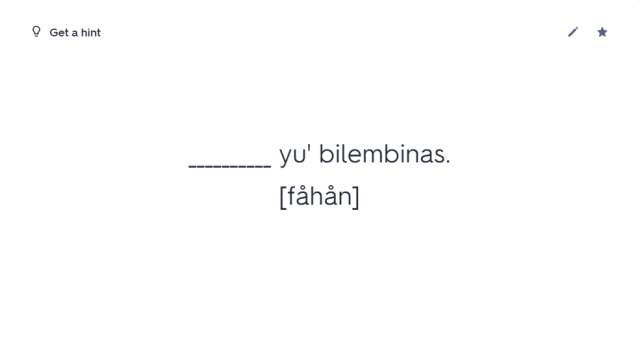
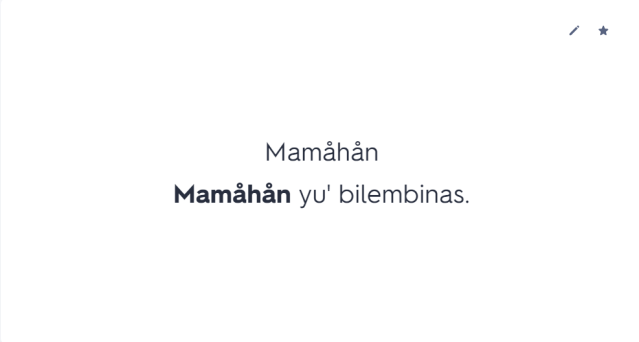
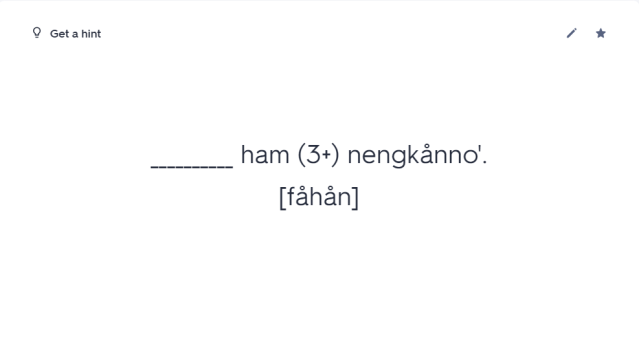
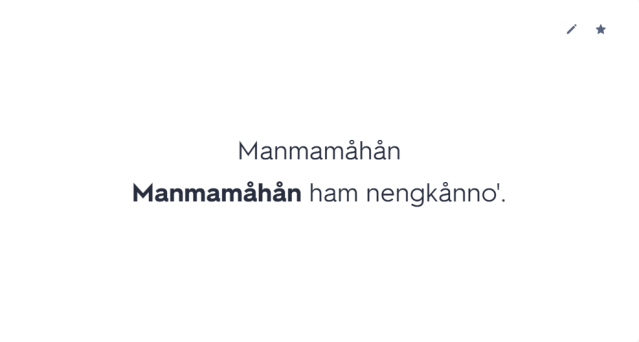
To make flashcards for practicing verb conjugations, on the front of the card use a complete sentence and put a blank where the verb should go. Underneath the sentence put the root form of the verb as your cue. On the back of the card put the conjugated verb and the completed sentence. To keep the card as a Chamorro-only flashcard, don’t put the English translation. Otherwise, put an English translation at the bottom of the back of the card. If you don’t have a complete sentence, that’s okay. Just put the root word on the front of the card and the conjugated form on the back. However, try to use complete sentences where possible.
Here are some Chamorro-only flashcard examples for the indefinite man- prefix, but you can easily add the English translation on the back of the card:
Front
Back
Front
Back
Sound Transformations
Another way Chamorro differs from English is in the fluidity of the sound. The pronunciation of words will change depending upon the words that are around it, especially with vowel harmony rules and the use of possessive pronouns. Flashcards can also help us practice how to shift these sounds.
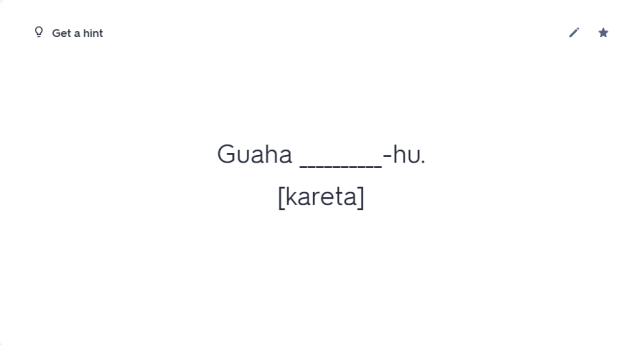
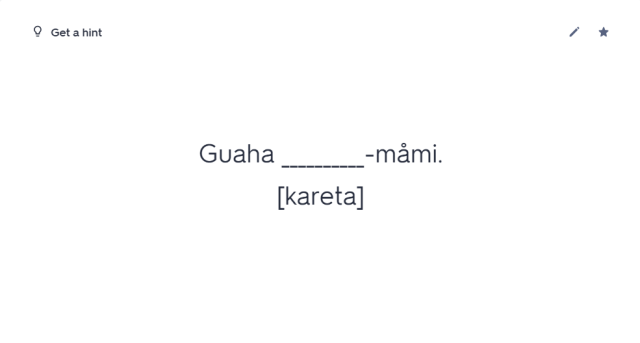
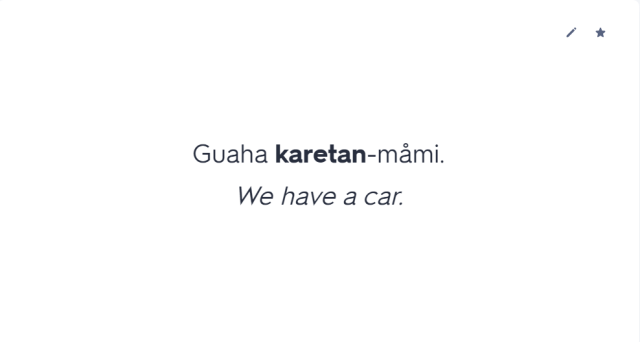
The examples below are for practicing how the pronunciation of a word changes when we add a possessive pronoun, but you can also create similar flashcards to practice things like vowel harmony.
In these cards, there is a blank where the word should go, and the original form of the word is shown below the sentence as a cue. On the back we see the completed sentence, with the correct form:
Front
Back

Front
Back
Pronouns
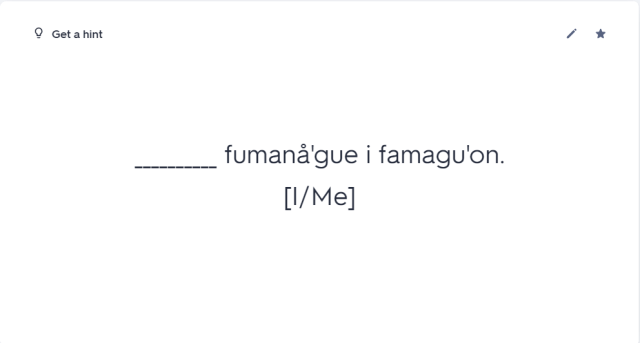
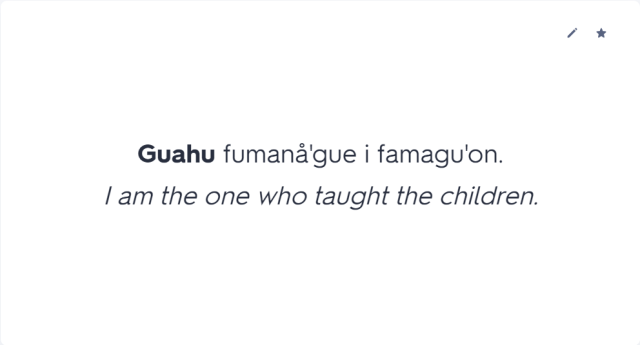
Often learners struggle to learn the pronouns in Chamorro, and when to use which pronoun. We can modify our flashcards to help us learn the different pronouns in context by putting a sentence and leaving a blank space where the pronoun should be. A cue is given underneath the sentence in either English or Chamorro, and the completed sentence is shown on the back with the pronoun in bold.
In these flashcards, the cue is given in English:
Front
Back
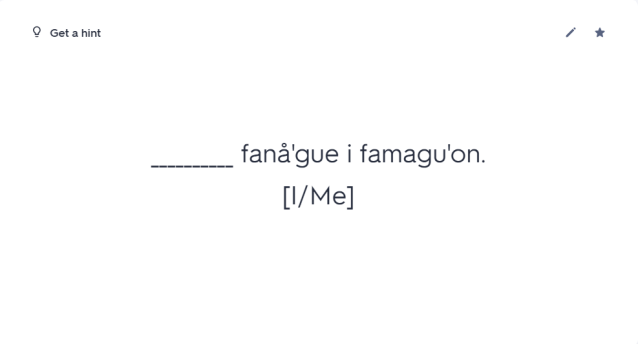
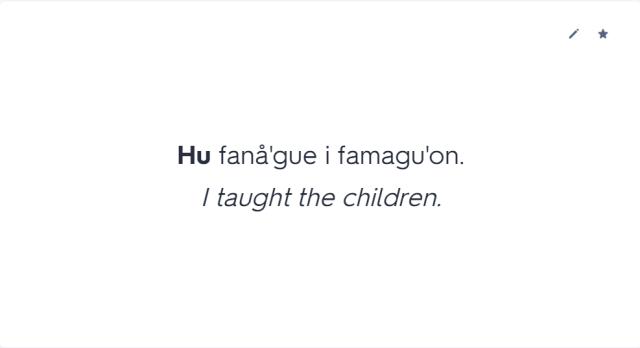
And here is another flashcard with a phrase that communicates a similar idea, but the structure requires a pronoun from a different pronoun group:
Front
Back
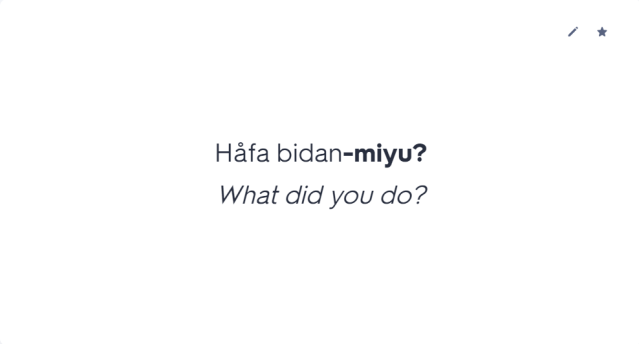
Finally, to make these pronoun cards Chamorro-only (no English) flashcards, the cue can be the same pronoun from another pronoun group. This can also help learners to associate pronouns together. Here’s an example:
Front
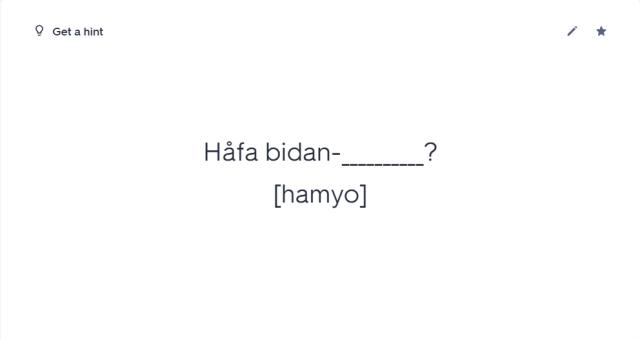
Back
Grammar Markers
Chamorro is filled with many articles and particles, or little words that must be used as markers in our speech. Sometimes we can forget to use these markers, or it can difficult to remember when to use them.
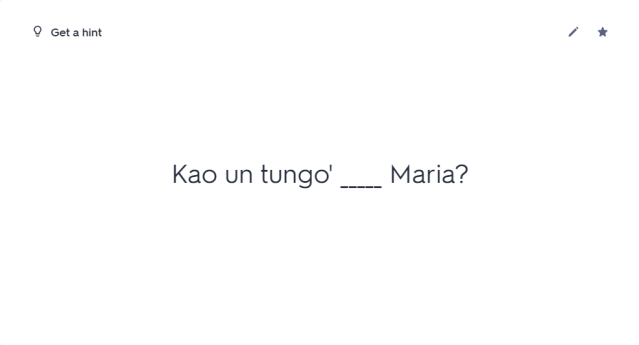
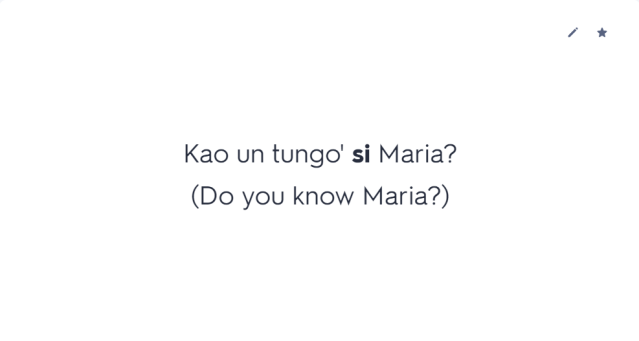
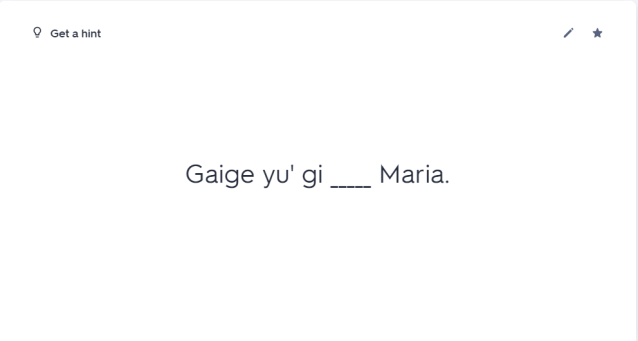
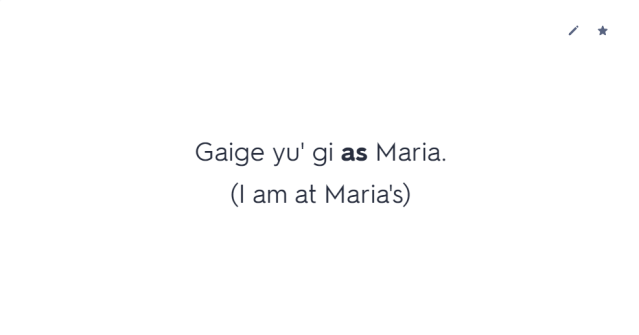
In the flashcard examples below, I am learning when to use si versus as to mark a proper name. Complete sentences are used to provide context. On the front side of the card, a blank space is left where the si or as should go, and then the back provides the answer and a complete sentence. This method can be used for any other grammar marker, such as the different future tense markers, gi versus giya, etc.
Front
Back
Front
Back
Word Order
Since word order often differs widely from English, practicing the proper word order of phrases and sentences can be helpful so that we are speaking Chamorro correctly, rather than arranging all of our thoughts according to an English structure and speaking with Chamorro words. Practicing word order is also especially helpful if the order of words can have multiple possibilities.
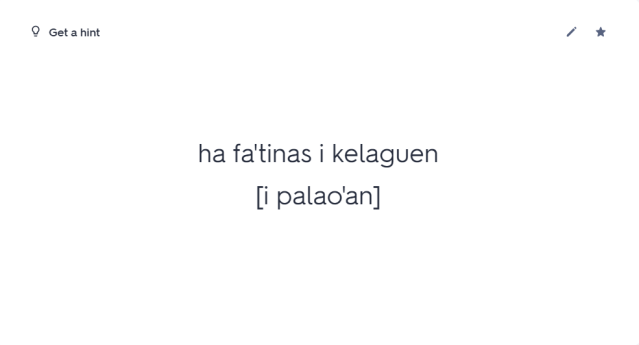
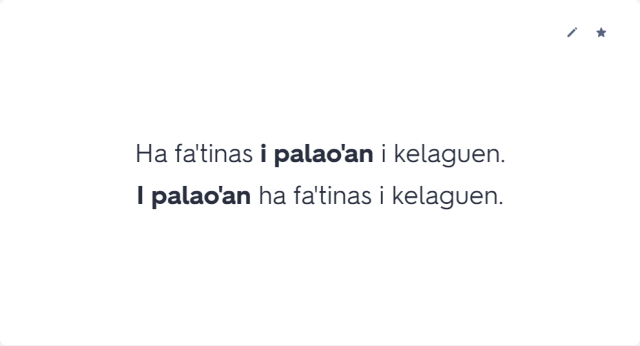
To create flashcards to learn word order, on the front of the flashcard put an entire sentence with a word missing, but do not put any blank spaces. Underneath the sentence put the missing word(s). The back of the flashcard shows the possible sentences, with the missing word(s) in the complete sentence in bold:
Front
Back
New Words
Finally, we can create flashcards to help us learn new words in context. To do this, we want to use a full sentence that uses the word we are trying to learn. If we can include a picture that represents the new word, this will give us a visual anchor that will help us remember the word better.
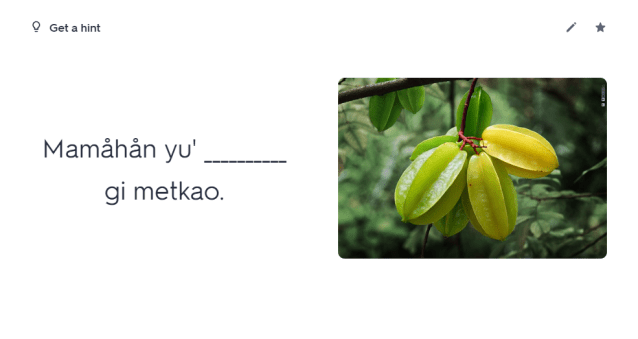
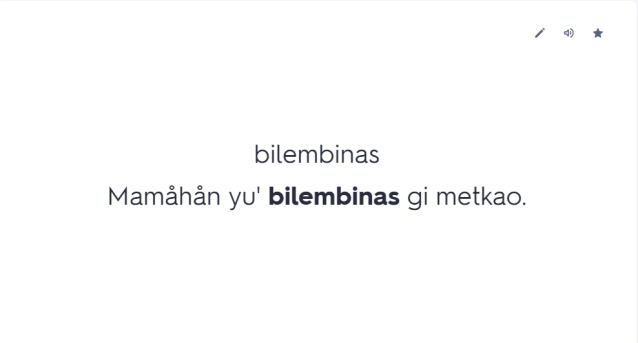
In the following example, we create a flashcard to learn the word bilembinas (starfruit). I’ve included a photo of the bilembinas and an example sentence with a blank space where the word should go. The back of the card gives us the missing word and completes the sentence. You can leave this as a Chamorro-only flashcard, or put the English translations on the back of the card underneath the Chamorro:
Front
Back
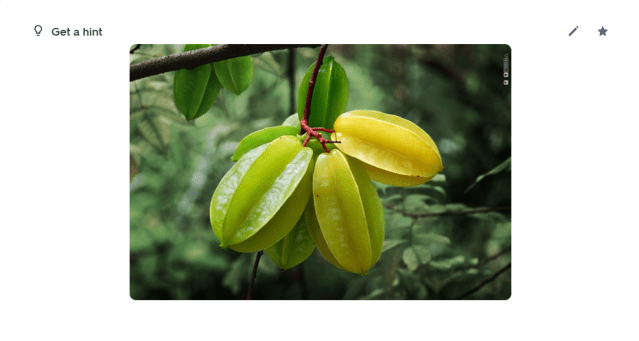
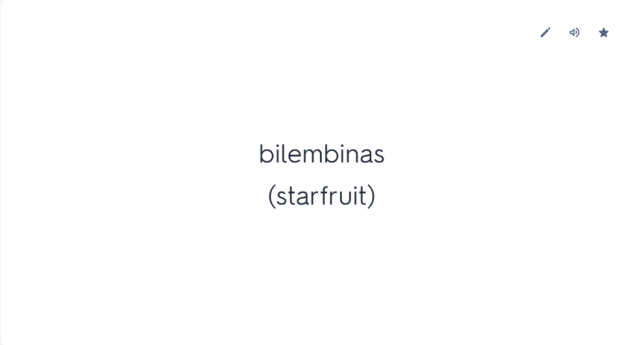
For a more simplified flashcard (especially helpful for beginners who need to build up vocabulary), we can just put the photo on the front of the card and the word bilembinas on the back. If you need extra help, you can also put the word “starfruit” underneath the word bilembinas on the back of the card:
Front
Back
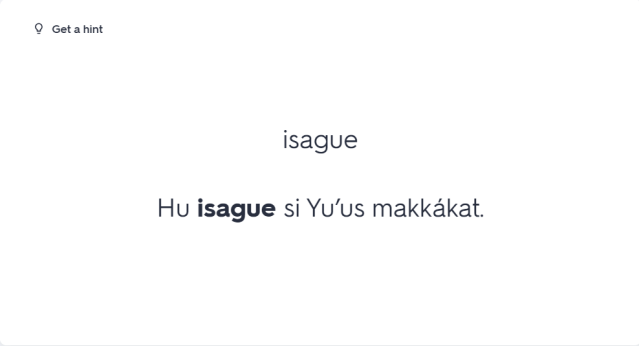
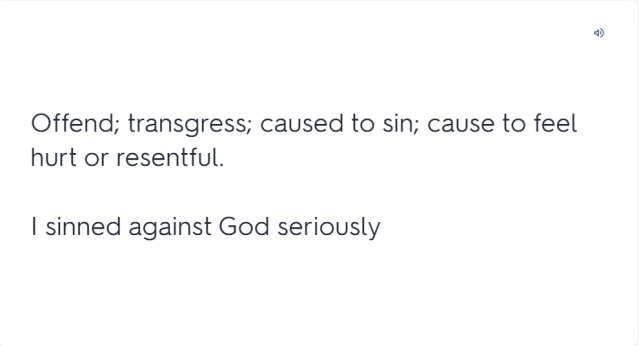
Sometimes it might be too difficult or time consuming to find a photo that represents a new word you are learning. In these instances, what I’ve found helpful is putting the word and a sentence that uses the word on the front of the card, then the translation on the back:
Front
Back
Final Study Tips
And to wrap up this post, here are some additional study tips to keep in mind when making your flashcards.
Make Multiple Flashcards From One Sentence
One tip to make your sentence drills do more for your learning experience is to create multiple flashcards from a single sentence. If you need to drill different concepts, you don’t always need to create or find new sentence drills because you can probably use the sentences you already have! We’ll illustrate this with the sentence Humånao yu’ guatu gi gima’ Yu’os:
| Flashcard | Front | Back |
|---|---|---|
| Verb Conjugations | _____ yu’ guatu gi gima’ Yu’os. [hånao] | Humånao Humånao yu’ guatu gi gima’ Yu’os. |
| Sound Transformations | Humånao yu’ guatu gi _____. [guma’ Yu’os] | Humånao yu’ guatu gi gima’ Yu’os. |
| Pronouns | Humånao __ guatu gi gima’ Yu’os. [guahu] / [I, Me] | Humånao yu’ guatu gi gima’ Yu’os. |
| Grammar Markers | Humånao yu’ guatu __ gima’ Yu’os. | Humånao yu’ guatu gi gima’ Yu’os. |
| Word Order | humånao guatu gi gima’ Yu’os [yu’] | Humånao yu’ guatu gi gima’ Yu’os. |
| Word Order | humånao yu’ gima’ Yu’os [guatu gi] | Humånao yu’ guatu gi gima’ Yu’os. |
Combine Different Decks for An Extra Challenge
When you are first learning a concept it can be helpful to make an entire flashcard deck that focuses on just that topic. This is great to help you learn a concept and get the information into your long-term memory. But what happens when you know the concept already?
A great way to continue challenging yourself is to combine decks together. If you are comfortable with the plural man- prefix, then mix it with he deck you used for learning to conjugate with UM vs MA. Or combine the deck you used for making past tense statements with your deck on continuous/present tense to practice when to use reduplication and when to leave the verb alone.
Keep Adding Content To Your Decks
Finally, whenever you learn new words, you can add them to your flashcard decks. This keeps the flashcard decks relevant to you, regardless of how much you progress, and you can return to them over and over to practice new words and review older content.
 Lengguahi-ta
Pingback: 100 Adjectives in Chamorro – Lengguahi-ta
Pingback: How to Improve Your Listening Comprehension in Chamorro – Lengguahi-ta