Håfa adai todus hamyo! It has been a while since my last post – the last two months have been rough, as I’ve been repeatedly sick. To be honest I’m still struggling with my health and need to prioritize rest. But we made it to Guam for the holidays and Jay’s family has been saying the nobena to the baby Jesus this past week. This is a new experience for me, because my family did not keep this tradition going after moving to the states. So to help those who may be like me, here is a general how-to guide for praying this nobena, including what the nobena is, what’s usually involved in hosting it, the general order of songs, prayers and readings (as followed by Jay’s family – other families may follow a different order), and why praying the nobena can be helpful for language learners. Please note that this post will not include English translations. I plan to go over the English translations in separate blog posts.
UPDATED 12-31-2025: Changed the daily readings to a drop-down, to prevent navigation away from the main blog post. Just tap each day to reveal the full text.
UPDATED 12-29-2024: Added links to the sheet music for all songs, which are found on Kamalen Music. Also included links to each daily reading, made minor edits to the About the Nobena section, and added more notes for singing Si Jose yan Si Maria.
Contents
About The Nobena
What is a nobena? A nobena or novena is an ancient form of devotional prayer from Christianity that lasts for nine consecutive days. A nobena can be prayed for different reasons, but traditionally they are prayed to prepare our minds, hearts, and souls for a major event or liturgical feast. We also pray a nobena as a form of petition, or to show our spiritual devotion. For the nobena of rosaries we pray after a person has passed away, that is part of a 9-day tradition of mourning (originating from ancient Christianity), where we pray for the person as they journey through the afterlife. A nobena may also center around a specific theme, such as the birth and childhood of Jesus in I Nobenan Niño Jesus.
Why pray a nobena (for language learners)? Praying a nobena in the Chamorro language can also offer particular benefits for language learners. If we listen to prayers, church songs, and nobenas in the Chamorro language, you’ll notice a distinct rhythmic and chant-like quality to them. We often hear that when Chamorro is spoken well, it should sound as though we are singing. Practicing the prayers, songs, and readings can help train our speaking to be more musical and rhythmic. The language in a nobena is also older and provides rich opportunities for deepening our language ability. You’ll be saying or hearing words you don’t often encounter or have been lost from everyday speech, which is a gentle and humbling reminder of how vast our language is.
How and when do we say I Nobenan Niño Jesus? I Nobenan Niño Jesus is a Christmas-season nobena honoring the birth and childhood of Jesus, and is usually begun in the month of December. It may be prayed privately by your immediate family, or a person or family may choose to host it for their wider family, and even invite some friends and neighbors.
The exact start date of the nobena depends on what you want. You may choose to end the nobena on Three Kings (Feast of the Epiphany), while some families may choose to end their nobenas on Christmas Eve or earlier in December. It just depends on the family or person hosting the nobena.
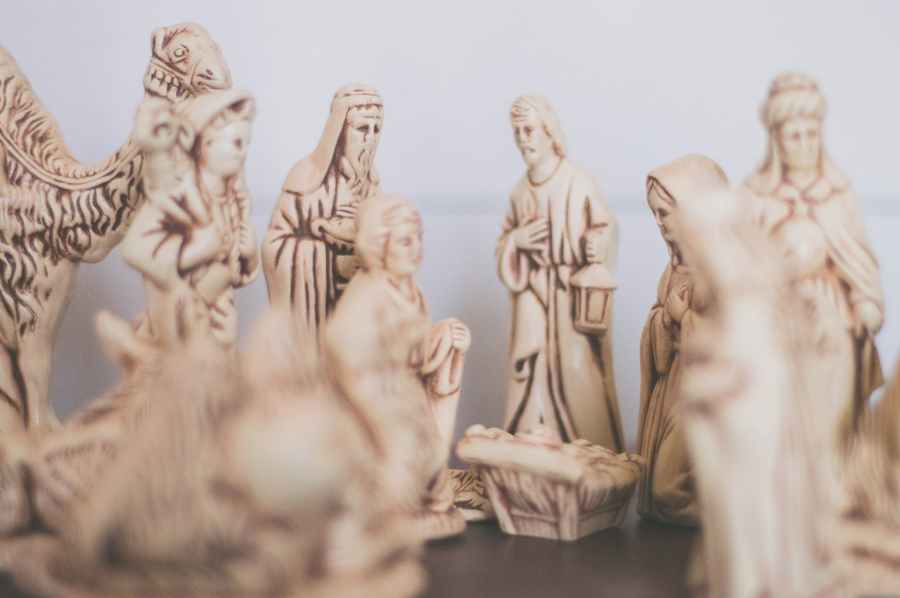
The Belen: As part of the nobena, families may set up a Belen, or nativity scene, in their homes. In setting up the Belen, it is common to use natural materials for decorations, such as moss, small tree branches, leaves or other plants from outside because this emphasizes the poverty of Jesus.
Language Note: In Chamorro, the word Belen can have two meanings. It is used to refer to the nativity scene that we set up in our homes for this nobena, and it also refers to Bethlehem.
Hosting The Nobena
How we host the nobena has changed, especially with the pandemic forcing us to move the majority of our activities online. In this section, we’ll talk about some norms for hosting a nobena both in-person and virtually.
In-Person Nobena: For in-person nobenas, one person in the family will choose to host the nobena at their house. The nightly nobena is usually small, limited to close family and friends. It’s important to note that it’s not expected that everybody who is invited shows up to every single night of the nobena, just whenever you can.
To lead the nobena you also have a techa or prayer leader, who says the prayers and readings. Some families may hire a techa, while other families may have a person in the family who acts as the techa. Some may even be voluntold, so make sure you are ready!
For the specific start time of the nobena, it depends on the family. For some techas, the nobena waits for nobody and will always start “on-time” even if nobody else is there except the techa. For other families, they may be more flexible and wait for people to trickle in, and will deem it “good enough” if they finish by midnight.
When everybody is gathered (or not!) the techa or one of the aunties will call everybody to prayer to begin the nobena. They may say Nihi ta fannobena! (Let’s go and pray the novena!) We also heard from Aunty Chris in our practice group and also Jay’s Aunty Jo that in the village of Hågat in southern Guam, the elders used to say Arisåt! as the call to pray the nobena. (There is also a video from Påli’ Eric that demonstrates this call to prayer:
After the nobena is prayed, the hosting family may offer something to guests, and each night can be different. It can range from a family potluck, to light refreshments, to a hosted family dinner. The final night of the nobena (the finakpo’) might be a larger party where more people are invited.
Virtual Nobena: For virtual nobenas, many things stay the same. One person in the family will choose to host the nobena for the family, and there will be a techa to lead the prayers and songs. The main difference is that everybody will be gathering online, likely in a Zoom room, rather than gathering physically at a person’s house. As people trickle into the Zoom room, there may be light conversation, or you can be playing music.
The person who is hosting may also have a dual camera set-up, with one camera facing the Belen and the other camera facing them. And for microphones, this depends on the family. Some may choose to have all microphones muted except for the techa, so that everybody can hear the techa. But during songs and prayers where everybody participates, some may choose to unmute.
And after the nobena, the family may choose to stay a little while in the Zoom room to chat with each other, before logging off.
The Order Of The Nobena
In this section, we’ll be going over how the nobena is actually prayed. Please note that this is the structure that Jay’s family follows, and that other people or families may have some differences in the order they follow.
For some of the prayers, the techa will start the first half of the prayer, and then everybody joins for the second half. These are marked in the sections below. Anything marked with techa is spoken only by the techa, and anything marked with todu is spoken or sung by everybody. I’ve also included notes at the beginning of each section for added context. Here are also some quick links to the different parts in this section:
#1 I FINE’NINA NA KÅNTA
Notes: We like to open the nobena with the song Fanmåtto Manhengge’ but you may choose a different opening song. Or you may choose to open with prayers and save the first song for later in the nobena.
Todu: Sing “Fanmåtto Manhengge'” (link to audio, link to sheet music)
Lyrics:
Fanmåtto manhengge, fatta i minagof
Fanmåtto, fanmåtto giya Belen
Atan i Patgon, Rai i anghet siha
Ta nginge’ ta adora, ta nginge’ ta adora
Ta nginge’ ta adora si Jesus
Ilek-ña i anghet nu i pastot siha
Estague i Kristo giya Belen
Gi sagan gå’ga, chatsaga’ taigima’
Ta nginge’ ta adora, ta nginge’ ta adora
Ta nginge’ ta adora si Jesus
I ma’lak na ina, Låhen Yu’us Tåta
Humuyong sen taotao, achaigua-ta
O Yiniu’san, Dikike’ na Påtgon
Ta nginge’ ta adora, ta nginge’ ta adora
Ta nginge’ ta adora si Jesus
Malångu i taotao, ti amtiyon esta
Lao måtto si Yu’us ni yo’åmte
Guiya i amot, na’homlo’ yan mames
Ta nginge’ ta adora, ta nginge’ ta adora
Ta nginge’ ta adora si Jesus
#2 FINE’NINA NA TINAYUYUT SIHA
Notes: The techa alone will say the Sign of the Cross, and then the Our Father and Hail Mary are prayed as a call-and-response, with the techa saying the first half of the prayer and then everyone praying the second half. Everybody prays the Creed together, and the final prayer is a short call-and-response.
I Siñat i Kilu’us
Techa:
Put i siñat i Såntos Kilu’us,
na’fanlibre ham nu i enimigun-måmi,
Yu’us Sainan-måmi,
Gi na’an i Tata, i Lahi-ña, yan i Espiritu Santo.
Åmen.
Tåtan-måmi
Techa:
Tåtan-måmi ni gaige hao gi langhet
u matuna i na’ån-mu,
u mamaila’ i gobietno-mu,
u mafa’tinas i pinto’-mu,
asi gi tano’ komu gi langhet.
Todu:
Nå’i ham på’gu nu i kada ha’åni na agon-måmi,
ya un asi’i ham nu i diben-måmi,
taiguihi i in asisi’i i dumidibi ham siha,
ya cha’mu ham pumopo’lo na in fanbasnak gi tentasion,
lao na’fanlibre ham gi tailayi.
Taiguennao mohon.
Abe Maria
Techa:
Si Yu’us un gineggue’, Maria, bula hao gråsia!
Si Yu’us gaige giya hågu,
matuna hao entre todu i famalao’an
ya matuna i finañågo-mu as Jesus.
Todu:
Sånta Maria nånan Yu’us
tayuyute’ ham ni manisao
på’gu ya gi oran i finatai-måmi.
Taiguennao mohon.
I Kredo
Todu:
Manhongge yu’ as Yu’us Tåta ni todu ha’ ha na’siña,
na ha na’huyong i langet yan i tano’:
yan as Jesukristo, guiya-ha Låhi-ña as Saina-ta,
ni i mamapotgeñaihon pot fina’tinas yan gråsian i Espiritu Sånto;
finañago nu i Bithen as Sånta Maria;
masåpet gi papa i sisinan Ponsio Pilato,
maklaba gi kilu’us, måtai yan mahåfot;
tumunok los infiernos;
mina’tres dias låla talo’ ginen i entalo’ i manmåtai;
kahulo gi langet ya gaige na matåta’chong gi agapa Yu’us Tåta ni i todu ha’ ha na’siña;
desde ayu u mámaila para u sentensia i manlålala yan i manmåtai.
Manhongge yu’ gi Espiritu Sånto, hu hongge i Santa Iglesia Katolika;
i komunion manñåntos; i ma’asien isao; i linala tátaotao ta’lo;
yan i taihinekok na ha’åne.
Taeguenao mohon.
Ågang yan Oppe’
Techa: Ásaina, baba i pachot-hu.
Todu: Ya i pachot-hu, un tinina.
Techa: Yu’us, maila’ ya un ayuda yu’.
Todu: Ásaina, guse mågi ya un gogue yu’.
Techa: U matuna i Tata, yan i Lahi-ña, yan i Espiritu Sånto.
Todu: Taiguihi i tutuhon-ña, yan på’go, yan siempre yan i mannaihinekkok na ha’åni. Taiguenao mohon.
#3 MAFO’NA NA TINAYUYUT
Notes: After the opening prayers, each day of the nobena is started with this first prayer, read only by the techa.
Techa:
Sen mames Jesus, i Minakahaya i taotao! Hagas ha’ un magufi sumagåyi i taotao siha, un tåtanga na en fanhamyo yan i mandikiki na famagu’on, sa’ ilek-mu: “Pelo i famagu’on na u fanmámaila’ giya guahu, sa’ iyon-ñiha yan i mañilong yan i famagu’on i rainon i langet”.
Ásaina, na’fanmamaila’ ham gi me’na-mu; in dimuyi yan in tatayuyut hao na un asi’i i isao yan i linachen-måmi, ya un nå’i ham gråsia yan meggai na mina’åsi ni i in nánangga ginen i dikiki yan todu ha’ ha na’siña na kannai-mu.
Guini na Nobena in na’keke’matuna i guaiyayon na Imahen-mu; ya in gagao hao na un ina yan un ogte ham gråsian långet ni i u na’hulat ham humassuyi i manmames na Fina’pos i yiniusan na Pinatgon-mu. Ya enao siha na hinasso, mandádanña yan i manmanhulat na tinayuyut i sen gasgas na Nanå-mu as Sånta Maria, u ha na’tungu’ yan u ha na’gofli’e’ ham nu Hågu guine gi tano’ ni i sagan lågu, ya an magtos i ha’ånen-måmi u ha na’hago ham nu i taihinekkok na minagof i langet, sa’ enao ha mina’ un fa’tinas yan un na’fañgahaya ham.
Taiguenao mohon.
#4 KADA HA’ÅNE NI TINAITAI
Notes: Then the techa will read the story that corresponds to the day of the nobena.
Tap each day to open the full reading.
▶ Day 01: I Fine’nina Na Ha’åne
Mafañagon i Patgon as Jesus.
Kalan un líli’e’ ha’ i Patgon as Jesús guihi gi liyan Bilén, mana’ono’ pañåles, mana’åsson gi pisebre gi hilo’ i ngasan, gi éntalo’ i dos gå’ga’ nu i humahåhayi yan muna’mámaipe gui’. I na pineble, diníkike’ yan tinai nina’siñan i todu ha’ ha hulat na Låhen Yu’os!
Si Sånta Maria yan i asaguå-ña as San Jose dumídimu yan ma ádódora i Sainan i langet yan i tano’. I mananghet siha manágulúlumi yan manlålailai i matunå-ña. Ayu na puengi annai mafañågu i Lahen Yu’os nu i Mama’taotao, muma’lakña ki i nauau yan bula somnak na talo’åni. Ya ná’manman na puti’on sumulo’ gi i sankattan ha tanchúchu’i i taotao siha ni’ i manggágaige gi tano’ amånu nai gaige i Patgon as Jesús.
Manhongge yu’ nu i Patgon nu i hu líli’e’, Guiya muna’huyong yu’ ginen i taya, ya Guiya i todu ha’ ha na’siña na Saina-ta, i taitutuhon yan i taíchi’i, i taíhinekkok na Yu’os-hu nu i Yuma-ña Mama’taotao. Fina’tinas Yu’os Espiritu Sånto, finañågu nu i Bithen as Maria; Guiya muna’kahåya yu’.
I lini’é’-hu guennao, Påtgon ha’ na hinéheggue as Nanå-ña yan iní’iga as San Jose, i mafa’tatå-ña. Yan ma’adódora nu i mamopble yan manmanhongge na pastót giya Bilén. Lao ennao na Påtgon u lámoddong, u na’umitde sagå-ña giya Nasarét, ya u facho’cho’ gi che’cho’ katpenteru. I masahalom i matå-ña nai u nina’chocho Gui’ nu i aggon-ña; ya u taiguennao ha’åni-ña trenta åños.
Ya annai måkpo’ ennao, u gef maså’pet; u uma i makkat na kilu’os i isao-ta siha; ya u lachai numå’enñaihon i ha’åni-ña sa’ u mapuno’ gi hayon i kilu’os. I taotao siha, nu i manmanhongge nu Guiya, yanggen ma dalalaki i fina’nå’gue-ña yan i tinago’-ña siha, u fanhålom gi rainon i langet. Lao i manåguaguat ni i ti manmanhongge ya ha saguaguati, u taíhinekkok manmayogguan-ñiha giya Sasalåguan.
▶ Day 02: I Mina’dos Na Ha’åne
I sen Såntos na NÅ’AN “JESUS”
Kalan un líli’e i linahyan i manånghet yan i manganite yan i taotao siha na mandídimu yan ha tekúkune i sénsantos na NÅ’AN JESUS, nå’an ni i minaolekña umí’ige i pumalon nå’an siha, sa’ inayek gi lañget as Yu’us Tåta annai tåtaya’ taotao yan tånò, ya manågò na u mafana’an JESUS, i maisa na Lahi-ña ni i Yu’us Taotao. Annai munhåyan maloffan ocho na ha’åne na mafañågu i yini’usan na Påtgon giya Belen, machåchakñaihon i lassas i sensen-ña ya mafana’an as JESUS.
I na’an JESUS, guiya ha’ inangoko-ku. Åpmam na mahuchom i fanhalumam i lañget sa’ manisao i taotao siha. Lao i Lahen Yu’us, i mina’dos na Petsonan i Sinantusan Trinidåd mumagof tumunok mågi. Ha chuda’ i sen såntos na hagå’ña ya ha na’fangahaya hit gi isao-ta yan i kinautiban i aniti as Satanas. I ha’ånen Åñu Nuebu annai ha tutuhon mañuda håga’ ginen i mahatot na machachåk-ña i náma’agoddai na Låhen Sånta Maria. Tinago Yu’us na i Finañagon i Bithen umáyaho as JESUS, na kumekilek-ña “Nanalibre”; nå’an ni i u madimuyi nu i mangi-langet i mangi-tano’ yan i mangi-sasalåguan. Enao na yini’usan Nå’an u láchachai muna’fańgahaya i taotao siha, yanggen siha mangéf-malago’. I Sénsantos na Nå’an JESUS siña u na’hago yu’ meggai na gråsia yan mina’åse långet, yan lokkue’ i sásahnge na gineguen Yu’us ni i u choma yu’ nu hu basnak gi tentasion; ya enao ha’ u na’manå’i yu’ ti mantufungon na minaolek tåno’, kulolo’ña ayu siha i u ha fa’maulek i anti-hu. Sa’ guaha sinangan Jesukristo ya u huhońg magåhet: na mi nina’siña i Sénsantos na Na’ån-ña yanggen ta sanganñáñaihon ya ta gagao si Yu’us Tåta nu ayu siha i ha tåtanga i korason-ta.
▶ Day 03: I Mina’tres Na Ha’åne
Manmåtto i Pastot siha.
Kalan un líli’e ha’ i pastot siha giya Belen. Man nina’tungo’ nu i anghet Yu’us gi halomtåno’, ya ha fatótoigue i liyan ni sagan gå’ga’. Sumén ma’lak ayu na tatalo’ puengi. Man é’ekahat manhålom guatu, mandimu gi fi’on annai manå’asson i Patgon as Jesus. Ti sangånon i takhalom inatan-ñiha nu i yini’usan na Finañågon Sånta Maria ni i man iná’atan kulan chumålek háhalom. I pachot-ñiha yan i korason-ñiha nai ha sangånñáñaihon na ayu na Påtgon guiya i Matátañga na Mesias pat i Kristo, ni u na’fangahåya i famagu’on Israet. I pastot siha manmanhongge yan manmanggofli’e as Yu’us; ya siha fumanåna’gue yu’ na maulekña na hu gofli’e si Yu’us nu todo i korason-hu.
I Saina-ta as Yu’us ha gofli’e yu’ nåya. Ya guahu hu na’keke’maolek oppe-ku nu guiya. Iya guahu ha’ ha háhasso si Yu’us sa’ yo’åse gue’ na Tatå-hu. I ginefli’e-ña nu guahu mina’ ha na’ginen i taya’ yu’, ya ha tåtanga na hu saonao gi langet gi taihinekkok na ginefsagå-ña. Ti nahong gue’ nu enao. Sinisi’on nu i mampos na guinaiya-ña nu guahu, ha na’tunok påpa’ i maisa na Låhi-ña, ya ha po’lo na u mapuno’ gi kilu’us ya ha apasiyi yu’ nu i isao-hu siha.
Si Yu’us Låhi-ña lokkue’ sumén háhanon ginefli’e-ña nu guahu annai ha dingu i langet ya mama’taotao ya ha toktok i pinepble yan i chinatsaga siha yan i finatai gi kilu’us, sa’ ha tåtanga na u nina’ñaha i mahetok na korason-hu. Ha hulat yu’; ya håfa ha malagúgu’i apås-hu nu guiya? Na hu gofli’e ha’ gue’. Na hu gofli’e si Yu’us Tåta nu i nina’siñan yan i hinilat i korason-hu na ginefli’e, meggaiña ki iya guahu ha’ yan i ha’åni-hu. Ada taiguennao nåya i ginefli’e-hu nu guiya?
▶ Day 04: I Mina’kuattru Na Ha’åne
Inato i Tres Reyes
Kalan un líli’e guini i sén ma’lak na puti’on ni i mali’e gi lassas i langet gi sumankattan, ya i tres Reyes ni i dumadálalak i mina’lak-ña manma’udai gi ga’-ñiha kameyu, ya manmalak Hudédea, annai mandimu gi me’nan i Pa’go Mafañågu na Rai i manhudios, ya ma atútu’i gue’ oru, insienso, yan mirra. I puti’on sumåga gi hilo’ i liyan annai gágaige i Patgon as Jesus.
Liyan gå’ga ha’ i fanlihengan i Rai i langet yan i tano’. I tagåhlo’ yan todu ha’ ha na’siña na Yu’us Taotao ha na’sásahnge gumofli’e i pinepble, ya yumå’ña umayek i chatsaga’ yan i nápiniti. I tres Reyes mankinenne’ guatu nu i lalala’ na hinenggen-ñiha. Manggefilo’ yan manggefmanhonngge, manhalom gi fina’palåsyon i Lahen Yu’us, ha dimuyi i Patgon ni i fuma’tinas i langet yan i tano’ yan i mansinahguan giya siha, si Jesus ni i sumísiha yan i Nanå-ña yan si San Jose. Ha panakñaihon siha guatu ya ha nå’i oru i Dikiki’ na Rai, insienso i Ma’gas na Yu’us, yan mirra ni i u pinalaiñaihon si Yu’us Taotao sa’ ti apmam u chu’ot mahåtot na finatai yan u mahåfot gi naſtan.
Guahu lokkue’ hu dalalaki i maolek na fina’tinas-ñiha; ya hu atu’i si Jesus ni korason-hu yan i ginefli’e-hu, fina’oru ni i gaige giya guahu. Hu chudå’i gue ni tinayuyot-hu, fina’paopao na insienso ni i mámagap giya halólom i anti-hu. Ya hu na’gígihen umatu’i gue ni manmaolek na che’cho-hu siha, guaiyayon-ña ki i mirra; sa’ i che’cho i mangilisyåno ha í’ige i minaolek i tinekcha’ yan i minagap i trongkon hayu siha.
Lao i Saina-ta as Jesukristo guaha sásahnge minalago’-ña giya hita. I minalago’-ña na u ta geflamen yan u ta gofli’e magahéhet i tiguang-ta ya u ta cho’guiyi ya u ta na’fanggefmagof i manggaipiniti sa’ guiya ha’ as Yu’us machoguiguiyi an ha magéflamen i pepble ni taya’ guinahå-ña yan i manaimañaina yan i manmalåñgu. Annai gágaige ha’ gi tano’ i Saina-ta as Jesukristo ha sångan: “In fa’tinasi i mandikiki na mañe’lu-hu, ya guahu ha’ na maisa in fa’tinåsi. Enao mina’ boi hu ma’asi’i yan hu ke’fa’maolek i mamopble taimanu i kadada’ pat anåkko’ na nina’siñan i kannai-hu yan i guinaha-hu siha.
▶ Day 05: I Mina’sinko’ Na Ha’åne
Mafattan Jesus gi gima’ Yu’us Herusalem.
Kalan un líli’e si San Jose yan si Santa Maria na kokokolo guatu gi gima’ Yu’us Herusalem gi mina’kuarenta na ha’åne ginen i mafañågon i Patgon as Jesus. Mansugo guatu. Ya si Sånta Maria yan si San Jose ha na’hineggue as Simeon i Dikiki’ na Påtgon; ya i Profeta ha ofresi si Yu’us Tåta nu i mámaisa ha’ na Låhi-ña, sa’ ha géftungo’ na i hinaguegue-ña na Påtgon ti iyon i taotao na iyon Yu’us ha’ na gaige gi lañget. I Patgon as Jesus, achokka’ mamamatkilu ha’ ha nå’iñaihon lokkue’ i ha’åni-ña as Tatå-ña, tulaika yan fina’åpas i ma’isågue-ña, sa ha tåtangan na i famagu’on Adan yan Eba u fanmalak i langet. Si Yu’us Tåta gi sen ma’lak na Fanmata’chungan gi lañget nina’magof ya ha chåhlao magof i nina’en Jesukristo ni Lahi-ña yan i Nanan i Patgon as Sånta Maria. Ha cháchahlao nai, achokka ha po’loñaihon ta’lo gi trentai tres na såkkan gi kannai i Nanå-ña.
Finakpo-ña, i Patgon as Jesus ma’apåsiyi dos paluma taiguihi i tinago’ Moises nu i taotao siha ni i mamopble yan tåya’ meggai iyon-ñiha.
Guahu lokkue’ ma’tågo’ yu’ na hu nå’i si Yu’us ni guinahå-hu siha sa’ iyo-ña siha. Maggode yu’ lokkue’ na hu fa’saina-hu si Yuus, sa’ i kannai-ña muna’huyong yu’ gine i taya’; ya enao hu fa’tinas sesso, kulolo’ña an ogga’an gin kahúhulo yu’ gi asson-hu yan ta’lo an puengi gin kumeke’maigo; ya hu ta’lo gin Damenggo yan må’gas gupot annai hu gopte gefkilisyåno i Saina-ta, hu osge i Santa Iglesia, ya hu hånao magof humosme misa yan hu cho’gue i che’cho’-ta na mangilisyano, ayu siha i manyo’åse na che’cho ni i u ha na’hasso yu’ na iyon i Sainan i tátaotao-hu yan i anti-hu yan i guinaha siha ni i hu fa’nána’an na iyo-ku. Nånalau! Ya håfa taimanu inesge-ku nåya nu enao i matago-hu?
▶ Day 06: I Mina’sais Na Ha’åne
Finalagu guatu giya Ehipto.
Kalan un líli’e i rai as Herodes na manånago na u mapuno’ i Patgon as Jesus, sa hináhalang i korason-ña na u inamotguan nu i raino-ña. Manmapuno’ ayu na ha’åne i famagu’on ni i dos åños påpa såkkan-ñiha giya Belen yan i man áchetton na songsong siha. I anghet Yu’us ha na’tungo’ si San Jose na guaha kumeke’puno’ si Jesus. Ya i santos na Patriatka ayu ha’ na puengi ha konne’ i Patgon yan i Nanå-ña yan manmalågu guatu giya Ehipto na tåno’. Siette åños i mañågan-ñiha guihi. Lao annai måtai i båba yan taglahiyon na rai, i anghet ha tågo’ si San Jose na u fana’lu guatu Israel. Ya manmå’pos siha ya mañåga giya Nazaret.
Taiguennao fina’tinánas-ña i Saina-ta as Yu’us nu i anti siha ni i man inayek-ña. Yanggen muto’ si Yu’us, siña ha puno’ si Herodes pat ha chomma na u na’låmen i yini’usan na Påtgon. Lao ga’o-ña na i tailayi na rai u lulok nåya i båba na hinasso-ña; sa’ ha keke’fa’nå’gue hit na u ta tungo na i mañåntos gi tano’ guaha nai u fanmasåpet yan u fanmana’tailayi. Ya enao i magåhet na chålan långhet, lu maiot, mitituka yan nápiniti.
Guahu lokkue hu eyak na yanggen hu keke’hago i rainon i langet, yanggen hu keke’abok yan si Yu’us, hu hasso na u fansilok i chinatsaga yan i piniti gi fi’on i korason-hu. Yanggen mana’tailayi pat mana’piniti yu’, håfa hu cho’gue? Hu dalalaki i minesngon yan i chumilong hinalom yan i ti aguyon na minatatngan Sånta Maria yan i asagua-ña as San Jose; hu famatkilo ha’ ya hu setbe si Yu’us månu ha pinelólo-ña nu guahu.
Ada taiguennao i minesngon-hu nåya annai masåsapet yan mapetsísigi yu’ nu i taotao siha?
▶ Day 07: I Mina’siette Na Ha’åne
Gima Nazaret.
Kalan un líli’e ha’ i Sagråda Familia gi halom i etego na guma’ Nazaret annai mañísiha si Jesus yan si Jose yan si Maria. Si Jesukristo humålom gi mina’ocho años i sakkån-ña. Achagåtbo yan i langhet, yo’åse umadingan-ña, mames mamatanña gi halom taotao, yini’usan na minames. Lumalámoddong gi gråsia yan i tiningo. Ogga’an yan puengi manánaitai kalan Yu’us Taotao, dumídimu gi me’nan i Tatå-ña, ya i Tatå-ña tinítina lokkue’ annai kumeke’chocho yan an måkpo chumocho. Guaha tenga nai ha tátane gue i che’cho sumísiha yan si San Jose. Guaha nai tenga ha choguiguiyi i nanå-ña ya ha fa’mámaolek i gima’; tenga nai humúhuyong ya mañisiha yan i famagu’on taotao manatatnon gi chalan, ya i manggachong-ña mannina’manman nu i minaolek yan i minames ni i mámagap gi pachot-ña yan i kinalamten-ña. Siette åños inapmam-ña i Sagrådo na Familia giya Egipto na tan, ya ti sanganon i minagof Sånta Maria yan i asagua-ña as San Jose annai mansinedda’ gi lágefsaga na guma’-ñiha giya Nazaret. Lao matto lokkue gi hinason-ñiha na i ha guaiya na Patgon Yu’us ti apmam u masåpet yan u mapuno’ gi kilu’us.
I mámagap guennao na i Saina-ta as Yu’us ha na’mámagof gue nu i taotao siha yanggen á’anok i tinai-nina’siña-ñiha. Hana- fanátahgue i piniti yan i minagof siha gi halom guma’. Gaitiningo yu’ nu enao; ya mungą’ ho muna’takhilo yu’ yanggen hu fakcha’i i ginefsaga ni i haflak yan fáfapos ya hu tungo i fina’fapos-ña. Munga’ ho lokkue tumaihinalom yanggen ha hinegse yu’ nu i chinatsaga taiguihi mohon i sinala yan yiniti yu’ as Yu’us. Lao hu tuna i Saina-ta gi ginefsaga yan i chinatsaga sa’ acha’pine’lon Yu’us, acha’nina’ina nu guahu, ya siha u ha na’hago yu’ ni langet ya enao ha’ ginagagao-ña giya guahu tulaikan i manoftof na fina’maolek-ña nu i anti-hu. Ti hu na’maloffan i ha’åne na ti hu tuna yan hu na’tagkilo i santos na Na’ån-ña.
Lao haftaimanu fina’tinas-hu nåya gi chinatsaga yan i ginefsaga siha?
▶ Day 08: I Mina’ochu Na Ha’åne
Si Jesukristo gi gima’ Yu’us Herusalem.
Kalan un líli’e guini ha’ gi me’nå-mu i náma’agoddai na Påtgon as Jesus na sumísiha yan i Nanå-ña yan si San Jose. Man inesgágaihon nu meggai na mañataotao-ñiha manhåhanao guatu giya Herusalem. Mangigo’ i tres mansugo guihi måkpo i tinayuyut yan i che’cho’-ñiha gi sanhalom i ma’gas na guma’ Yu’us, manmahnao yan manhånao talo gi tano’-ñiha. Si Santa Maria umetnon yan i famalao’an; ya San Jose ha dalalak i lalåhi. På’go, i famagu’on siña ha’ ha osgaihon i tata pat i nana. Annai tuma’lo umásodda’ si Maria yan si Jose, ha li’e na taigue si Jesus giya siha. Kulan inachan makkat na mattiyu ayu na piniten i Korason-ñiha. Mamámaisen nu i palu siha na mangga’chong kao guaha nai lini’e si Jesus; lao tåya’ lumi’e i yini’usan na Påtgon.
Hu háhasso yan hu na’mangto guini i mahåtot sumén mala’et na piniten Maria yan Jose. Man osgon nu i pintó Yu’us; lao kalan machaflilek i korason-ñiha, sa’ ti sangånon i minakkat i piniten-ñiha guihi. Tuma’lo guatu Herusalem, ha layague i ti man tufungon yan manáfutut na chålan i siudåd Yu’us.
Håfa na ha na’diningu gue nu i Nanå-ña yan si San Jose? — I malago’-ña na u fa’nå’gue yu’ na guaha lokkue’ pinto-ña na hu tane yu’ gi che’cho’ i Tatå-ña na gaige gi langhet. Yanggen malago’ i Saina-ta as Yu’us na hu na’fo’na chumo’gue i tinago’-ña nu guahu ki i tinago taotao siha, ayu ha’ hu na’fo’na. Yanggen i korason-hu kineke’hulat nu i piniti yan i tinanges i mañaina-hu pat i manáchihet-hu, u hasso i fina’pos i Niño Jesus yan i mañaina-ña ni i mina’i’eyak yu’ na mo’na si Yu’us ki i taotao. Si Maria yan si Jose finalingaiguan nu i Patgon as Jesus, lao ti hinasngune, ti isao-ñiha yenao. Si Yu’us ha’ gumai pinto, guiya chumáchagi i minesngon-ñiha, sa’ dångkulo i ginefli’e-ña nu siha. Annai chumåchalan siha tres na ha’åne gi sanhalom iya Herusalem, manmå’pos ha’ ha dalalaki guatu i ma’gas guma’ Yu’us, annai ha sodda’ i Patgon Yu’us ni i matåta’chong guihi man á’asangåni yan i manhulon yan i manmå’gas na måmale’, man áfaisen yan man á’oppe nu i manlinangitan siha.
Ya guahu, ada ti hu na’falingu si Yu’us, ya tenga hu hasngne? Hu’o nai. Hu na’inale yu’ ya hu isågue si Yu’us makakat. Hu na’abak si Jesus; ha falingaiguan yu’ si Yu’us. Hokkok malingu-hu! I na binaba; i na tinailaye-ku! Ya på’go na ha’åne ada ti hu atotga’ tuma’lo umaligao ya hu na’fañotsot i korason-hu yan hu na’metton i hinasso-ku ya ti u letke ta’lo si Yu’us? Ada ti hu gagao i yini’usan na Korason na u gaipiniti nu guahu?
Hunggan. Boi hu gefkonfesåt i isao-hu siha, ya hu setbe si Yu’us ni Saina-hu yan Tatå-hu; ya ti hu abak ta’lo giya guiya gi tétehnan i ha’åne-hu.
▶ Day 09: I Mina’nuebi Na Ha’åne
Gof manosgen Jesus.
Kalan un líli’e guini ha’ gi me’na-mu i Patgon as Jesus annai ha dingu i gima’ Yu’us Herusalem ya tuma’lo guatu Nazaret mañísiha yan si Santa Maria yan si San Jose. Sumåga giya Nazaret trenta åños, maniné’esge ha’. I Patgon as Jesus annai ha dingu tres na ha’åne i mañaina-ña gi gima’ Yu’us, ha fa’nåna’gue hit nu u ta osge guse i sásahnge na pinto Yu’us giya hita, ya u ta po’loñaihon i guinaiyan i tátaotao-ta yanggin enao ti umá’aya yan i takhilo’ na pinto-ña.
Lao annai tuma’lo guatu Nazaret, tåya’ manmasangånen-måmi, na guiya man ó’osge ha’ as Maria yan Jose. I malago’-ña guini muna’eyak hit na sen tunayon i manosge nu i mañaina yan i manmå’gas ni i manggaípeka, sa’ si Yu’us ha’ ma’osgígiyi giya siha, ya siha ha’ huyúyungi i Saina-ta guini gi tano’. I humóhongge i taotao ni i gumehilúlu’i, si Yu’us Tåta ni i gaige gi langhet ha hóhongge. På’go, i aguaguat, i chatmanosge nu i tátago na må’gas, si Yu’us na todu ha’ ha na’siña chinató’osge yan sinagúaguati. Magåhet na i mañaina yan ayu siha i mangógohe mantinago as Yu’us na cha-ñiha muna’húhuyong tinago siha ni i manácha’ot yan i tinago Yu’us yan i tinago i Santa Iglesia.
Chatmatågo, aguaguat i taotao; ti ya-ña manosge; ti ya-ña magehilu’i. Lao yanggen hu li’e’ i Lahen Yu’us na mama’påtgon ya manó’osge ha’ trenta na såkkan nu i nanå-ña yan si San Jose (lu ti séntatå-ña); haftaimanu yan i manátago?
#5 TINAYUYUT
Techa:
Saina-hu yan Yu’os-hu! O TININGO ni i humúhuyong gine i pachot i Geftakhilo’, ya un taka i tutuhon yan i chin i tano’, ya un na’fehman yan un na’mames fina’maulek-mu nu todu i guinaha. Maila’ ya un fa’nå’gue ham nu i chalan i tinemtom.
#6 TRES NA HINAHAN I ANTI
Notes: This next section alternates between the techa doing a reading, and then the Our Father being prayed in the same call and response structure as was done at the beginning of the nobena.
Techa:
Yu’us na Påtgon! Hågu umålok na i “mangagao u manå’i”. Nå’i yu’ nu i hu gågao hao i hu tåtånga på’go gi me’nan i Imahen-mu.
Tåtan-måmi
Techa:
Tåtan-måmi ni gaige hao gi langhet
u matuna i na’ån-mu,
u mamaila’ i gobietno-mu,
u mafa’tinas i pinto’-mu,
asi gi tano’ komu gi langhet.
Todu:
Nå’i ham på’gu nu i kada ha’åni na agon-måmi,
ya un asi’i ham nu i diben-måmi,
taiguihi i in asisi’i i dumidibi ham siha,
ya cha’mu ham pumopo’lo na in fanbasnak gi tentasion,
lao na’fanlibre ham gi tailayi.
Taiguennao mohon.
Techa:
Yu’us na Påtgon! Hågu umålok “i manaligao u fanñoda'”. Na’sodda’ yu’ ni minaolek ni hu egága, sa hu tungo’ na makíkihom gi dikiki na kannai-mu.
Tåtan-måmi
Techa:
Tåtan-måmi ni gaige hao gi langhet
u matuna i na’ån-mu,
u mamaila’ i gobietno-mu,
u mafa’tinas i pinto’-mu,
asi gi tano’ komu gi langhet.
Todu:
Nå’i ham på’gu nu i kada ha’åni na agon-måmi,
ya un asi’i ham nu i diben-måmi,
taiguihi i in asisi’i i dumidibi ham siha,
ya cha’mu ham pumopo’lo na in fanbasnak gi tentasion,
lao na’fanlibre ham gi tailayi.
Taiguennao mohon.
Techa:
Yu’us na Påtgon ni i numå’i finiho i taotao siha na “i manyåho u mababayi”. Atan yu’ guini na manyåyaho gi pettan i yo’åse na korason-mu. Babayi yu’, ya hu halom gi annai hu tåtånga, ya hu gefsaga yu’ yanggin humita yan hågu.
Tåtan-måmi
Techa:
Tåtan-måmi ni gaige hao gi langhet
u matuna i na’ån-mu,
u mamaila’ i gobietno-mu,
u mafa’tinas i pinto’-mu,
asi gi tano’ komu gi langhet.
Todu:
Nå’i ham på’gu nu i kada ha’åni na agon-måmi,
ya un asi’i ham nu i diben-måmi,
taiguihi i in asisi’i i dumidibi ham siha,
ya cha’mu ham pumopo’lo na in fanbasnak gi tentasion,
lao na’fanlibre ham gi tailayi.
Taiguennao mohon.
#7 TINAYUYUT MANGGAGAO
Notes: This next section offers an opportunity for people to pray in silence for what they seek at the nobena (like a prayer of petition, where you ask God for what you need / want)
Techa:
Fanaitai dididi; ya un gagao i Patgon Yu’us ni sásahnge na grásia ni i un tátanga guini na Nobena. Tåya’ minaulek-ña i Nobena, yanggen ti manayuyut hao as Yu’us.
(Fanmanayuyut gi silensio)
#8 KÅNTA: Si Jose yan Si Maria
Notes: After a moment of silent prayer, everybody sings Si Jose yan Si Maria. Usually the techa will start start singing the song to bring everyone out of silent prayer. Since this song is so long, you may choose to alternate the verses you sing by day. For example: On odd days you may sing only versus 1 – 4, and on even days you may sing versus 5 – 7. Make sure that after the last verse you sing, you sing the entire chorus again to end the song.
Todu: Sing “Si Jose yan Si Maria” (link to sheet music, link to audio)
Lyrics:
Koru:
Si Jose yan si Maria esta guennao manmasåpet
O Yu’us na pelegrinu, sugo mågi giya hami
Betsu 1:
Taitutuhon na tiningo’ taihinekkok na Finayi
Takhilo’-ña i tachong-mu, ke i sagan mapagåhes
Håfa na un dingu på’gu i ginefsagan i Langhet?
O Yu’us na pelegrinu, sugo mågi giya hami
Betsu 2:
Saina Hao, Yu’us Lahi-ña ni i bula mina’åse
Mama’taotao yan humuyong Yu’us taotao Che’lun-måmi
I Mesias Hao I Kristo hagas ham manmasangåni
O Yu’us na pelegrinu, sugo mågi giya hami
Betsu 3:
An humålom i chatanmak, ya machåchak i ha’åni
Un na’sulo gi sankattan i atdao-mu bula guafi
Hågu i ma’lak na atdao, i mañíñila na kåndet
O Yu’us na pelegrinu, sugo mågi giya hami
Betsu 4:
Cha-mu chåchågo, Asaina, guini gi fañågon-måmi
Gos manengheng i sanhiyong, meggai lokkue’ i mañaki
Maila hålom Påtgon Yu’us sa’ yan-måmi dinanña’i
O Yu’us na pelegrinu, sugo mågi giya hami
Betsu 5:
Guai-fanhagman i gimå’-ta yanggen magof Hao humåtmi
Maila hålom giya hami, sugo ya un ma’adahi
Kalan i ma’gas i gima’ yan Rai i leka na långhet
O Yu’us na pelegrinu, sugo mågi giya hami
Betsu 6:
Nangga nåya, gofli’ion in sangåni hao magåhet
I taotao-mu Hao yumute’ sa’ mañaguat manmandagi
Ti u cho’gue i Chamoru sa’ ti enao påyon-måmi
O Yu’us na pelegrinu, sugo mågi giya hami
Betsu 7:
Sugo dikike’ na Påtgon maila ya un madandåni
ni manná’magof na dåndån guini gi atpa pat labet
Hågu ha’ siña dumåndan sa’ manungo’ hao yan fayi
O Yu’us na pelegrinu, sugo mågi giya hami
Koru:
Si Jose yan si Maria estaguennao manmasåpet
O Yu’us na pelegrinu, sugo mågi giya hami
#9 MANMAMAKPO’ NA TINAITAI
Notes: Following the song, the techa will read this prayer.
Techa:
Todu ha’ un na’siña yan gágaige ha’ na Yu’us, Sainan i lañget yan i tano’ ni i mina’mali’e hao nu i mandikiki. In tatayuyut hao na un na’baso ham maolek ni minagahet hineñgge gi Patgon dikiki as Jesus, ya un na’dalalak ham nu todu i hinalom-måmi; ya un na’fansiña ham humago i rainon i lañget ni i mapromete gi manakpapan hinalom. Ginen as Jesukristo ha na Sainan-måmi. Taiguenao mohon.
(Mana’ma’åsi’si’e 300 na ha’ånen sinapet.)
Si Jesus tumatano’ ha taiguihi iya hita. Ya ha nå’i gue na maisa guatu gi finatai ya ha na’kahaya gi finatai i sengsoñg-ña, ya ha na’taihinekkok i Na’ån-ña. U matuna i Na’ån i Saina-ta. På’go yan i manaihinekkok na ha’åne. Taiguenao mohon.
#10 KÅNTA: I SATBE
Notes: Next everybody sings the Salve. On Days 1-8, the techa or the family will choose a song. Sing Dåndan i Panderetas on the 9th day.
Days 1-8: The techa will choose a song for everyone to sing. If you don’t know what to choose, here are some to get you started. You can also look at the Christmas Hymns section on Kåmalen Music to get more ideas.
- O Påtgon Belen (link to sheet music)
- Linanghitan Niñu (link to sheet music)
- Puengen Yu’us (link to sheet music)
- Hongga Nåna (link to sheet music)
- Na’Guinaiyayon (link to sheet music)
- Iya Belen (link to sheet music)
- I Tres Man Rai (link to sheet music)
- Kantåyi Gue’ (link to sheet music)
- Gi Homhom na Saga’ (link to sheet music)
- Maila’ Maila’ Emmanuel (link to sheet music)
- Sen Bonitu O Maria (link to sheet music, link to lyrics)
Day 9: Dandan i Panderetas (link to sheet music)
(On the chorus people may bang pots)
Todu: Sing the Salve (Days 1-8: Pick a Song; Day 9: Dåndan i Panderetas)
#11 TINAYUYUT
Techa:
Yu’us ni tumågo i mámaisa na Láhi-mu na u na’fañgahaya siha i taotao, ya un na’mayåho as JESUS. Na’magof hao ya un nå’i ham ni gråsian i in tina i Santos na Na’an-ña gi tano’, ya in na’fannina’magof lokkue gi lañget nu i mali’e’-ña. Ginen guiya ha as Jesukristo na Sainan-måme. Taiguenao mohon.
#12 KÅNTA: U MAGEFTUNA / U MATUNA
Todu: Sing “U Ma Gef Tuna” (link to audio link to sheet music)
Todu:
U mageftuna i sinantusan Sakramenton i atat, yan i tailamen na Konsepsion i Bithen as Maria Nånan Yu’us, ni i mamapotgeñaihon ni i mamapotgeñaihon tai’isao orihinat anai ha tutuhon huma’ane. U mageftuna. Amen.
#13 I FINAKPO’ NA SIÑAT I KILU’US
Notes: Make the sign of the cross while saying this.
Todu:
Abe Maria, purisima
Sin Pekådo konsebida
Abe Maria, bula hao gråsia
Biba Niño!
#14 FOR THE 9TH DAY ONLY
Notes: For this section, some people will do this before the previous section. But Jay likes to do this part last when he leads the nobena.
During the song, someone (usually a child) takes the Niño from the Belen and goes around for everyone to Åmen. There’s usually a perfumed handerchief that people wipe the Niño with after people kiss the Nino. Some people kiss the forehead, the hand, or the foot. Some people will not kiss and just bow.
Then the Niño ends up either 1) back where it started or 2) a special spot on the food table prepared for it; 3) or a different central spot that is accessible to everyone.
Todu: Sing “Adios Patgon Yu’us” (link to sheet music)
#15 AFTER THE NOBENA (All Days)
Make sure to Åmen all of your elders (this applies to every day of the nobena). Then everyone gathers around the table for the blessing of the food, and then will eat and enjoy the time together.
Biba Niño!
Other Online Resources
Here are links to other resources online that can help you with praying this nobena in the Chamorro language:
Chamoru Devotions – This Youtube channel has videos with audio in Chamorro for all the days of this nobena. If you are unsure of what the prayers should sound like, please listen to the nobena on this channel. It has personally helped me out over the past 2 years as I’ve been learning this nobena.
Kamalen Music – For the sheet music to any of the songs used in this nobena, go to the Christmas Hymns on this site. This website also includes a wide variety of hymns in Chamorro and is a wonderful resource that you should definitely use!
Nobena Book PDF – For a copy of the entire nobena book in Chamoru, visit this page on Guampedia to read and download it. Just note that the spelling in this nobena book follows the Spanish spelling orthography and may be challenging to read if you aren’t used to it.
 Lengguahi-ta