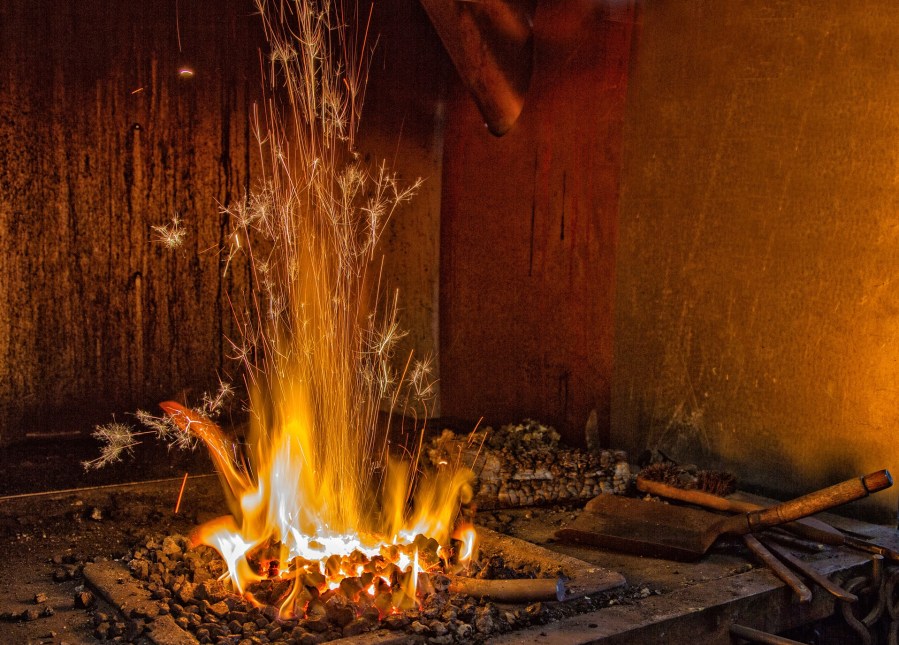
This is another Chamorro legend that I never heard about until I started learning Chamorro, which is the legend of Chaifi, the god of fire or the underworld. This is the version written by Georg Fritz, who was a German colonial official of the Northern Mariana Islands starting in 1899. I have a transcription of the Chamorro as it was written by Georg Fritz (with updated spelling) and an English translation in this post, but you can also access it in a pdf from a Digital Library Project compiled and maintained by Dirk Spennemann. There is also a paper by Steve Pagel that dives into the more linguistic aspects of the language, and includes a line-by-line translation of the legend across all three languages (English, German, and Chamorro). The narration for this story is done by Jay Che’le. Hope you enjoy it!
Si Chaifi
Un kuentos ginen Marianas, sinangan as Georg Fritz.
Si Chaifi eståba gi sanme’nan i fraguå-ña gi taddong papa giya Sasalåguan ya mama’titinas ante siha para u gaitentågo ya umasesetbe. Ya ha susu’on i guafi duru ya i fragua måpta: pinigan åcho’ yan såddok guafi ha yute’ siha gi hilo’ i edda’, ya un ånte gumupu huyong ya poddong papa’ giya Fouha gi tano’ Guåhån ya mama’åcho’. Lao i atdao ha na’maipe’ i acho’, i ichan ha na’mañaña, ya i tasi ha na’huyong gui’ kalang taotao.
Ayu nai ha li’e’ i taotao, na i tano’ gåtbo. Guiya mama’titinas taotao siha ginen i edda’ yan hånom, ya ha fa’tinånåsi siha ånti gi minaipen i atdao, na guiya ha tungo’ ginen as Chaifi; ya ha fa’na’na’an Famagu’on i Tano’….. Lao annai si Chaifi ha li’e’ na un ånti malågu, aliligao gi todu i lugåt para u puno’. Un ha’åne ha sodda’ un Påtgon i Tano’ na matå’tå’chong gi uriyan i tasi ya pinelo’-ña na i ante-ña ni i malågu. Ya ha na’hånao un nåpun dångkulu, sa’ i hanom, i guafi yan i manglo’ ha gobietbietña. I napu ha chule’ huyong i patgon i tano’, lao ti ha na’siña pumuno; sa’ i ante-ña ginen i atdao, ya este ti ginebietbietña as Chaifi. Ya i Patgon i Tano’ mama’guihan. Lao si Chaifi ha tattitiyi i guihan ya ha susugon hålom gi un hagoi, ya ha po’lo un guafi gi papa asta ki umånglo’. Lao i guihan ti siña måtai ya mama’hilitai ya lumålå’la’ gi halom tåno’.
Ayu nai si Chaifi ha songge’ i halom tåno’, lao i hilitai mama’gå’ga’ gumugupu ya humånao. Ya si Chaifi ha na’huyong un påkyo, ya este ha yute’ i ga’ga gumugupu gi un paderon ya hinilok i papå-ña – ya mama’taotao. Ya i taotao yan i anten åtdao ilek-ña as Chaifi, “Dia ha, hågu ti siña yu’ un puno’ yan todu i nina’siñå-mu, sa’ i anti-hu ginen i atdao!”
Este ha atan ya ilek-ña, “Ginen Sasalåguan i anti-mu, sa’ guahu na maisa fuma’tinas.”
Lao i Patgon i Tano’ umoppe’, “I ante ni i fuma’la’guaihon hao gaige’ giya Fouha gi tano’ Guåhån, na mama’titinas palu ånti gi minaipen i atdao. Ya sen magåhet! Ha na’tungo’ maolek ni i atte, sa’ dia ha, guahu fina’tinas-ña, un ånti ginen i atdao, ya i mas gaitiningo’, tainina’siña para guahu…”
Annai si Chaifi ha hungok este, nina’luhan yan maggoddai, ya ha håkot. Sumayao kalang feheman na påkyo, i tasi ha palo’po i hilo’ i tano’, i ekso’ siha manmuta guafi ya ha pañot meggai siha na tåno’. Giya Fouha mababa i tano’ ya ha pañot i tatan i taotao, lao i famagu’on-ña siha ti ha hulat pumuno’…. I Lahen i Tano’ ni matattitiyi, dumångkulu yan gainina’siña, ya ha na’huyong un råsan metgot. Lao tåya’ nai magof, sa’ ha tåtånga i tano’ i anti-ña.
Entonses si Chaifi ha hihot gui yan i chathinasson-ña ilek-ña, “Guahu hu li’e’ i mañe’lu-mu giya Guåhån gi tano’ i manmagof. I anten-ñiha ti manmå’o ni manñålang, manmagof ya manmaolek, sa’ manhåspok. Lao hågu må’o yan ñålang hao put i tano’-mu ni i malingu. Pues maolek! Na’hani un sahyan ya ta’lo guatu gi tano’ i manmagof!”
Ayu nai i patgon i tano’ ha na’hani un sahyan, ya i manglo’ siha chumule’ para Guåhån, ya ha li’e’ i mañe’lu-ña siha. Lao siha ti ma ketungo’ gue’ ya ti matungo’ i sinangån-ña; lao siha manmaolek nu guiya ya na’na’i ni i guinahan-ñiha ya manmalago’ ha fokai i ginefsågan-ñiha yan guiya. Lao i ginefsågan-ñiha yan i taitiningo’-ñiha nina’fangai binibu: ha fanui siha ni i taitiningo’-ñiha, enao muna’siha manmamåhlao, ya ha nå’i siha ni i pineblen guinahå-ña; enao muna’desde på’go ma ingen i tinekcha’ i tano-ña; ya ha fanå’gue siha håfa i ti nina’siña gue’, ya ma chatli’e’ gui’, ya manachatli’e’ maisa ya i unu’ chinatli’e’ ni i otro.
Este para si Chaifi un minagof yan un chinalek, sa’ i chinatli’e’ yan i linayu i mas mangguaiyayon na famagu’on-ña. Siha ha gu’ot i korason i taotao siha kalang i gamson yan i nifen i halu’u, ya ha yute’ papa ginen i ininan atdao ni i gumogogue siha, para i tinaddong giya Sasalåguan. Siha pumupulan i tekcha’ i minimo ya i atupat i emmok, i ha yute’ siha para i tinaddong giya Sasalåguan.
Guiya ha’ na maisa, na ha na’fåkpo i ha’ånen-ña gi minahgong, makmåta gi tano’ i manmagof; annai i niyok yan i lemmai siha manmanonokcha mås maolek, ya i tasi manggaiguihan mås mångnge’, ki gi hilo (todu) i tano’.
Chaifi
A tale from the Marianas, told by Georg Fritz
Chaifi stood in front of his forge deep down in Hell and forged souls, so that he would have slaves to serve him. And he poked the fire hard and the forge broke in pieces: molten rock and rivers of fire cast themselves onto the earth, and one single soul flew out (of Hell) and fell down to Fu’na in the land of Guåhan, and turned into stone. But the sun heated the stone, the rain softened it, and the sea turned it into the shape of man. Then the man saw that the world was beautiful. He made people from earth and water and made for them a soul from the heat of the sun, the way he learned from Chaifi; and he named them Children of the Earth.
But when Chaifi saw that one soul had escaped him, he searched for it everywhere and wanted to kill it. One day he found a Child of the Earth sitting nearby the ocean, and he assumed that it was his soul that had escaped. And he sent a huge wave, because he controlled the water, the fire and the winds. The wave swallowed the Child of the Earth but it could not be made to kill him; because his soul was from the sun, which was not controlled by Chaifi. And the Child of the Earth turned into a fish. But Chaifi pursued the fish and chased it into a lake and lit a fire below until the lake dried out. But the fish did not die and became a lizard and lived in the forest. So Chaifi burned down the forest, but the lizard turned into a bird and flew away. And Chaifi created a storm, and this storm smashed the bird against a cliff and its bones were broken – and it turned into a human.
And the man with the soul from the sun said to Chaifi: “behold, you cannot kill me with all your power, because my soul is from the sun!” But Chaifi looked at him and said: “your soul is from Hell, I was the one who made it.”
But the Child of the Earth replied: “the soul, the one that escaped you, lives in Fu’una in the land of Guåhan, where it makes more souls in the heat of the sun. And indeed! He was taught the art well, because see there: I am his creation, a soul from the sun, and the master has no power over me.”
When Chaifi heard this, he was afraid and excited from anger, and he was overcome with it. He hurried away like a furious torm, the sea fell upon the land, the hills spit fire and buried many lands. In Fu’una, the ground opened up and swallowed the father of man, but it was not able to kill his children.
The pursued Son of the Earth grew big and mighty and fathered a strong race. But he was not happy because he longed for the home of his soul. Then Chaifi approached him and said, full of malice: “I saw your siblings in Guåhan. Their souls are neither thirsty nor hungry, they are happy and good, because they are satiated. But you are thirsty and hungry for your lost home. Come now, prepare a ship and return to the land of happiness!”
Then the Child of the Earth prepared a ship and the winds carried it to Guåhan, and he saw his siblings. But they did not recognize him and did not understand what he was saying; but they treated him well and give him from their wealth and also wanted to share their happiness with him. But their happiness and their ignorance made him angry: he showed them their nakedness so that they were ashamed, and he gave from his poor wealth, so that hereafter they rejected the fruits of their garden; and he taught them what he called virtue and sin. Then they envied him his wisdom and honesty, and they hated him and became enemies to each other, and one was hated by the other.
This was a delight and laughter for Chaifi, because hate and envy were his most beloved children. They grasped the hearts of men like the octopus and the teeth of the shark and dumped them down, away from the sunshine that was protecting them, into the depth of Hell. They watched over the spear of the warrior and the sling of the avenger, and cast them away to the depth of Hell.
It is alone those who end their days in peace, that will wake up in the land of the blessed; where the coconut and breadfruit trees bring forth better fruits and the sea has more delicious fishes than here on Earth.
Quizlet Study Resource
Here’s a link to the Quizlet flashcard deck I made which breaks up the story into phrase chunks: Si Chaifi
References
Fritz, Georg. 1906. “Der Chaifi. Ein Märchen von den Marianen.” [The Chaifi. A fairy tale from the Marianas]. Mitteilungen des Seminars für Orientalische Sprachen Ostasiatische Studien 9, pp. 178-180.
 Lengguahi-ta