Here’s another cultural piece, from the short stories book I found in the KPV Collection, about devotional prayers and the parties that are held in honor of the saint that the devotional prayer is said to. This short story is in Chamorro with the English translation and narration done by Jay Che’le. Whenever I read or listen to this story, I always end up very hungry because of all the food they describe for the party, and it makes me nostalgic for the days, now 20 years ago, when my family would host events like this or attend them. Hope you enjoy!
Gupot Nobena
Tinige’ as Carmen C. Blas
Pinentan as Lita Payne
Numobébena si Tan Kåtmen Jose ni nobenan Santa Kåtmen. Este masilélebra gi disisais di Hulio. Matútucha i nobena gi diha ocho di Hulio.
Annai esta proksimu para matucha i nobena, si Tan Katmen manågo’ para u mafahåni flores plastik gi tenda para u mafa’tinas attat para si Santa Katmen. Gof malago’ na u manna’gof bunitu i attat sa’ mampos dångkolo i hinengge-ña gi nobenå-ña. Manågo’ ha’ lokkue’ dånges para u masósongge kada puenge. Åntes di ayu na ha’åni i para u matucha i nobena, manma’agångi todu i manhihot na familia yan todu i bisinu para u fannobébena kada puenge. Kada puenge, måtto i techa yan i kantoras ya matucha yan makånta i nobena. Todu i famagu’on mañasaonao mangånta. Gof bunitu este siha na kånta ni manma’ú’usa gi Santa Kåtmen. Kada puenge mannana’chocho buñelos, pat kek yan kontodu lokkue’ gimen mames.
Annai esta mina’ocho puenge i nobena, mamuno’ si Tun Jose dos na babui para i gipot gi sigente diha. Manmafåhan lokkue’ i kes månnok yan i kes barrigådan guaka para ma’aflitu, kelaguen yan para matunu. Tulanoche di manmaprepåra todu i katne ni para mafa’tinas para na’talo’åni gi sigente diha.
Gi sigente diha, i mina’nuebe puenge i nobena, manmåtto tåftåf i familia yan i bisinu ya matútuhon ma totnge i guafen sanhiyong para manmana’lagu i nengkanno’. Guaha manaflíflitu månnok, guaha manúnunu månnok para u makelaguen, guaha lokkue’ prumipǻpåra i para ensalådan gollai yan ensaladan batåtas, unu lokkue’ munana’lagu adobu yan guaha prumipara i babui para mahotnu. Fuera ha’ di i manmafa’títinas guihi gi gima’-ñiha, guaha siha manmanofresi para u fanmañúñule’ gollai åppan cho’da yan suni, tamåles suni yan tamåles gisu’, gollai hågon suni, yan unu lokkue’ gi kumairi manofresi pansit.
Esta meggai manmåsa na nengkånno’ gi alas onse i media, i mamåsa, ma plǻplånta guatu gi dangkulun lamasa ya matátampe foil. Gigon ha’ alas dosse, matucha i nobena ya annai makpo’, matútuhon mana’fañocho i konbiti. Bula manmåtto konbiti, familia yan bisinu para u masilebra i gipot Santa Kåtmen.
Mampos bibu este na gupot, todu i taotao manhåspok yan lokkue’ manmanna’yan ha’ ni sepblan nengkånno’ para i gima’-ñiha.
Novena Party
By Carmen C. Blas
Illustrated by Lita Payne
Ms. Carmen (better known as Carmen of Jose) says the novena of Saint Carmen. This is celebrated on the 16th of July. The novena is started/prayed on the 8th day in July.
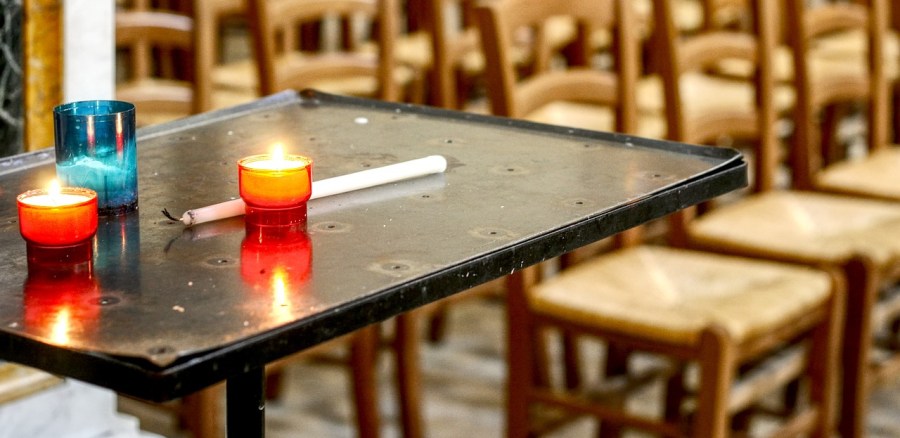
When it is already close to pray the novena, Ms. Carmen orders for plastic flowers to be bought at the store to prepare the altar for Saint Carmen. She really wants the altar to be made very beautiful because her belief in her novena is very great. She also sends for candles that will be burning every night. Before that day when the novena will be prayed, all the close family and all the neighbors are called to be praying the novena every night. Every night, the prayer leader and singers arrive and the novena is prayed and sung. All of the children join and sing. These songs that are used in the novena for Saint Carmen are very beautiful. Every night they make them eat donuts or cake and also including sweet drinks.
When it is already the 8th night of the novena, Mr. Jose kills two pigs for the party on the following day. A case of chicken and a case of a side of cow is also bought to be fried, to be made into kelaguen, and to be barbecued. All night, all the meat that will be made for lunch on the following day is prepared.
One the following day, on the 9th day of the novena, the family and neighbors arrive early and they start to light the outdoor fire for the food to be cooked. There is someone frying chicken, there is someone barbecuing chicken to be made into kelaguen, there is someone preparing what’s needed for vegetable salad and potato salad, and there is also someone cooking adobu and there is a pig being prepared to be cooked in the oven. Other than the food that is being prepared there at their house, there are people offering to bring gollai åppan cho’da and taro, tamåles suni and tamåles gisu, gollai hagon suni, and one of the målles offered pancit.
There is already a lot of food that is ready at 11:30, and the things that are ready are put there on the big table and covered with foil. As soon as it is 12:00, the novena is prayed and when it is finished, they start to feed the guests. Many guests arrived, family and neighbors, to celebrate the party of Saint Carmen. This party is really lively, all the people are full (of food) and also they are dishing out the leftover food for their houses.
Notes
kelaguen: a dish where raw fish, meat, or other seafood are cooked in lemon juice. If prepared with chicken, the chicken is usually barbecued first.
gollai åppan cho’da: a dish where green (cooking) banana is cooked in coconut milk
gollai åppan suni: a dish where taro root is cooked in coconut milk
tamåles suni: honestly, I’ve never eaten this before or seen it on the table, but I’d imagine it is a sweet tamale, made with taro root and wrapped in a banana leaf or aluminum foil. If I am wrong, please let me know in the comments!
tamåles gisu: a Chamorro-style tamale, that is usually wrapped in a banana leaf or aluminum foil. It is made with corn meal and corn flour, with a red side and a white side. The red side is flavored with annatto seed and meat.
gollai hagon suni: a dish where the leaves of the taro plant (or spinach leaves) are cooked in coconut milk
kumaire / målle: the godmother to your child or mother of your godchild
pancit: a Filipino noodle dish with meat and vegetables
 Lengguahi-ta
Pingback: 4 Key Learning Practices For Self-Study Chamorro Language Learners – Lengguahi-ta